The Biological Architecture of Immunity: How Vaccines Fortify Human Health
Vaccines represent one of the most significant achievements in the history of medicine. By leveraging the body’s innate ability to recognize and neutralize pathogens, vaccines act as a "training manual" for the immune system. Rather than waiting for a dangerous encounter with a live pathogen—which could result in severe illness or mortality—vaccination provides a controlled, safe preview of the threat. This process enables the body to build a robust defense mechanism without the risks associated with natural infection.
The Fundamental Mechanism: Adaptive Immunity
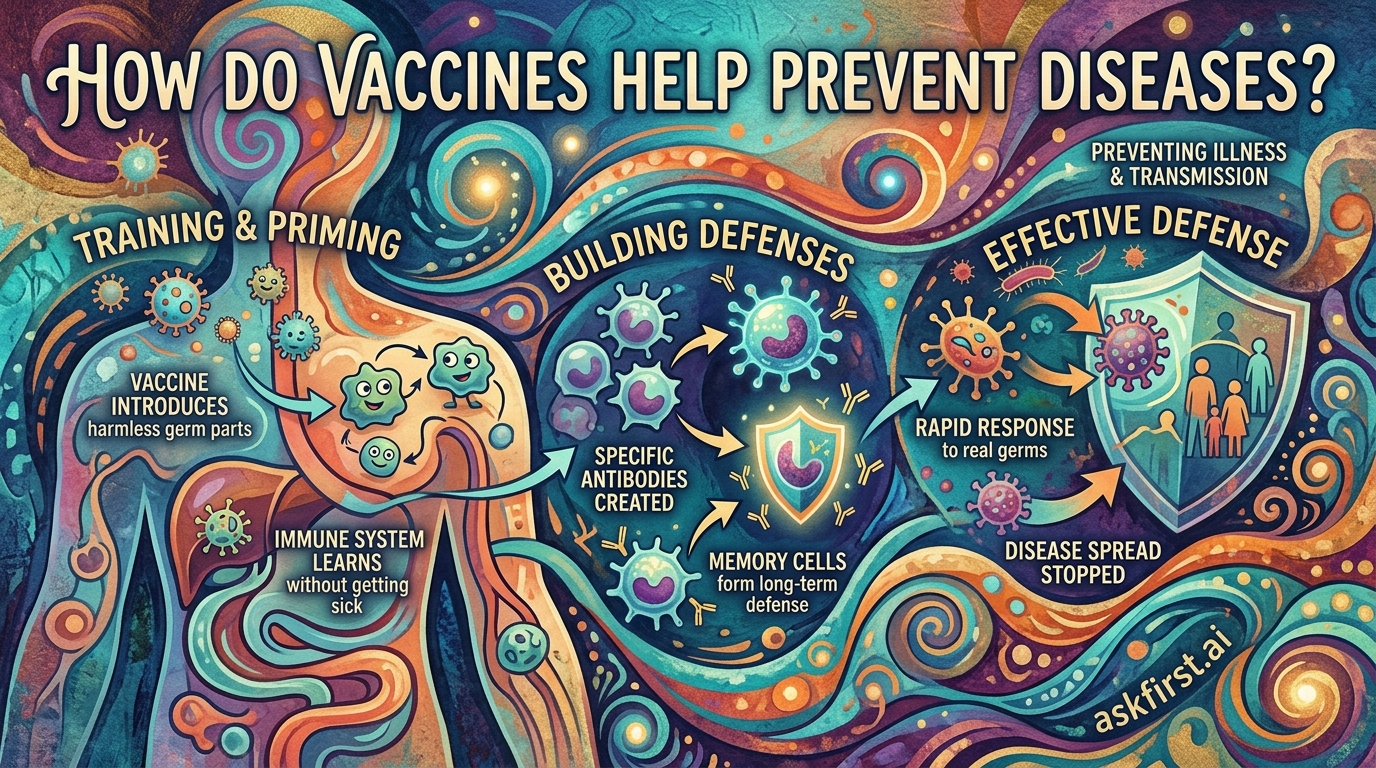
The core of vaccine functionality lies in the concept of adaptive immunity. When a vaccine is introduced into the body, it typically contains an antigen—a substance that mimics a specific part of a pathogen, such as a protein or a weakened version of a virus or bacterium.
As noted by Dr. Stanley Plotkin in his definitive text Vaccines (8th Edition), the immune system responds to these antigens by activating specialized white blood cells known as B-lymphocytes and T-lymphocytes. B-cells are responsible for producing antibodies, which are Y-shaped proteins that specifically target and neutralize the invading agent. T-cells, on the other hand, identify and destroy cells that have already been compromised by the pathogen, while also coordinating the broader immune response.
Memory Cells: The Long-Term Sentinel System
The true brilliance of vaccination is the creation of immunological memory. Once the initial immune response concludes, the body does not simply discard the tools it created. Instead, it maintains a population of "memory cells." These cells act as biological sentinels that circulate in the bloodstream for years, or even decades.
In the work Janeway's Immunobiology (authored by Kenneth Murphy and Casey Weaver), it is detailed that if the body encounters the actual pathogen in the future, these memory cells recognize the antigen immediately. They initiate a rapid, large-scale production of antibodies far faster than the primary response. This secondary response is usually so swift that the individual never experiences symptoms, effectively preventing the disease from taking hold.
Types of Vaccine Platforms
Vaccines are not monolithic; they utilize different biological strategies to provoke an immune response:
- Inactivated Vaccines: These contain a killed version of the pathogen. Examples include the polio vaccine (IPV) and the hepatitis A vaccine. While they are safe, they often require "booster" shots to maintain long-term immunity.
- Live-Attenuated Vaccines: These utilize a weakened form of the germ. The Measles, Mumps, and Rubella (MMR) vaccine falls into this category. Because they mimic a natural infection closely, they provide strong, often life-long immunity.
- mRNA Vaccines: A modern breakthrough, exemplified by the COVID-19 vaccines developed by Pfizer-BioNTech and Moderna. As described in The mRNA Vaccines by Dr. Katalin Karikó, these vaccines do not contain the virus itself. Instead, they provide the body with a set of "instructions" (messenger RNA) that teach cells how to produce a protein found on the surface of the virus, which then triggers the immune response.
- Subunit, Recombinant, and Conjugate Vaccines: These use specific pieces of the germ—like its protein, sugar, or casing. The HPV vaccine is a prime example, targeting the specific proteins of the Human Papillomavirus.
The Power of Herd Immunity
Vaccines do more than protect the individual; they provide a vital public health service known as herd immunity. When a significant percentage of a population is vaccinated, the pathogen finds it difficult to spread because there are too few susceptible hosts.
This is critical for protecting vulnerable individuals who cannot be vaccinated, such as infants too young to receive certain shots, chemotherapy patients, or those with compromised immune systems. If the vaccination rate drops—a phenomenon discussed extensively in Dr. Peter Hotez’s book Vaccines Did Not Cause Rachel’s Autism—the "herd" becomes porous, allowing outbreaks of previously controlled diseases like measles to return.
Concrete Examples of Success
The effectiveness of vaccines is best illustrated by historical outcomes. Smallpox, once a devastating scourge responsible for millions of deaths, was declared eradicated in 1980 by the World Health Organization (WHO) thanks to a global, coordinated vaccination campaign. Similarly, polio cases have been reduced by over 99% since 1988. These achievements serve as empirical evidence that vaccines are the most efficient tools for disease eradication and control in human history.
Conclusion
Vaccines function by bridging the gap between biological vulnerability and resilience. By introducing a "harmless shadow" of a disease, they prime the immune system to respond with precision and speed. The integration of immunological memory and the collective protection of herd immunity creates a formidable barrier against infectious disease. Through the rigorous application of these scientific principles, medicine has successfully shifted the human experience from one of constant susceptibility to one defined by the ability to proactively defend against global health threats.