The Neural Architecture of Musical Affinity
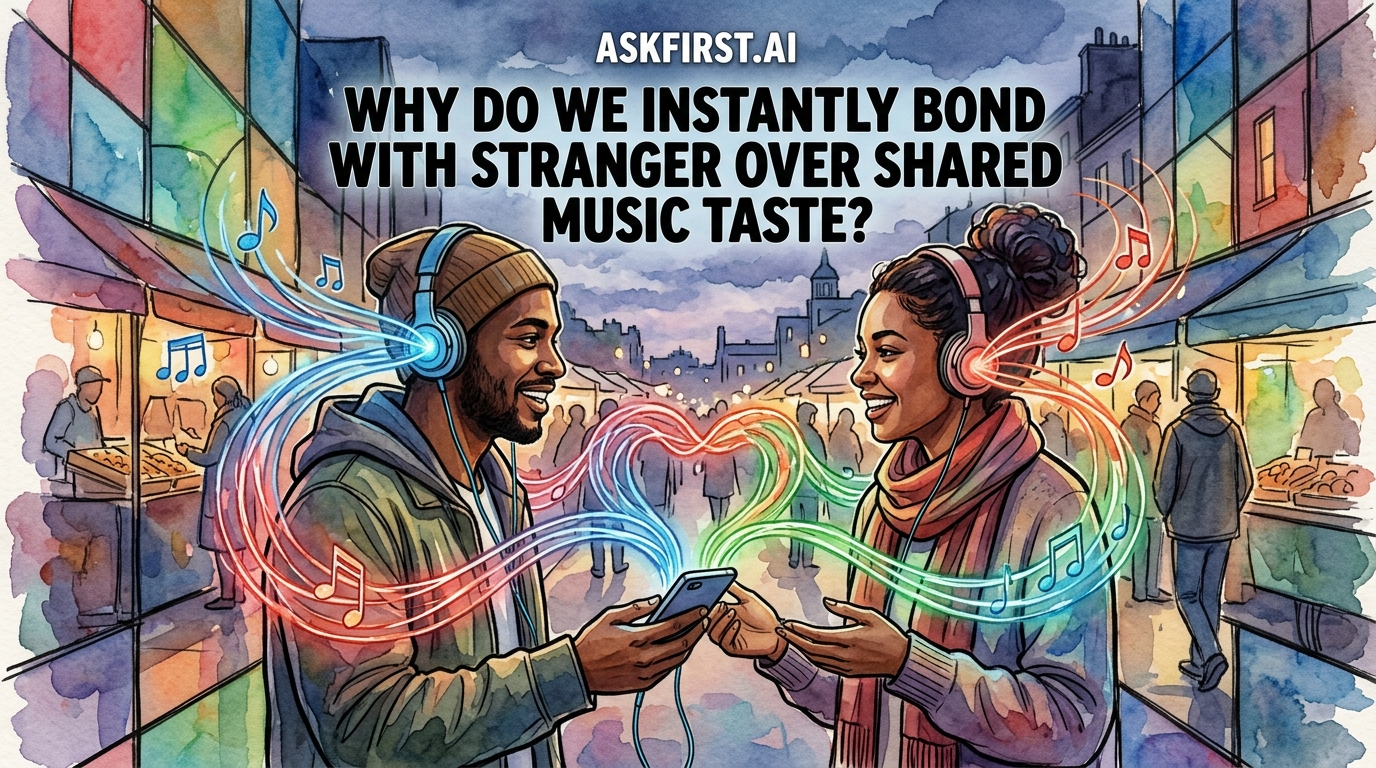
Human social interaction is often governed by a complex set of heuristic evaluations. When individuals encounter strangers, the brain immediately initiates a process of 'social categorization.' However, music transcends these standard societal filters. Research into neuroscience suggests that music activates the brain's reward centers, specifically the striatum and the orbitofrontal cortex. When two people discover a shared preference for a specific musical genre or artist, the brain processes this information as a form of 'social proof.' This phenomenon, often termed the 'proximity of preference,' signals to the brain that the other individual possesses a compatible cognitive map, thereby reducing the perceived risk of social rejection.
The Psychology of Social Signaling
Music acts as a profound social signal. Sociologists often argue that tastes in art, fashion, and music serve as markers of identity and group affiliation. By revealing musical preferences, individuals are essentially engaging in a form of 'social signaling.' When a stranger responds with a matching preference, it acts as a shorthand for shared values, history, and even intellectual tendencies. This is not merely an emotional reaction but a deeply ingrained psychological survival mechanism. Historically, belonging to a group increased chances of survival; therefore, the discovery of a 'tribe member' through cultural preference triggers an immediate release of oxytocin, the bonding hormone.
Theoretical Frameworks for Musical Bonding
Several scientific models explain this instant rapport:
The Shared Mental Representation Theory: Music creates internal simulations of emotions. When two people enjoy the same song, they are effectively experiencing a synchronized emotional state. This synchronization facilitates empathy, as both parties are essentially sharing a transient, private psychological landscape.
The Personality Projection Hypothesis: According to studies conducted by psychologists like Dr. Peter Rentfrow, musical taste is highly correlated with the 'Big Five' personality traits. A fan of complex, experimental music often displays openness to experience, while fans of high-energy pop might exhibit higher degrees of extroversion. Recognizing this in a stranger provides an immediate, albeit intuitive, profile of their underlying personality structure.
Cultural Identity and Tribalism
Music is the most portable and easily shared form of culture. Unlike literature or film, which require hours of focused attention, a musical preference can be communicated in seconds. This accessibility makes it a powerful catalyst for 'micro-communities.' In the absence of a shared local environment, musical taste provides an immediate sense of geographic and cultural belonging. Studies have shown that when individuals participate in the consumption of the same music, the psychological barriers between them diminish. This phenomenon is frequently seen at live concerts, where thousands of strangers synchronize their heart rates and physical movements to the beat, creating a powerful sense of collective effervescence, as coined by sociologist Émile Durkheim.
Why Music Overpowers Other Cultural Markers
Why does music bond us more effectively than, say, a favorite book or film? The answer lies in the auditory processing speed of the human brain. Auditory stimuli are processed faster than visual or linguistic data. Because music is intrinsically tied to human memory—specifically, autobiographical memory—it functions as a 'memory anchor.' When you share a musical taste with a stranger, you are not just sharing an aesthetic preference; you are sharing a set of potential memories and emotional contexts that have defined your life. The listener feels a sense of validation for their own life experiences when a stranger expresses love for the same soundtrack.
The Evolution of Social Cohesion
From an evolutionary perspective, music may have developed as a tool for social grooming. In the ancestral environment, music-making likely served to solidify group bonds, ensure coordination during collective labor, and establish clear social hierarchies. Today, this impulse survives in the form of shared playlists and recommendation algorithms. The 'instant bond' felt with a stranger is, in essence, the modern manifestation of an ancient survival strategy: finding comfort, safety, and predictability in a world of potential unpredictability. When the music matches, the brain concludes: 'This person is like me; this person is safe.'
Conclusion
The bond we form over music is a sophisticated intersection of neuroscience, personality psychology, and evolutionary history. It is a testament to the fact that humans are fundamentally wired to seek connection. By utilizing music as a shortcut to human understanding, we bypass the tedious process of traditional vetting, finding immediate kinship in the universal language of melody and rhythm. This connection reinforces our social identity and highlights the beautiful simplicity of the human capacity to find common ground in the most unlikely of places.