The Environmental Architecture of Creativity
For decades, the debate surrounding the physical workspace has centered on productivity metrics, but the conversation has shifted toward a more profound investigation: Does the environment fundamentally architect the creative output of the mind? Cognitive science suggests that the answer is a resounding yes. The workspace acts as a sensory scaffold that shapes how ideas are formed, connected, and executed. When the external environment is intentionally designed, it can serve as a catalyst for neuroplasticity and cognitive expansion.
The Psychology of Spatial Cues
Human cognition is inherently embodied, meaning that thoughts do not happen in a vacuum; they occur in relation to physical surroundings. Psychologists have long utilized the concept of situated cognition, which posits that knowledge is inseparable from the context in which it is acquired and used. A workspace characterized by openness may encourage divergent thinking, while a confined, structured environment often supports convergent, analytical tasks.
- Visual Complexity: High visual complexity has been linked to increased creative arousal. However, too much clutter can cause cognitive overload, depleting executive function.
- Sensory Anchors: Elements like natural lighting, organic textures, and varied spatial dimensions provide the brain with "anchors" that facilitate creative transitions.
- The Power of Proximity: The proximity to different stimuli can influence associative thinking, allowing the mind to bridge disparate concepts more fluidly.
The Myth of the Blank Canvas
There exists a popular myth that true creativity requires a perfectly sterile, empty room to function at its peak. In reality, the "blank canvas" often induces psychological resistance. Environmental stimulation serves as a vital input for the brain's internal search engines. By curating a space filled with objects that evoke curiosity—books, tools, or art—a professional creates a physical representation of their mental landscape. This externalization of the mind reduces the cognitive load required to hold ideas in working memory, freeing up neural bandwidth for innovation.
Designing for Neurodiversity and Focus
It is essential to recognize that there is no universal "perfect" workspace. Different creative profiles require distinct environmental configurations:
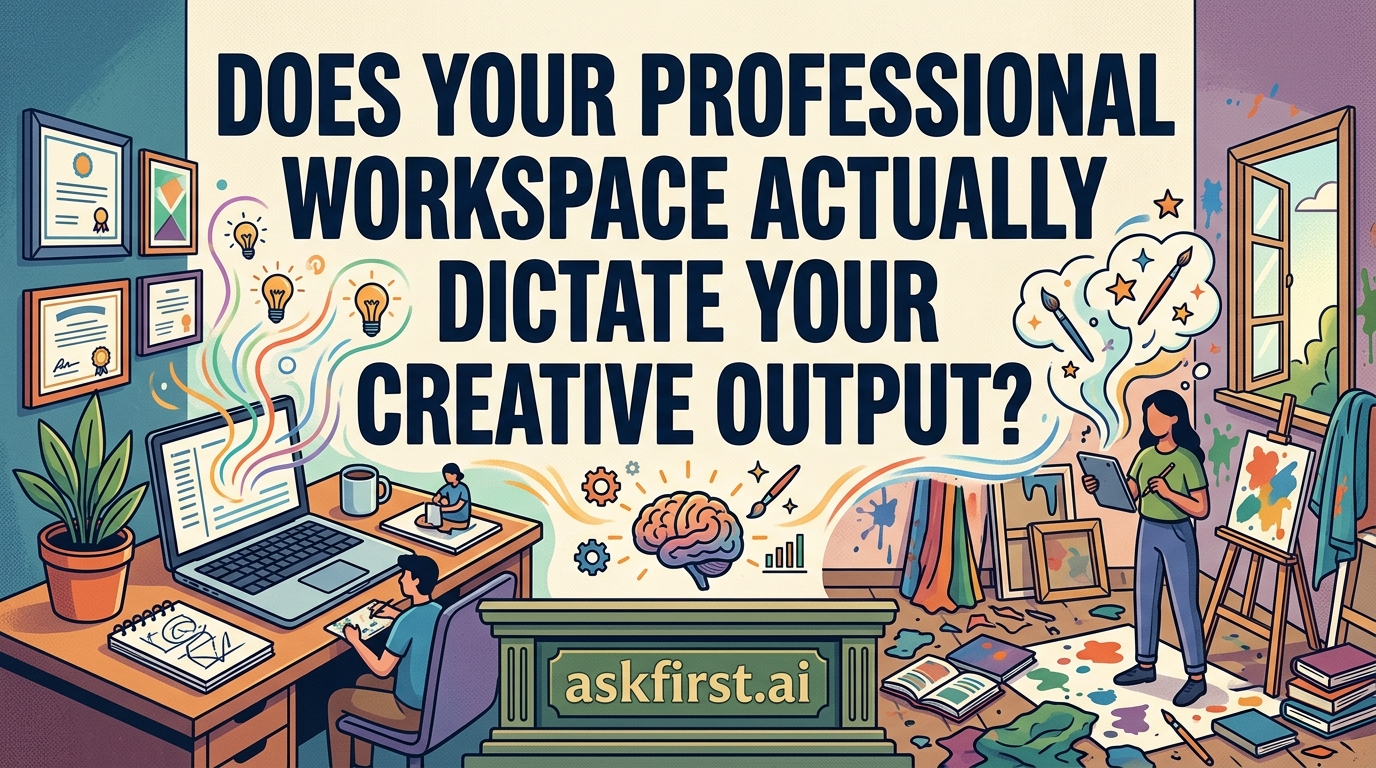
- The Deep Worker: Requires low-stimulus environments with acoustic shielding and minimalist decor to enter a 'flow' state.
- The Pattern Builder: Benefits from high-stimulus spaces where multiple project threads can be laid out visually, facilitating the identification of patterns.
- The Social Innovator: Thrives in environments that mimic 'third spaces'—café-like settings that blend activity with intimacy, fostering serendipitous collisions of ideas.
The Role of Bio-Inspiration
Biophilic design—the practice of integrating natural elements into built environments—has demonstrated a measurable impact on cognitive performance. Research indicates that the inclusion of plants, natural wood, and light-filled vistas reduces cortisol levels and enhances sustained attention. When the brain senses a 'natural' environment, the parasympathetic nervous system remains more balanced, which is the biological bedrock upon which sustained creative output is constructed.
The Impact of Spatial Mobility
Stagnation in a single physical location can lead to 'cognitive habituation.' When the brain stops registering the environment because it has become too familiar, creative curiosity often wanes. Dynamic workspaces—those that allow for reconfiguration or intentional movement—force the brain to remain vigilant and adaptive. The simple act of changing a desk setup or moving to a different chair can disrupt habitual thought loops, effectively resetting the creative process.
Cultivating an Intentional Ecosystem
Ultimately, a professional workspace is not merely a desk or a screen; it is an external hard drive for cognitive processes. To optimize creative output, one must treat the environment as a living, evolving ecosystem. This involves:
- Curating 'Discovery' Zones: Areas dedicated to visual stimuli that are unrelated to the current task to spark new associative pathways.
- Establishing 'Flow' Triggers: Using sensory signals—such as specific music, scents, or lighting levels—to cue the brain that it is time to transition into high-intensity creative labor.
- Iterative Design: Periodically assessing whether the space still supports current goals or if it has become a relic of past work habits that no longer serve innovation.
In conclusion, the workspace is the silent partner of every creative endeavor. While it cannot provide the raw talent or discipline required for excellence, it undoubtedly sets the ceiling and the floor for the quality and speed of cognitive output. By aligning physical surroundings with specific cognitive needs, professionals transform their environment from a passive backdrop into an active engine for innovation.