The Cognitive Paradox of Fictional Loss
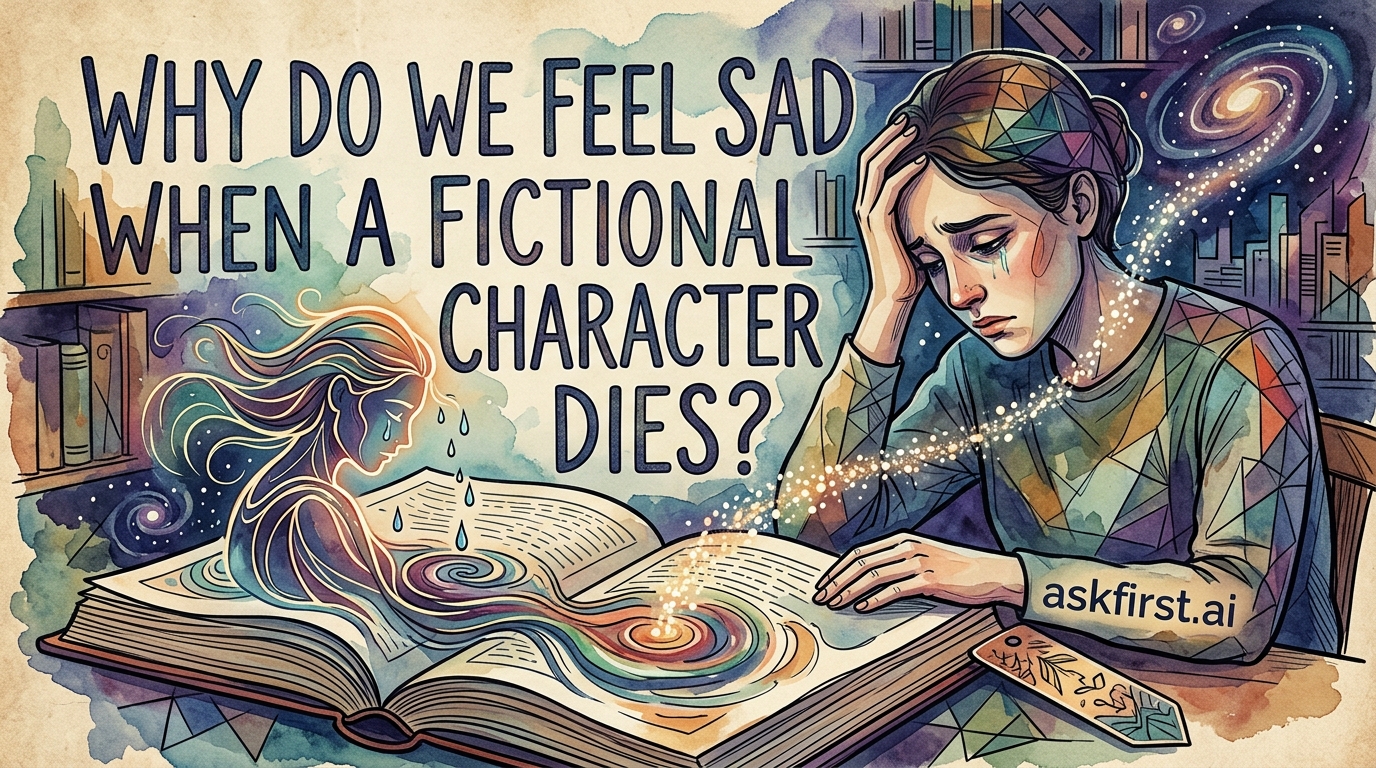
Human beings often find themselves genuinely mourning the exit of a character from a beloved story, even while the rational brain recognizes the entity as a construct of ink, pixels, or scripted dialogue. This phenomenon, while seemingly contradictory, finds its roots in the complex architecture of human empathy and evolutionary psychology. The brain does not distinguish as sharply as one might assume between the neural activation of real-world interactions and those occurring within a narrative.
The Mirror Neuron System
At the foundation of this emotional resonance is the Mirror Neuron System (MNS). When individuals observe a character in a narrative undergoing an experience—be it a triumphant victory or a poignant farewell—the brain replicates the neural patterns that would occur if the observer were undergoing that experience themselves. This mechanism is an evolutionary adaptation designed for social bonding and cooperative learning. When a character leaves a story, the MNS triggers a sense of social loss because the brain perceives the loss of an 'ally' or a familiar presence within the individual’s social landscape. The boundary between the 'self' and the 'other' becomes fluid when the narrative creates deep character immersion.
The Parasocial Connection
Psychologists define the relationship between an audience and a character as a Parasocial Interaction. Over the course of a series, a movie, or a long-form novel, the brain accumulates memory fragments that equate to a long-term friendship.
- Consistency: The character acts as a steady influence in the reader’s life.
- Vulnerability: Seeing the character overcome obstacles creates a sense of shared hardship.
- Reciprocity: Even though it is one-sided, the narrative provides a sense of emotional fulfillment that the brain interprets as a valid social exchange.
When that presence is removed, the brain experiences a signal that suggests a social gap, leading to genuine feelings of melancholy. This is not a malfunction; it is a testament to the sophistication of the human capacity for social connection.
Narrative Transportation and Psychological Realism
Researchers identify Narrative Transportation as the state where a reader or viewer becomes fully absorbed into a story, losing awareness of their immediate surroundings. During this phase, the brain's 'Critical Evaluator'—the portion responsible for discerning fact from fiction—quiets down. As noted in psychological studies by Green and Brock, transportation leads to a suspension of disbelief that elevates the emotional stakes of a narrative.
If the character possesses high psychological realism, the viewer projects their own values, fears, and hopes onto that persona. The departure of the character feels like an abrupt conclusion to a developmental stage in the viewer’s own personal emotional journey. This is why the departure of a character feels 'wrong' or 'incomplete'; the viewer was not ready to end their own development alongside that figure.
Why This Evolution Matters
From an evolutionary standpoint, the ability to care deeply about the 'fates' of others—even fictional ones—suggests a highly developed capacity for empathy. The same biological machinery that makes one grieve for a fictional character is the same machinery that facilitates compassion for neighbors, family, and community members.
- Empathy Training: Engaging with narratives allows the brain to practice managing complex emotions in a safe, controlled environment.
- Moral Development: By 'losing' characters, viewers reflect on their own morals and what they value in others.
- Community Building: Shared grief over a fictional character creates powerful, lasting social bonds between people who have never met.
Conclusion: The Beauty of Immersion
Feeling sorrow when a character departs is a profound indication of the depth of the human imagination. It reveals the extraordinary ability of the human brain to construct meaningful emotional realities out of abstract concepts. Far from being a trivial response, this sadness confirms that storytelling remains one of the most potent technologies available for expanding human consciousness and emotional range. Embracing these feelings allows individuals to cherish the narratives that define, challenge, and inspire them throughout their lifetimes, proving that while stories may have an end, their emotional impact remains a permanent part of the human experience.