The Evolutionary Basis of the 'Gaze Detection' Phenomenon
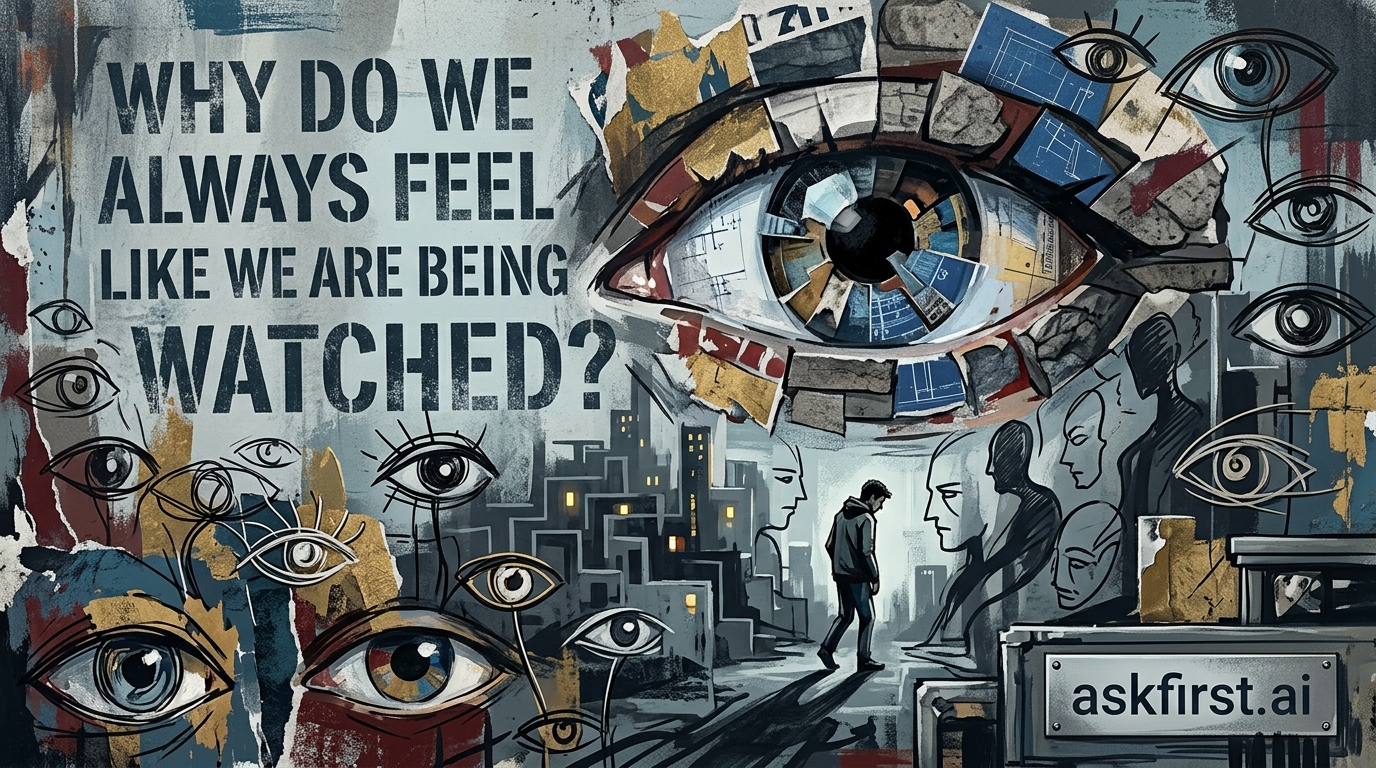
The sensation of being watched—often termed the psychic staring effect or scopaesthesia—is a pervasive human experience. Across cultures, individuals frequently report an uncanny feeling that someone is observing them from behind, only to turn around and find their suspicions confirmed or refuted. While often categorized under anecdotal or paranormal experiences, this sensation is rooted in deep-seated evolutionary biology, cognitive neuroscience, and social psychology. At its core, the brain is an extraordinary pattern-recognition machine, constantly scanning the environment for threats and social cues.
The Neurobiology of Gaze Sensitivity
Human beings possess a highly specialized neural architecture dedicated to gaze perception. The superior temporal sulcus (STS) is a region in the brain specifically tasked with processing the direction of another person's eyes. Evolution has wired the human brain to detect eye direction with incredible precision because, for our ancestors, knowing where another creature was looking was a life-or-death matter. A predator’s gaze indicated an imminent strike, while a competitor’s gaze might signal a social challenge. Consequently, humans have evolved an unusually high contrast between the iris and the sclera (the white part of the eye). This anatomical feature, known as the 'cooperative eye hypothesis,' makes it easier for humans to communicate intentions non-verbally, but it also creates a heightened sensitivity to being the subject of another’s attention.
Cognitive Biases and Pattern Recognition
Why does this sensation occur even when no one is watching? The answer lies in hyperactive agency detection. The human brain evolved to be 'better safe than sorry.' If an ancestor heard a rustle in the bushes, they had two options: assume it was the wind (potentially leading to death if it were a tiger) or assume it was a predator (leading to a mild annoyance if it were only the wind). Those who defaulted to the latter—assuming agency—were more likely to survive and pass on their genes. This cognitive bias means that when the brain lacks sufficient information, it tends to fill in the gaps with the most socially relevant explanation: someone is here.
- Confirmation Bias: People tend to remember the times they turned around and actually saw someone looking, while conveniently forgetting the hundreds of times they turned around and saw nothing at all. This creates a psychological illusion of accuracy.
- Signal Detection Theory: In any environment, we constantly perform a 'cost-benefit analysis' regarding threats. The neural cost of a false alarm is low (a brief moment of awkwardness), while the cost of a missed threat is infinite (death). Therefore, evolution favored a 'twitchy' detection system.
The Role of Peripheral Awareness
While humans do not have eyes in the back of their heads, they do possess sophisticated peripheral vision. The human visual field is divided into the foveal vision (the sharp central focus) and peripheral vision (which excels at detecting motion and changes in light intensity). Often, a person may subconsciously perceive subtle shifts in the environment—a flicker of shadow, a slight change in air current, or the movement of a person on the periphery—before the conscious mind can process what happened. The brain interprets these micro-stimuli as evidence of a gaze and forces the conscious mind to pay attention by generating an uneasy feeling of 'being watched.'
Psychological Projection and Social Anxiety
It is also important to consider the social aspect of this feeling. In modern, crowded environments, individuals are constantly under the 'social gaze.' Being in public spaces, working in open-plan offices, or traversing city streets creates a persistent, low-level activation of the brain’s social monitoring centers. When we feel insecure, self-conscious, or stressed, this sensitivity to being observed intensifies. The brain essentially projects our internal state onto the environment. If we are worried about how others perceive us, our brain starts to 'check' for that observation as a form of social defense mechanism.
Scientific Skepticism and the 'Stare in the Back' Myth
While the feeling is real as a psychological phenomenon, scientific studies generally do not support the idea that humans possess a sixth sense or psychic ability to detect an actual gaze without visual or auditory cues. Controlled laboratory experiments, such as those conducted by psychologists like Rupert Sheldrake in the late 20th century, have faced significant replication issues. In rigorous, double-blind settings where all environmental cues are eliminated, humans are generally no better than chance at knowing when they are being watched. Thus, the sensation is better described as a projection of internal vigilance rather than a reception of external energy.
Summary of the Mechanism
- Evolutionary Vigilance: The brain prioritizes safety by assuming an agent is present.
- Neural Specialization: Specialized areas of the brain constantly monitor eyes and gaze.
- Peripheral Processing: Subconscious visual data triggers the suspicion of observation.
- Cognitive Bias: Memory reinforces the feeling by favoring 'hits' over 'misses.'
Ultimately, feeling watched is a testament to the sophistication of the human brain. It is an internal alarm system, designed to keep us hyper-aware of our surroundings in a complex social world. Rather than a supernatural occurrence, it is a fascinating byproduct of human evolutionary history, showcasing how our biological hardware continues to shape our perception of reality in the modern age.