The Psychology of Social Reflection: Why Embarrassment Lingers
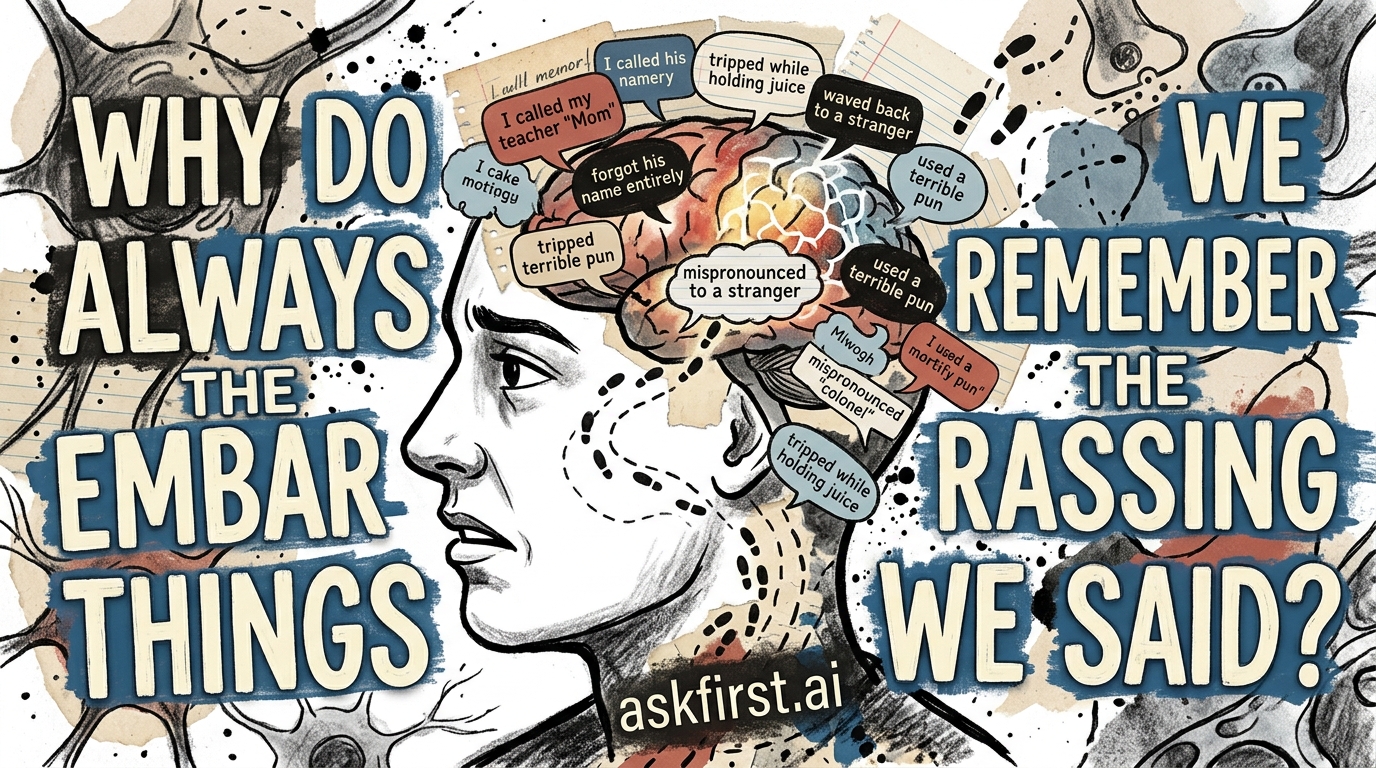
Human memory is not a perfect video recorder of life events; rather, it is a highly selective, biased archive shaped by the intensity of emotions. The phenomenon of fixating on past social blunders is driven by a complex interplay of evolutionary biology, social cognition, and neurological functioning. When a person reflects on an embarrassing comment made years ago, they are not merely reliving a memory; they are engaging in a protective mental mechanism designed to ensure future survival within a social group.
The Evolutionary Perspective: Social Survival Mechanisms
From an evolutionary standpoint, human beings are obligate social animals. For tens of thousands of years, an individual's ability to remain within their tribe was synonymous with physical survival. Being cast out from the group meant starvation or death. Consequently, the brain developed an intense sensitivity to social standing and public reputation. Embarrassment serves as a 'social alarm system.' When we say something inappropriate, our brain flags it as a potential threat to our social status. By keeping that memory front and center, the mind is effectively running a continuous simulation of 'how to avoid social exclusion in the future.' It is a form of negative feedback loop intended to sharpen social calibration.
The Spotlight Effect and Cognitive Biases
Much of our fixation on embarrassing moments is exacerbated by the Spotlight Effect. This cognitive bias causes individuals to believe that others are noticing their actions, flaws, and comments far more than they actually are. In reality, most people are far too consumed with their own internal thoughts and insecurities to dwell on another person’s minor faux pas. However, the human brain struggles to internalize this reality. We mistakenly assume our embarrassing moment left an indelible mark on everyone who witnessed it, amplifying the perceived severity of the mistake and ensuring it is stored in our long-term episodic memory for future analysis.
Neurobiology of Negative Bias
Neurologically, the brain is hardwired with a negativity bias. Evolutionarily, it was more important to remember a dangerous predator or a poisonous berry than a pleasant sunny day. Similarly, the brain prioritizes negative social information over positive or neutral interactions. When we experience embarrassment, the amygdala—the brain's emotional processing center—becomes highly active, which forces the hippocampus to 'burn' the event into long-term memory. This is why a compliment might be forgotten by the end of the day, yet a stutter during a presentation from five years ago remains crystal clear.
The Role of Rumination in Self-Correction
Rumination, the process of repetitively thinking about past events, is the engine of this memory retention. While often viewed as detrimental, rumination can serve a constructive purpose in moderate doses. It is a form of mental rehearsal. When a person mentally replays an awkward statement, they are often unknowingly trying to find a better version of the interaction. They are asking the subconscious question, 'What should I have said instead?' While this often manifests as painful regret, it is effectively a diagnostic process the mind uses to refine social competence.
Strategies to Manage the 'Embarrassment Hangover'
Understanding that these memories are biological adaptations rather than personal failures can significantly reduce the distress they cause. To manage these intrusive thoughts, consider the following strategies:
- Perspective Taking: Actively remind yourself that other people have already forgotten the event. The narrative that 'everyone still thinks about this' is a creation of your own mind, not a reflection of objective reality.
- Cognitive Reframing: Instead of viewing the memory as a 'failure,' view it as data. Ask yourself: 'What did this teach me about my values or my communication style?'
- Self-Compassion: Acknowledging that imperfection is a fundamental aspect of the human condition can disrupt the shame cycle. Everyone experiences social friction; it is a sign of engagement with the world rather than withdrawal.
Conclusion
The memory of embarrassing moments is a testament to the sophistication of our social brain. While it can feel like a heavy burden, it is essentially a persistent, automated maintenance system. By recognizing the biological imperatives and psychological biases at play, we can stop viewing these memories as enemies and start seeing them as the natural, if occasionally uncomfortable, byproducts of navigating a complex human society. Ultimately, the ability to feel embarrassed is actually a sign of pro-social behavior, as it demonstrates an internal commitment to maintaining harmony and respect within our communities.