The Reconstructionist Nature of Human Memory
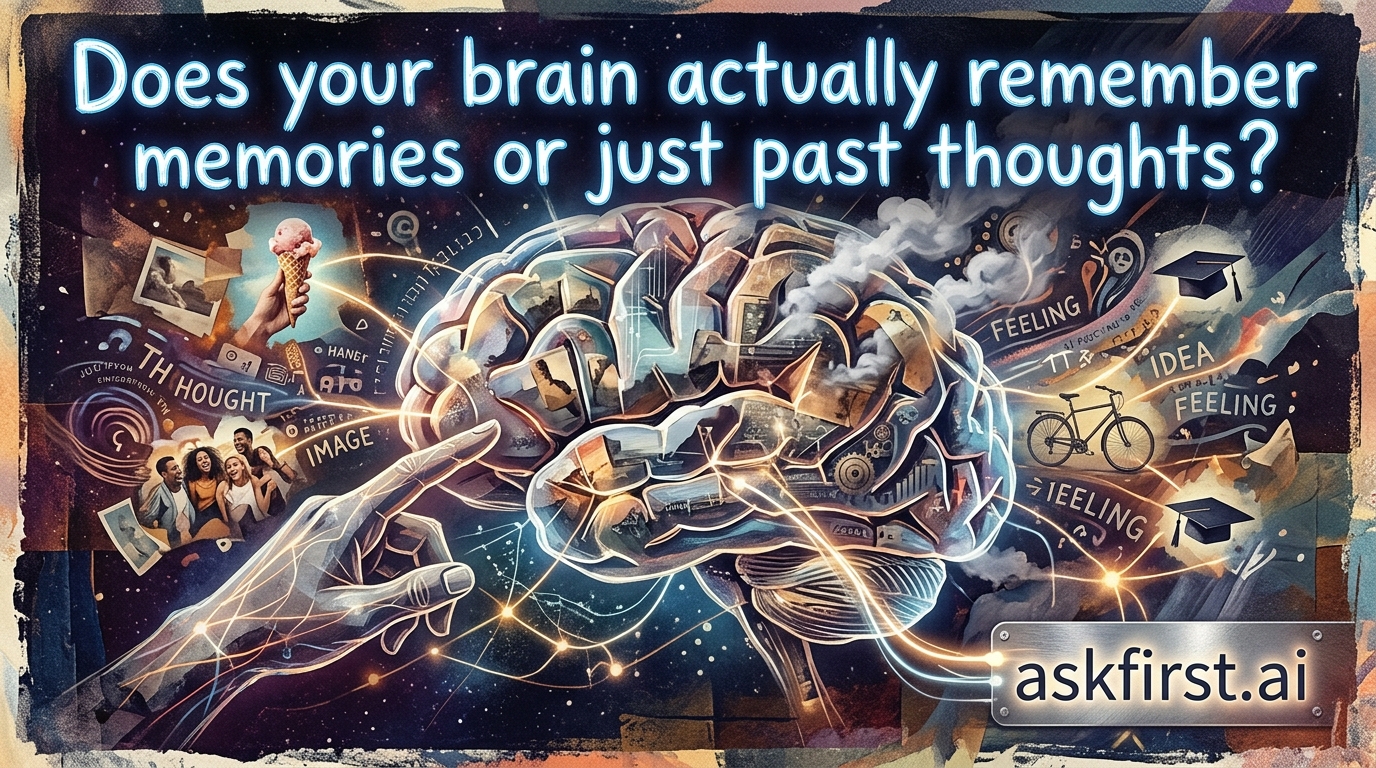
Modern neuroscience reveals that the brain does not operate like a digital video recorder, archiving raw footage for later playback. Instead, human memory is a reconstructive process. When individuals recall an event, they are not retrieving an objective 'recording' but rather actively reconstructing the experience from disparate fragments stored in various neural networks. In this sense, the act of remembering is inherently tied to current thought processes, meaning every recollection is a hybrid of original data and contemporary interpretation.
The Fragility of Neural Encoding
Memory is organized into distinct phases: encoding, storage, and retrieval. During encoding, sensory input is transformed into electrical and chemical signals. However, the brain never records everything. It relies on selective attention, filtering information based on emotional relevance and prior knowledge. This means that at the moment of 'saving' a memory, the brain is already pruning and editing the data. Consequently, what remains is not the past itself, but a summarized version shaped by the individual's mental state at that time.
Memory as a Dynamic Thought Process
Research in cognitive psychology suggests that every time a memory is accessed, it becomes malleable. This phenomenon is known as memory reconsolidation. When a person retrieves a past event, the neural pathways associated with that memory are temporarily destabilized. During this period of instability, the brain integrates new information, feelings, and current environmental cues into the existing framework. Therefore, the memory is 'updated' before it is stored again. Because of this, it is more accurate to view memory as a dynamic process of thinking about the past rather than a passive retrieval of fixed data.
Key Mechanisms of Reconstruction
- Schema Integration: The brain utilizes 'schemas'—cognitive frameworks that help organize and interpret information. When recalling a story, the brain may fill in gaps by defaulting to these pre-existing structures, essentially turning a memory into a past thought consistent with the individual's worldview.
- Emotional Coloring: Emotions act as a biological highlighter. Events associated with high emotional arousal are remembered more vividly, but their accuracy remains subject to bias. A fearful memory might emphasize a threat, causing the 'thought' of that event to become increasingly dramatized over time.
- Confabulation: The brain possesses a natural drive for coherence. If elements of a memory are missing, the mind often creates plausible details to bridge the gap. This is not lying; it is the brain's attempt to construct a logical narrative out of incomplete mental files.
Are Memories Just Past Thoughts?
If memory is constantly updated through the lens of the present, the distinction between a 'memory' and a 'past thought' becomes blurred. Consider the concept of the 'Remembering Self' versus the 'Experiencing Self.' Daniel Kahneman’s research highlights that how we think about an experience afterward often differs significantly from how we felt during the experience. The 'remembered' version is a narrative—a thought constructed for self-identity—rather than a perfect archival replica of the original sensation.
Evolutionary Utility
Why would the brain evolve such an unreliable system? The answer lies in utility over precision. Evolution prioritized the ability to use past experiences to navigate future challenges. By being reconstructive rather than archival, the brain allows for cognitive flexibility. It enables humans to 're-think' the past to solve new problems, apply lessons to different contexts, and adapt behavior to shifting environments. Precision in every sensory detail is often less valuable than the general lesson learned.
Summary of Findings
- Memories are not static files: They are biological processes that fluctuate with each retrieval.
- Context dictates content: The environment and mood present during retrieval significantly impact what is recalled.
- Identity formation: We curate our memories to build a coherent sense of self, further distancing the 'memory' from the 'original event.'
In conclusion, while memories originate from past experiences, the brain transforms them into something more akin to a 'current thought about the past.' By recognizing that our recollections are reconstructions, we gain insight into the profound complexity of the human mind. The brain is not a library of archives; it is a laboratory where the past is constantly being re-examined, edited, and woven into the fabric of the present.