The Intersection of Biology and Intuition
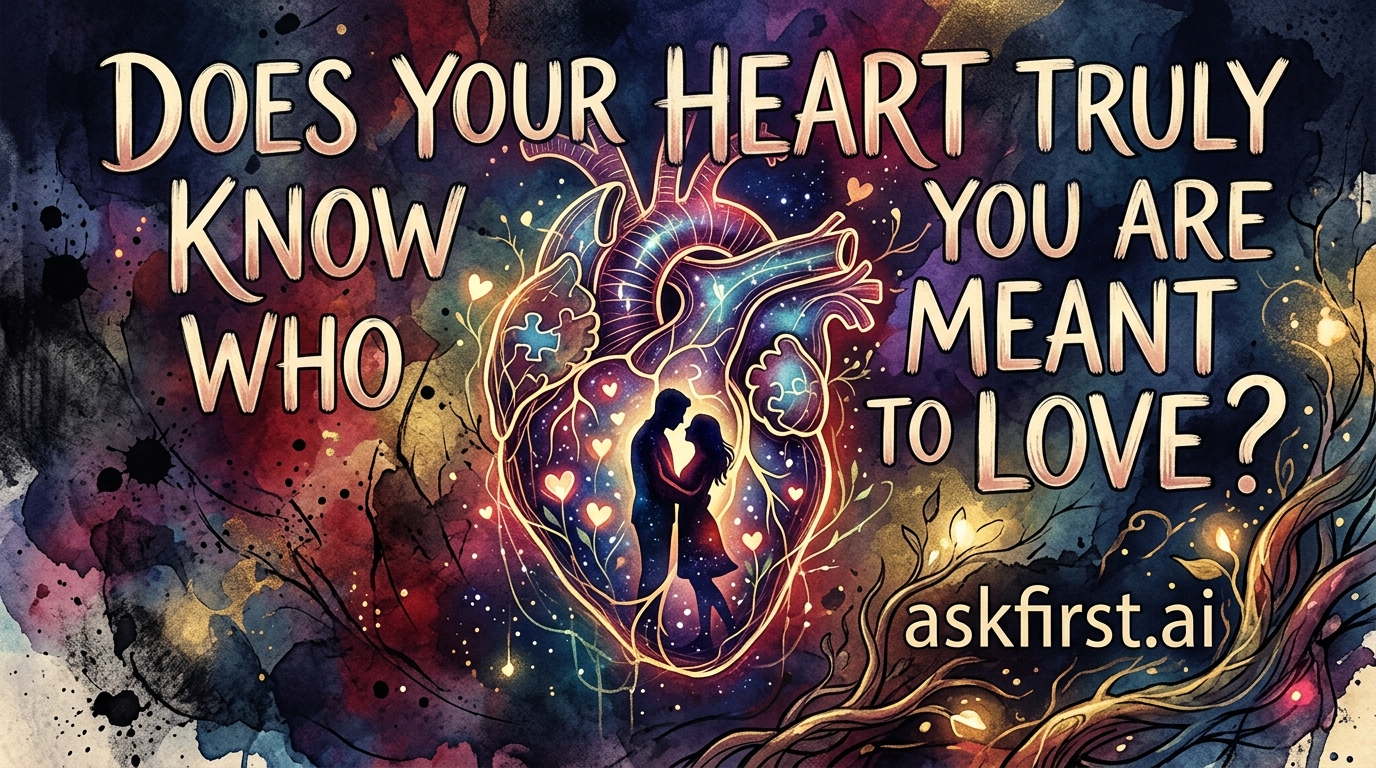
The question of whether the human heart possesses an innate, almost mystical knowledge regarding romantic destiny has captivated philosophers, poets, and scientists for centuries. While pop culture often portrays this 'knowing' as a sudden, undeniable spark—a 'love at first sight' phenomenon—the reality is a complex interplay of evolutionary biology, cognitive psychology, and neurological mapping. Understanding how the heart 'decides' who to love requires a dive into the sophisticated systems governing human attraction.
The Evolutionary Mechanism of Attraction
From an evolutionary standpoint, the concept of being 'meant to love' someone is often a projection of biological compatibility. Research in human behavioral biology suggests that what the heart perceives as a soul-deep connection is often a subconscious assessment of genetic compatibility and survival fitness. Humans are wired to seek partners who offer genetic diversity, which is why scent and pheromones play such a massive, often invisible role in initial attraction. The Major Histocompatibility Complex (MHC), a set of genes important for immune system function, influences body odor. Studies have shown that people are often drawn to the scent of individuals whose MHC genes are different from their own, a biological strategy designed to produce offspring with robust immune systems. In this light, the heart is not acting on cosmic destiny, but on a highly efficient biological algorithm.
Cognitive Anchoring and Attachment Theory
Psychology introduces the concept of attachment styles, which are formed during early development and significantly dictate who an individual feels 'meant' to be with. If someone grows up with a secure attachment style, their heart is more likely to gravitate toward healthy, stable partners. Conversely, those with anxious or avoidant attachments might feel a powerful, magnetic pull toward partners who mirror their childhood dynamics—a phenomenon known as repetition compulsion. When a person feels that their heart has found 'the one,' it is frequently a manifestation of the brain recognizing familiar patterns. This can create a profound sense of 'knowing,' even if the relationship itself is psychologically challenging. Therefore, what feels like destiny is often the psyche’s way of seeking resolution for unresolved emotional narratives.
The Role of Dopamine and Neural Priming
Neuroscience provides a clearer lens through which to view the 'heart’s knowledge.' When an individual meets someone who aligns with their subconscious desires, the brain releases a potent cocktail of dopamine, norepinephrine, and phenylethylamine. This chemical surge creates a hyper-focus on the partner, fostering a sense of inevitability. The brain effectively 'primes' the individual to seek out traits that align with their ideal romantic template. This process explains why people often report feeling like they have known their partner for a lifetime, even after knowing them for a brief period. The heart is merely reflecting the internal map that the brain has been constructing through lived experience, media consumption, and social conditioning.
Debunking the Myth of the 'Chosen One'
The notion of a singular, predestined romantic match is a persistent cultural myth that can sometimes lead to detrimental expectations. Relationships are not static; they are dynamic, co-created environments. Believing that the heart holds a secret knowledge about a preordained partner can lead to the 'destiny belief' trap, where partners abandon relationships the moment a conflict arises because they assume they must have been mistaken about the connection. Evidence-based relationship science, such as the work pioneered by researchers like Dr. John Gottman, suggests that successful love is more about active building, repair, and shared values than it is about an innate, mystical recognition of 'the one.'
Cultivating Intentional Connection
While the heart may guide individuals toward potential partners through biological and psychological cues, the ultimate decision to love rests on conscious commitment. True connection is cultivated through:
- Shared Vision: Aligning long-term goals and lifestyle values.
- Emotional Intelligence: Developing the ability to communicate needs and regulate internal states.
- Mutual Growth: Choosing to evolve alongside a partner, accepting that both individuals will change over time.
Ultimately, the heart knows what it has been taught to recognize. By understanding the underlying biological and psychological drivers of attraction, individuals can transform their romantic life from a passive game of chance into an intentional pursuit. Love is less about being 'meant' for someone and more about the deliberate, daily practice of choosing to cherish and grow with another person. The heart is a brilliant biological compass, but the mind must steer the ship toward sustainable, fulfilling connections.