The Science of Sound: Mapping Personality Through Music Taste
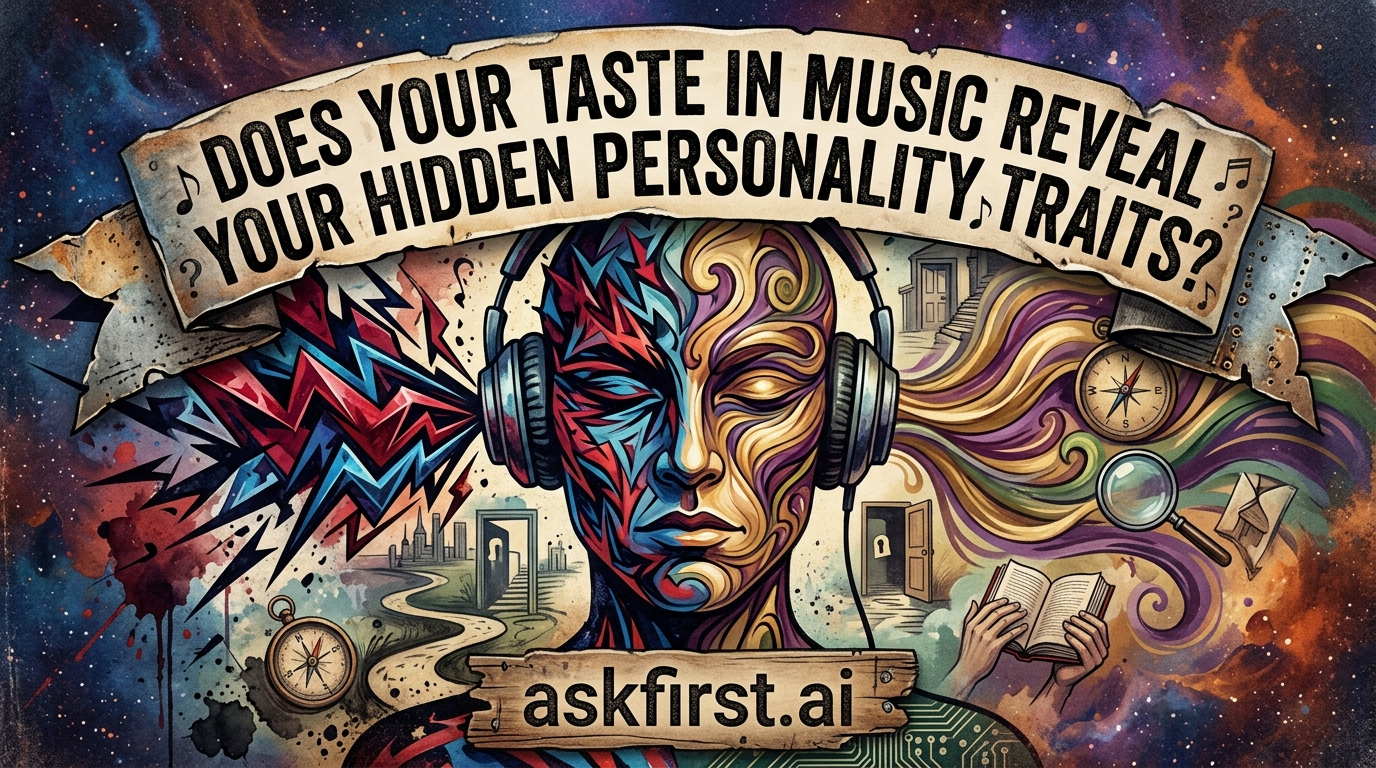
For decades, psychologists have investigated the symbiotic relationship between auditory preferences and human behavior. The question of whether musical taste acts as a digital fingerprint for the human psyche has moved from folklore to rigorous empirical science. Extensive research, most notably the landmark studies conducted at the University of Cambridge, suggests that music preferences are not merely aesthetic choices but are deeply rooted in cognitive styles and emotional processing mechanisms. By analyzing the structural complexity and emotional valence of musical genres, researchers have successfully correlated listener habits with the 'Big Five' personality traits: Openness, Conscientiousness, Extraversion, Agreeableness, and Neuroticism.
Cognitive Empathy Versus Systemizing
A primary framework for understanding this link is the distinction between 'empathizers' and 'systemizers'. Empathizers gravitate toward music characterized by low arousal, negative valence, and emotional depth—think of melancholic folk, acoustic singer-songwriters, or soulful R&B. This music resonates with their focus on emotional nuances and human social dynamics. Conversely, systemizers are drawn to high-arousal, complex, and technically precise compositions. Genres such as heavy metal, avant-garde jazz, or intricate progressive rock satisfy the systemizer's desire to decode structural patterns, appreciate instrumental virtuosity, and understand the internal logic of a musical composition.
Breaking Down the Big Five
Research indicates that specific musical markers consistently correlate with established psychological profiles:
- Openness to Experience: This is perhaps the strongest predictor of musical diversity. Individuals scoring high in Openness demonstrate a penchant for complex, experimental, and non-mainstream genres. They appreciate the unconventional, often finding solace in classical, jazz, or world music that challenges standard harmonic expectations.
- Extraversion: Those with high extraversion scores typically seek out high-energy music with strong rhythmic components. The social nature of pop, dance, and upbeat electronic music mirrors their desire for stimulation, social connection, and external engagement.
- Agreeableness: People who prioritize harmony and social cohesion tend to prefer upbeat, conventional music. Pop and mainstream radio hits often align with their tendency to avoid conflict and maintain a positive social persona.
- Conscientiousness: While less defined, there is evidence that individuals who value structure and organization may lean toward music that follows predictable, orderly patterns, sometimes avoiding music that is chaotic or overly experimental.
- Neuroticism: Individuals with high levels of neuroticism often utilize music as a form of emotion regulation. They may cycle between intense, moody genres to reflect their internal state or upbeat pop to counteract feelings of anxiety or sadness.
The 'Mellow' Paradox: Why Preferences Shift
It is vital to acknowledge that music taste is not a static monolith. While personality traits provide a baseline, situational needs often dictate transient preferences. This is known as 'mood regulation'. For instance, a highly organized, systematic individual might turn to aggressive, high-tempo rock music when they need a surge of dopamine to complete a difficult task. This phenomenon demonstrates that music is a tool for self-modulation. The personality trait determines the baseline 'go-to' genre, but the necessity of emotional equilibrium dictates the active listening habits of the moment.
The Cultural and Biological Filter
While personality remains a significant driver, researchers warn against ignoring cultural and environmental influences. The 'mere exposure effect' dictates that people often grow to like the music they were surrounded by during formative years. Furthermore, musical taste is often an act of identity signaling. Adopting a particular 'aesthetic'—such as the grungy attire of a metalhead or the minimalist style of an indie folk fan—is a way of signaling group belonging and values. In this context, music choice becomes a performative aspect of the personality, a way for the individual to broadcast who they are or who they wish to be to the outside world.
Is Personality Destined by Rhythm?
Does the evidence mean that a person's entire character is encoded in their Spotify library? Certainly not. Music taste provides a window, not a map. It serves as a psychological indicator of underlying cognitive preferences and emotional needs, but it cannot account for personal history, education, or specific lived experiences. What is clear is that music is far more than background noise; it is an active reflection of how the brain perceives the world. Whether one is drawn to the mathematical precision of a symphony or the raw, emotive storytelling of blues, that preference acts as a feedback loop, reinforcing the personality traits that initially sparked the interest. By observing what a person listens to, one is not just hearing sound—one is witnessing the internal architecture of their mind in real-time.