The Extraordinary Biology of the Octopus
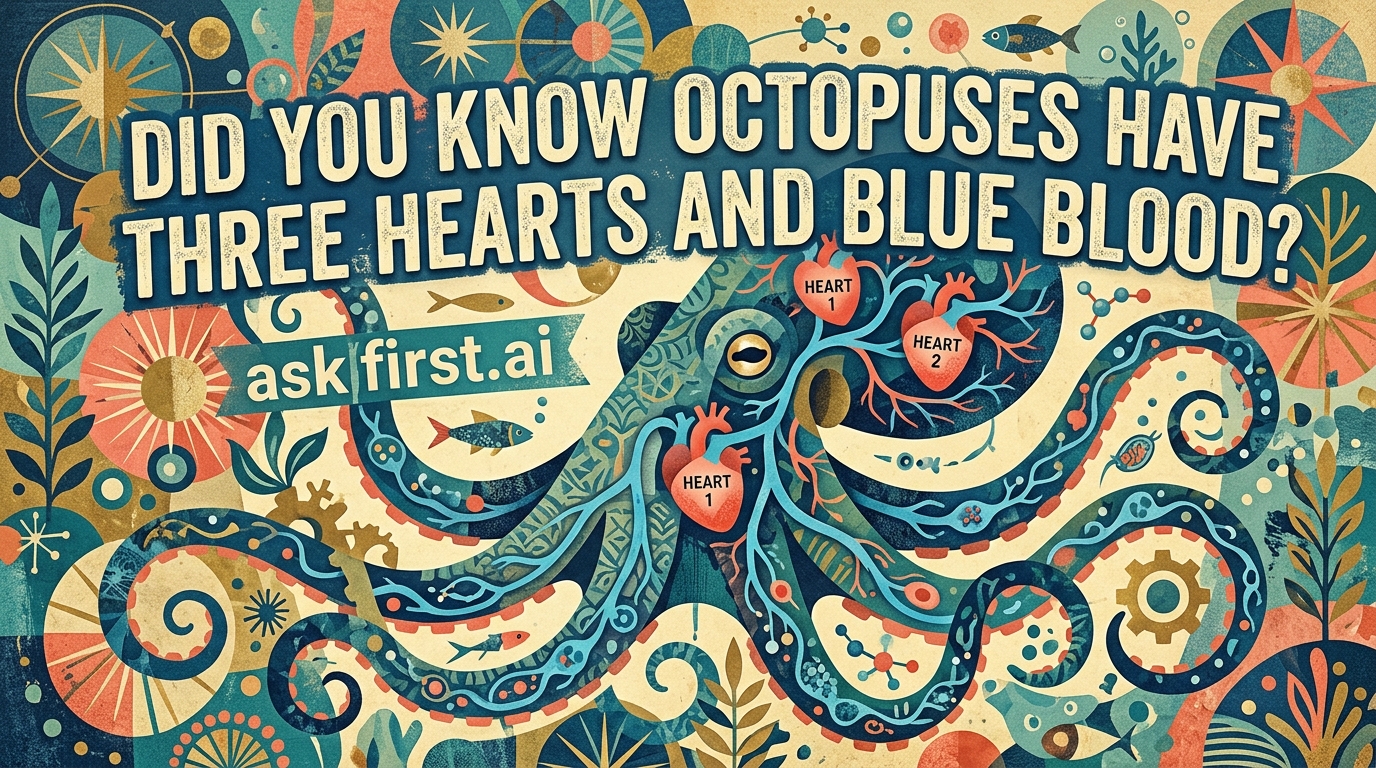
The octopus, a member of the cephalopod family, stands as one of the most intellectually complex and physically distinct creatures on Earth. Beyond their ability to change color and squeeze through impossibly small gaps, they possess a unique physiology that separates them from the rest of the animal kingdom. The presence of three hearts and blue blood is not merely an evolutionary oddity; it is a highly specialized biological adaptation for survival in the deep ocean.
The Mechanics of the Three-Heart System
Unlike humans and other vertebrates that rely on a single, central pumping organ, octopuses have distributed this vital task.
- The Systemic Heart: The primary heart is responsible for circulating oxygenated blood throughout the body. It pumps blood to the tissues and organs, ensuring that the necessary energy reaches the muscles.
- The Branchial Hearts: The two smaller, auxiliary hearts are situated near the gills. Their specific function is to pump deoxygenated blood through the gills, where gas exchange occurs.
When an octopus swims, the systemic heart momentarily ceases to beat. This is precisely why these creatures prefer to crawl along the sea floor; sustained swimming is physiologically taxing because their main blood-pumping engine pauses during the act. This delicate physiological trade-off highlights how their circulatory system is optimized for rest and hunting rather than endurance-based movement.
Why is the Blood Blue?
While humans use hemoglobin—a protein containing iron—to transport oxygen, octopuses utilize hemocyanin. Hemocyanin is a copper-based protein that gives their blood a distinct blue hue.
This difference is not superficial; it is rooted in environmental necessity. Copper-based hemocyanin is significantly more efficient than iron-based hemoglobin when it comes to transporting oxygen in environments that are cold and possess low oxygen levels. Because the deep ocean is naturally frigid and oxygen-poor, the copper-rich blue blood of the octopus allows them to thrive where other species would struggle.
Intelligence Beyond Biology
The anatomical uniqueness of the octopus is matched only by its cognitive capacity. Research has shown that these invertebrates possess a distributed nervous system. While a central brain exists, approximately two-thirds of an octopus's neurons are located in its arms. This allows each tentacle to function with a degree of autonomy, effectively 'thinking' and reacting to stimuli without needing constant input from the central brain.
This intelligence manifests in various ways:
- Problem-Solving: Octopuses have been observed solving complex puzzles, unscrewing jars to access food, and even navigating through intricate mazes.
- Tool Use: They are among the few invertebrates documented using tools, such as utilizing coconut shells as portable armor or shelter.
- Observational Learning: Studies suggest that octopuses can watch others and mimic behaviors, showcasing a form of social intelligence previously thought to be exclusive to vertebrates.
Evolutionary Significance
Evolutionary biology views the octopus as a triumph of adaptation. By diverging from the traditional mollusk body plan, they have managed to occupy a niche that requires high agility, incredible camouflage, and specialized metabolic processes. Their nervous system, which evolved independently of vertebrates, provides a fascinating parallel in how intelligence can emerge in different forms throughout the natural world.
A Final Note on Marine Stewardship
Understanding the biology of creatures like the octopus is essential for marine conservation. As the ocean faces changing temperatures and chemical compositions, the reliance on copper-based hemocyanin might dictate how these creatures adapt in the coming decades. Their health serves as a bio-indicator for the broader vitality of the marine environment.
By continuing to study these 'aliens of the sea,' humanity gains deeper insights into the versatility of life. The next time a fascination with the ocean arises, consider the three-hearted wonder crawling across the seabed, a masterpiece of biological engineering that reminds us how diverse and resilient life can truly be. Whether it is their ability to regrow limbs or their capacity to blend into any texture, the octopus remains a perpetual source of scientific wonder.