The Psychology of Parasocial Connection
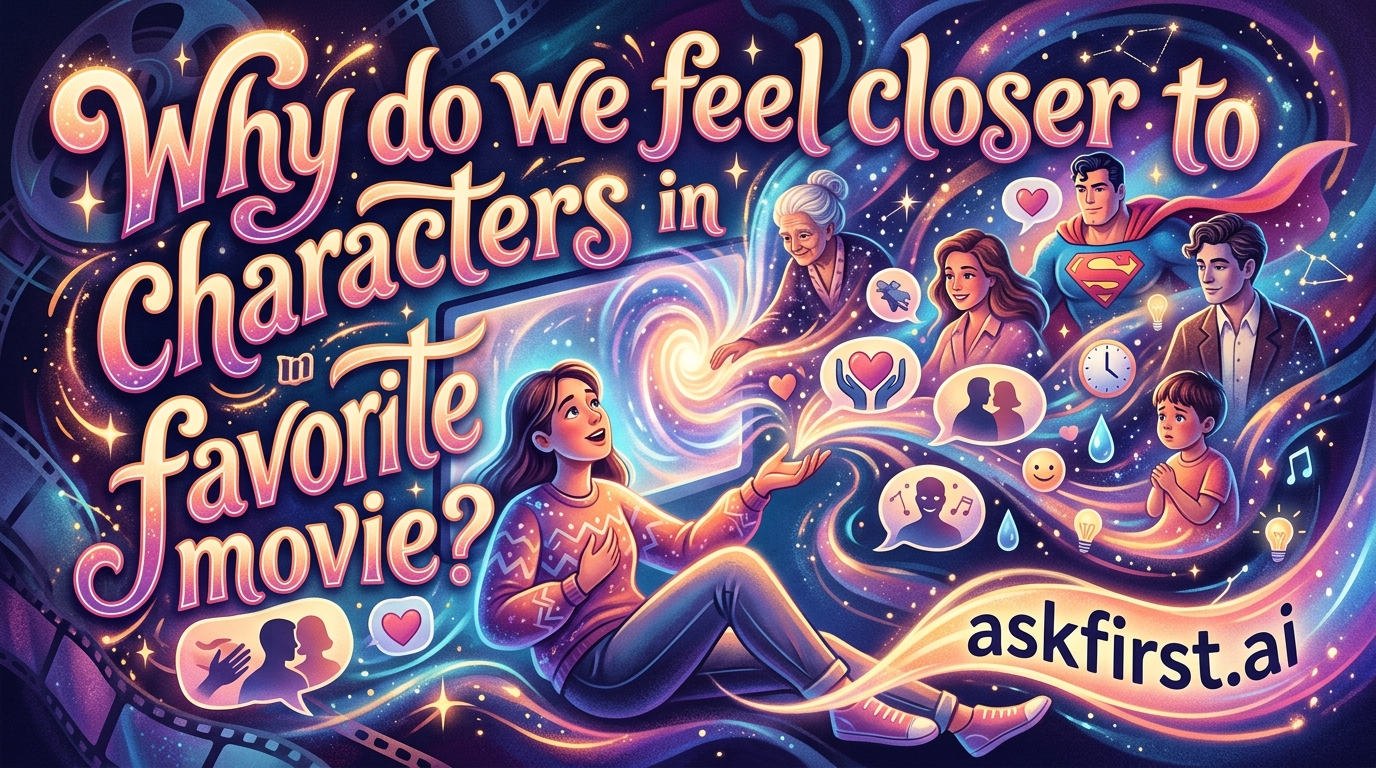
The phenomenon of feeling profound emotional intimacy with fictional characters is rooted in a psychological construct known as a parasocial relationship. Originally coined by sociologists Donald Horton and Richard Wohl in 1956, this term describes the one-sided relationships where individuals invest emotional energy, interest, and time into media personas. While the relationship is asymmetrical—the character does not know the viewer—the brain processes these interactions through the same neurological pathways used for real-life friendships.
Mirror Neurons and Empathy
At the core of this connection lies the system of mirror neurons. When viewers watch a movie, their brains fire in patterns that mimic the emotional states of the characters on screen. If a character experiences a moment of triumph or a heartbreak, the spectator's brain often mirrors that biological response. This creates an immersive state where the boundary between self and other becomes temporarily porous. Because human evolution primed the brain to seek social cohesion, these mirrored experiences trick the psyche into categorizing the character as part of the 'in-group,' triggering feelings of loyalty and genuine affection.
Transportation Theory
Research into Transportation Theory, popularized by psychologist Melanie Green, suggests that when viewers are 'transported' into a narrative world, they undergo a shift in mental state. During this immersion, the viewer's real-world beliefs, values, and environment fade into the background. As the narrative progresses, the viewer adopts the character's perspective, experiencing the story through their eyes. By the end of a long-form film or franchise, the sheer volume of time spent in the company of these characters—combined with the emotional intensity of the narrative arcs—leads to the development of deep, lasting emotional bonds.
The Role of Projection and Self-Identification
Often, the attraction to a character serves as a reflection of the viewer's own internal identity. This is known as self-referential processing. Individuals gravitate toward characters who embody qualities they admire or possess. By identifying with a character, the viewer vicariously experiences the character's growth, challenges, and eventual success. This creates a psychological 'mirror' where the viewer validates their own struggles and aspirations. Consequently, when a character faces an obstacle, the viewer perceives the threat as personal, deepening the sense of intimacy and concern.
Evolutionary Utility: Why Brains Crave Connection
From an evolutionary standpoint, the human brain is a social machine. For most of history, bonding with others was essential for survival. Modern media acts as an extension of the tribal campfire. Humans are wired to tell stories to understand the world and their place in it. Characters become archetypes that provide a safe 'laboratory' for navigating complex social scenarios, ethics, and emotions without real-world consequences. This safe space allows for experimentation with different facets of personality, which is why individuals often feel that they 'learn' or 'grow' alongside their favorite fictional figures.
The 'Attachment' Framework
Psychologists have identified that the intensity of these bonds often aligns with attachment theory. Individuals with 'secure' attachment styles often form healthy, appreciative bonds with characters as a form of leisure or comfort. Conversely, those seeking companionship or emotional regulation might rely more heavily on these parasocial ties. The predictability of a movie—knowing the character will be there exactly as they left them—provides a unique sense of comfort and stability, acting as an anchor in a chaotic or stressful external reality.
Why This Connection Remains Evergreen
Despite the advancement of technology, the mechanism of connection remains constant because the underlying biology of human empathy does not change. As long as narratives are structured around relatable human conflicts—fear, ambition, love, and sacrifice—the brain will continue to treat characters as vital social participants. This phenomenon is a testament to the power of human storytelling, demonstrating that we are not merely watching pixels or actors, but rather participating in a shared emotional architecture that defines what it means to be human in any century.