The Intersection of Auditory Preference and Personality Architecture
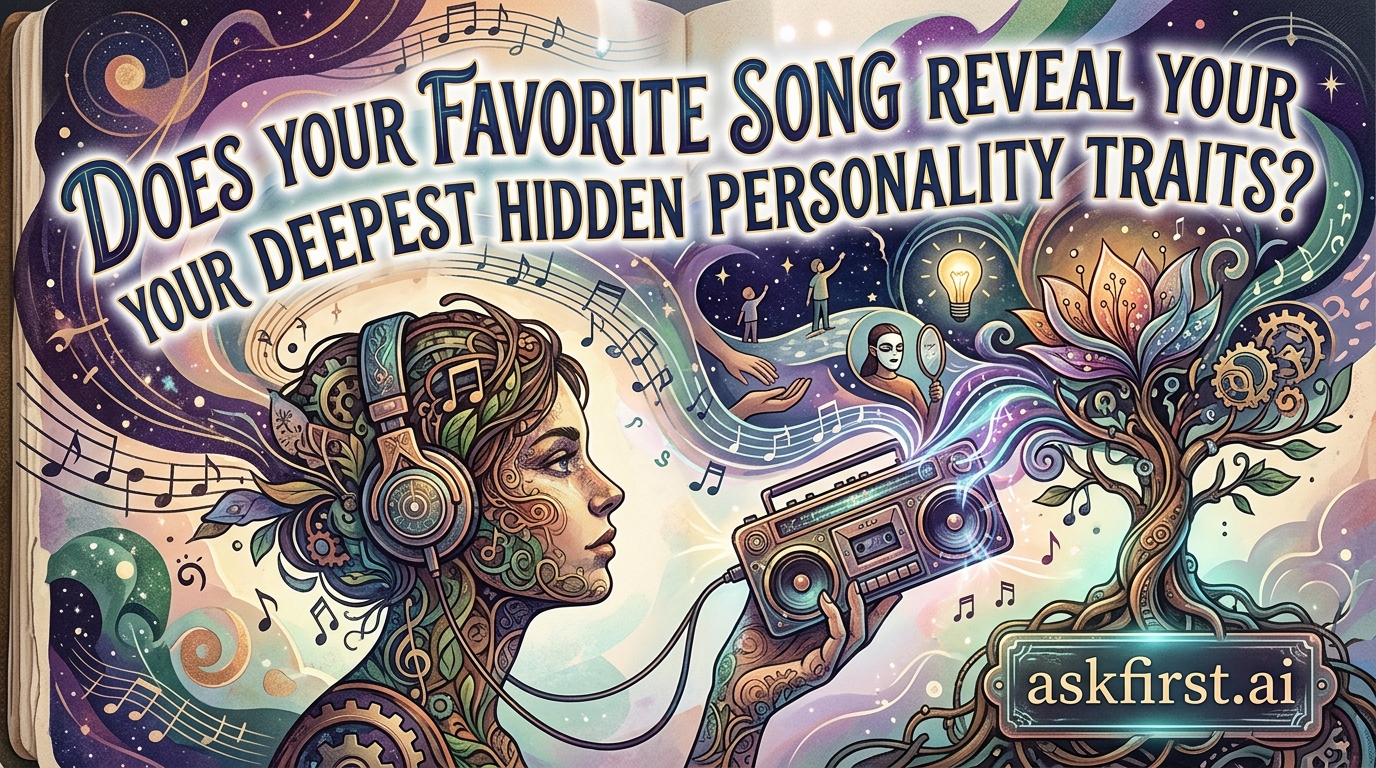
Human musical preferences are far from arbitrary. While cultural background and upbringing play a significant role in early exposure, the long-term emotional bond formed with a favorite song acts as a psychological fingerprint. Research in the field of music psychology suggests that individuals do not simply enjoy a song; they align with its structural, lyrical, and harmonic composition, which often mirrors their internal cognitive architecture. This phenomenon is rooted in the way the brain processes complex aesthetic stimuli, connecting specific sonic patterns to personality traits defined by the 'Big Five' model: Openness, Conscientiousness, Extraversion, Agreeableness, and Neuroticism.
The Openness to Experience and Complex Rhythms
Individuals who score high in 'Openness to Experience' typically favor complex, intellectually stimulating, or unconventional music. This genre list often includes jazz, classical, or progressive rock. Such individuals are usually characterized by their curiosity, unconventional thinking, and appreciation for nuance. Their favorite songs often feature non-linear structures or intricate layers of instrumentation, indicating a mind that craves intellectual growth and avoids the stagnation of repetitive, predictable pop loops. These listeners are often prone to introspection and possess a high degree of imagination.
The Relationship Between Extraversion and Sonic Stimulation
Extraversion is strongly correlated with a preference for high-energy music characterized by heavy basslines and rhythmic dominance. Music that serves as a vehicle for social interaction, such as dance, electronic, or upbeat contemporary pop, appeals to those who gain energy from external stimulation. These songs serve as an externalization of their inherent desire for social engagement and excitement. The fast tempo and high decibel levels often align with the reward-seeking brain chemistry of extraverts, who find comfort and validation in environments that reflect their internal dynamism.
Agreeableness, Empathy, and Lyrical Resonance
People with high levels of 'Agreeableness' frequently gravitate toward music that emphasizes lyrical harmony, emotional vulnerability, and acoustic arrangements. Their favorite songs often tell a story, prioritizing human connection, compassion, and gentle instrumentation. Research suggests that these individuals possess high levels of empathy and prioritize communal or relational values. The focus on melody and soothing textures reflects a desire for social cohesion and an aversion to conflict, mirroring their real-world approach to interpersonal relationships.
Neuroticism and Emotional Regulation
Contrary to popular myths that link specific dark genres solely to negativity, the connection between 'Neuroticism' and music is primarily about emotional regulation. Those who score higher in neuroticism often utilize music as a tool to manage overwhelming emotions. This does not necessarily mean they favor sad songs; rather, they may use aggressive or intense music as a cathartic release for feelings of anxiety or overstimulation. Music acts as a compensatory mechanism, providing a safe container for complex internal states and helping to soothe the nervous system through sonic immersion.
The Theory of Optimal Complexity
Psychologists often refer to the 'Theory of Optimal Complexity' to explain why we latch onto specific anthems. The brain seeks a balance between familiarity and novelty. A song that is too simple becomes boring, while one that is too chaotic becomes taxing. A favorite song is often the 'Goldilocks' zone for a person’s nervous system. It represents the perfect level of cognitive load that the listener can handle, suggesting that the complexity of your favorite track is a direct reflection of your need for mental stimulation versus mental comfort.
How to Decode Your Own Musical Signature
- Identify the Core Motif: Is your favorite song defined by its complex beat, its lyrical depth, or its atmosphere? This identifies your primary psychological driver—whether it be logic, emotion, or social energy.
- The Temporal Context: Do you reach for this song during stress or relaxation? If it is a stress-relief tool, it reveals your coping mechanisms. If it is a celebration tool, it reveals how you express your joy.
- Lyrics vs. Soundscape: Do you find yourself memorizing every word (logical/narrative-focused) or drifting away into the production (abstract/sensory-focused)? Each approach highlights different cognitive strengths.
Ultimately, while a favorite song cannot map every intricate detail of a person's life, it serves as a powerful barometer for emotional processing styles. By analyzing why certain rhythms and melodies resonate so deeply, one gains a fascinating insight into the silent, internal mechanisms that govern their outlook on the world. Music is not just entertainment; it is an external mirror of our internal complexity, remaining a constant, ever-relevant tool for self-discovery.