The Psychology of Instant Chemistry
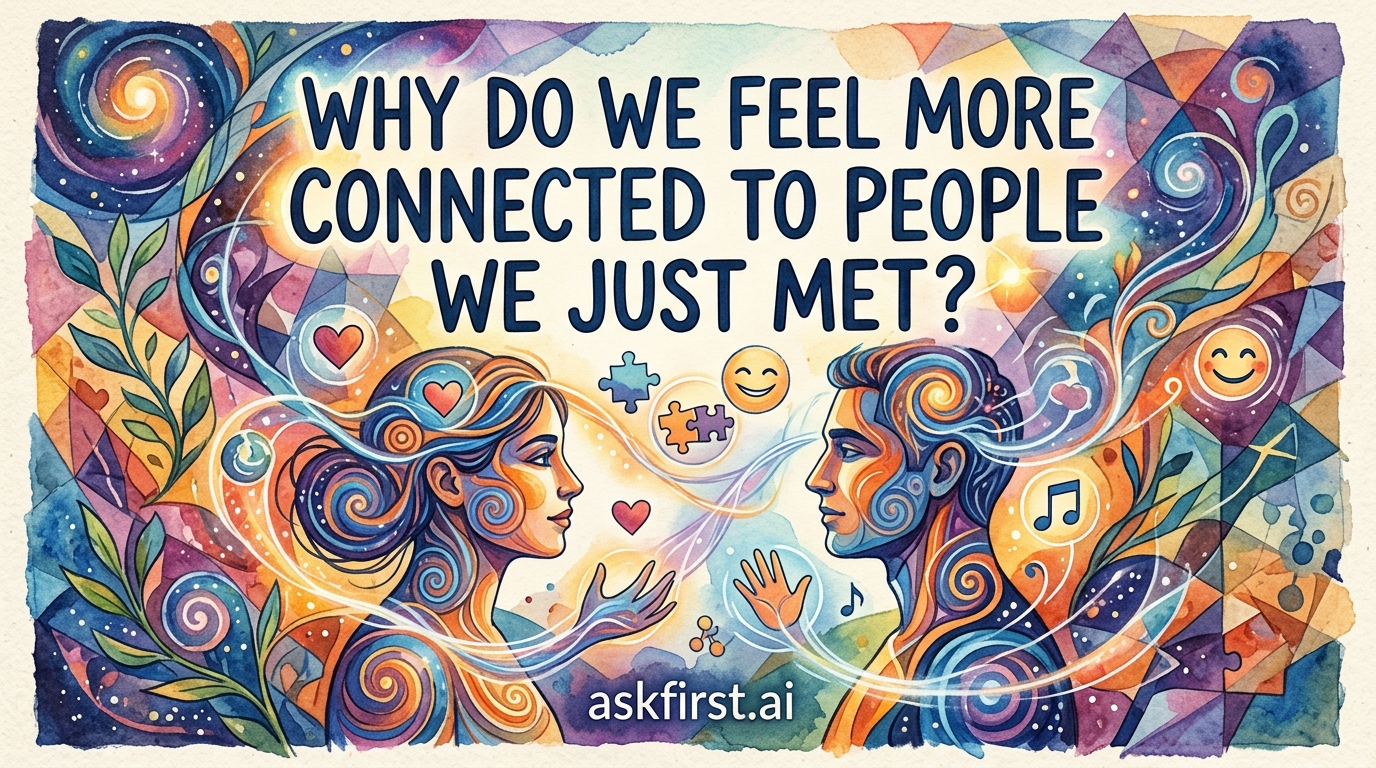
The phenomenon of 'instant connection'—that inexplicable feeling that you have known a stranger for years within minutes of meeting them—is a subject of intense interest in social psychology. While it defies conventional logic regarding relationship building, it is rooted in biological, psychological, and evolutionary mechanisms that prioritize social efficiency.
1. The Power of Mirror Neurons and Neural Coupling
At the core of this experience lies the activation of mirror neurons. These specialized brain cells fire both when we perform an action and when we observe someone else performing the same action. When two people meet and engage in fluid conversation, their neural patterns begin to synchronize. This is known as neural coupling. Research suggests that when two individuals share a story or an emotional moment, their brain waves align, creating a shared reality that feels inherently safe and intimate. This neurological synchronization acts as a shortcut to intimacy, tricking the brain into feeling a deeper history than exists.
2. The 'Similarity-Attraction' Effect
Humans are biologically hardwired to seek familiarity as a safety mechanism. When we meet someone who reflects our own values, speech patterns, or even body language—a process called mirroring—we experience the 'Similarity-Attraction' effect. This is not necessarily about deep personal values; it can be as superficial as a shared hobby or a mutual acquaintance. The brain interprets these micro-similarities as signals of 'social safety,' effectively bypassing the usual period of guarded evaluation. The mind concludes: 'You are like me, therefore you are safe.'
3. Evolutionary Safety and Social Cohesion
From an evolutionary standpoint, the ability to quickly assess potential allies was a survival imperative. In early human history, the capacity to forge rapid alliances within a tribe allowed for better resource gathering and protection. We possess a 'quick-read' social intuition designed to identify potential partners, friends, or allies who can help us thrive. When we meet someone new and feel an instant click, it is often our evolutionary software identifying a 'high-value connection' that might enhance our survival or social standing within a group.
4. The Role of Self-Disclosure
Psychologist Arthur Aron’s famous study on generating closeness via the '36 Questions' highlighted that rapid, reciprocal self-disclosure facilitates intimacy. Sometimes, when meeting someone new, an immediate sense of openness occurs. If both parties skip the 'small talk' barrier and dive into more vulnerable territory, the brain perceives this as a high-trust interaction. Vulnerability signals trust, and trust is the bedrock of long-term bonding. When a stranger reciprocates this vulnerability, it creates a powerful emotional loop that accelerates perceived closeness.
5. Projective Identification and Idealization
There is also a psychological component related to projection. When we meet someone, we often project our own positive traits, desires, or 'ideal self' onto them. If the stranger possesses traits we admire, we may mentally fill in the blanks of their personality with characteristics we favor. This cognitive bias, often called the 'Halo Effect', leads us to attribute deeper, more favorable qualities to someone based on a positive first impression. We feel connected because we are effectively falling in love with a version of them that our own mind has curated for our satisfaction.
Summary Table: Drivers of Instant Connection
| Driver | Mechanism | Psychological Impact |
|---|---|---|
| Mirror Neurons | Neural synchronization | Feeling understood without words |
| Similarity-Attraction | Recognition of self in others | Reduced social anxiety |
| Social Intuition | Evolutionary survival instinct | Quick identification of allies |
| Vulnerability | Reciprocal self-disclosure | Rapid trust development |
Managing the Illusion
While feeling an instant connection is an exhilarating and often positive experience, it is helpful to remain cognizant that this feeling is subjective. It is a fusion of our internal projections and the stranger’s immediate presentation. These connections are often potent starting points for profound relationships, but they require the passage of time to transition from an 'instant spark' to a sustained, grounded bond. The brain is an expert at creating narrative meaning out of sensory input; understanding this allows us to embrace the joy of new connections while acknowledging the beauty of the mystery they represent.