The Intersection of Biology and Intuition
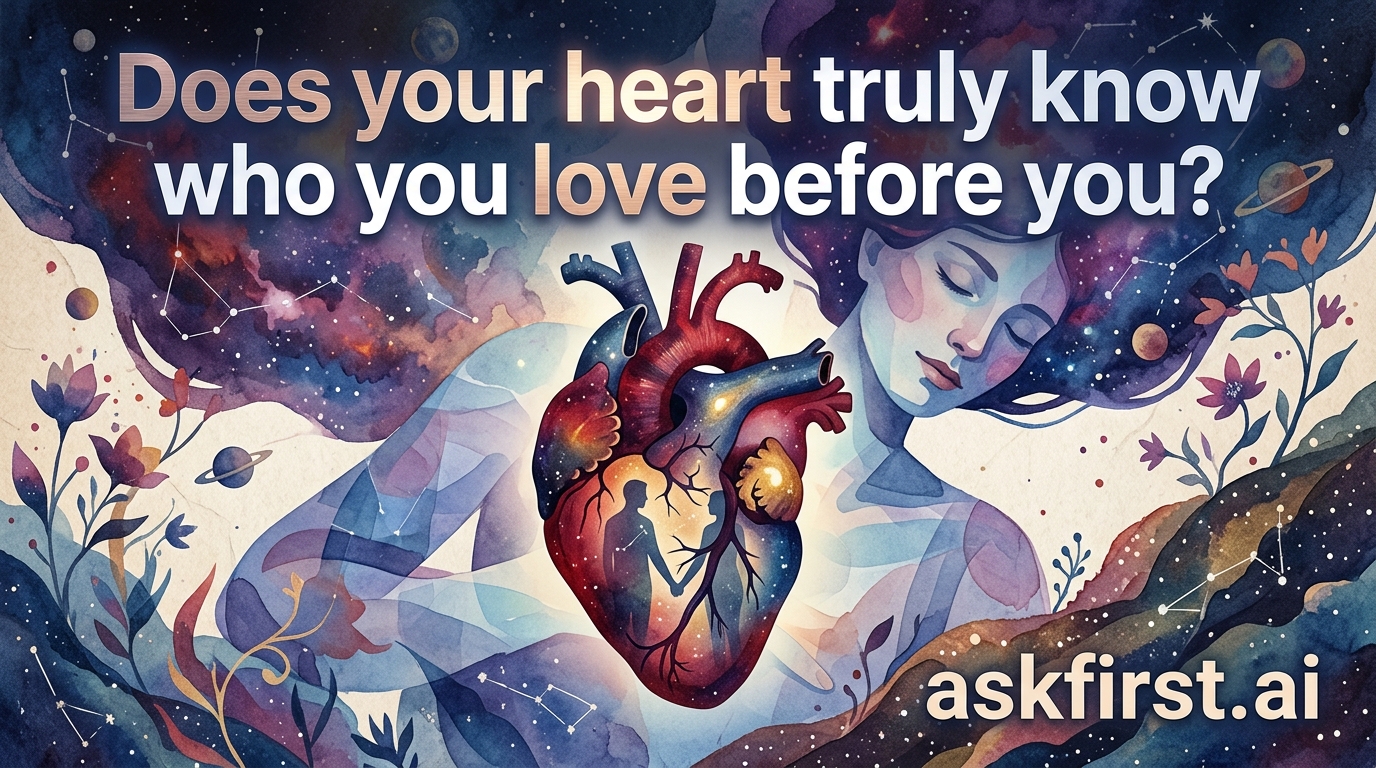
The age-old debate regarding whether the heart possesses a form of 'pre-cognitive' knowledge about romantic attraction is a fascinating synthesis of neuroscience, psychology, and physiological response. While popular culture often attributes deep emotional insight to the heart, science suggests a more complex dance between the autonomic nervous system, the brain's rapid-fire pattern recognition, and subconscious emotional processing. Often, a person feels an inexplicable 'pull' toward another long before the conscious mind has constructed a logical rationale for such affection.
The Role of the Autonomic Nervous System
The feeling of the 'heart knowing' often stems from the body's visceral response to stimuli. The heart is intrinsically linked to the vagus nerve and the enteric nervous system, often referred to as the 'second brain.' When an individual encounters someone who fits an unconscious set of criteria for genetic or emotional compatibility, the body undergoes subtle changes. These include:
- Elevated Heart Rate: A microscopic increase in beats per minute, even before the individual is aware of why.
- Pupillary Dilation: The autonomic response to interest or excitement.
- Hormonal Cascades: The rapid release of oxytocin and dopamine, which occur in milliseconds, affecting the body's state before the prefrontal cortex—the part of the brain responsible for logical deliberation—can process the encounter.
Because these physical shifts occur in the body's 'control center' for emotion and survival, it feels as though the heart has 'decided' on affection before the mind has even started its evaluation.
Neuroscience and Subconscious Pattern Matching
Modern neuroscience indicates that the brain is a powerful prediction machine. It constantly compares new experiences against a massive library of past memories, social templates, and evolutionary biological markers. This process, known as 'rapid cognition' or 'thin-slicing' (as explored in psychology by researchers like Malcolm Gladwell), allows the brain to make complex decisions in a fraction of a second.
When a person meets a potential partner, the brain cross-references the individual's micro-expressions, pheromonal profile, and linguistic patterns against existing mental schemas. If the data matches a 'safe' or 'desirable' partner, the brain signals an positive emotional state. Because this happens outside of conscious awareness, the resulting sensation of being 'drawn' to someone feels like an intuitive, mystical truth originating in the heart rather than an analytical calculation occurring in the brain.
The Biological Basis of Attraction
Evolutionary psychology provides further insight into this phenomenon. Humans are hard-wired to identify mates who offer genetic fitness or emotional stability. Scientific research into Major Histocompatibility Complex (MHC) genes, for example, suggests that humans are naturally attracted to individuals whose immune systems are different from their own, as this promotes offspring health. This 'biological knowledge' of compatibility bypasses the conscious mind entirely. A person might feel an inexplicable attraction that is actually the result of ancient, biological, and deep-seated detection systems operating far below the surface of conscious thought.
Can We Trust This 'Heart-Knowledge'?
While the feeling that the heart knows first is profound, it is essential to distinguish between biological intuition and psychological projections. Sometimes, what the heart detects as 'love' is actually 'familiarity.' If a person grew up in a chaotic environment, the brain might recognize those same chaotic patterns in a new partner and signal 'love' simply because the pattern feels 'home.'
Experts suggest a balanced approach to these intuitive feelings:
- Acknowledge the Feeling: Recognize that the initial spark is often a powerful subconscious processing of information.
- Engage the Conscious Mind: Once the 'heart' has reacted, bring in the prefrontal cortex to analyze the person's values, communication style, and long-term goals.
- Validate over Time: True, enduring love requires more than a biological spark; it requires the cognitive alignment of life goals and mutual respect.
Conclusion
In essence, the heart does not 'know' in a literal or mystical sense, but it does act as a receiver for the massive amounts of data processed by the subconscious mind and the nervous system. By the time a person consciously realizes they are in love, the brain and body have likely already spent days or weeks gathering evidence and confirming compatibility. That feeling of 'sudden' love is actually the final, conscious realization of a process that has been silently underway, proving that intuition is often just an intelligence we do not yet fully understand.