The Psychology of the 'Norman Door' Phenomenon
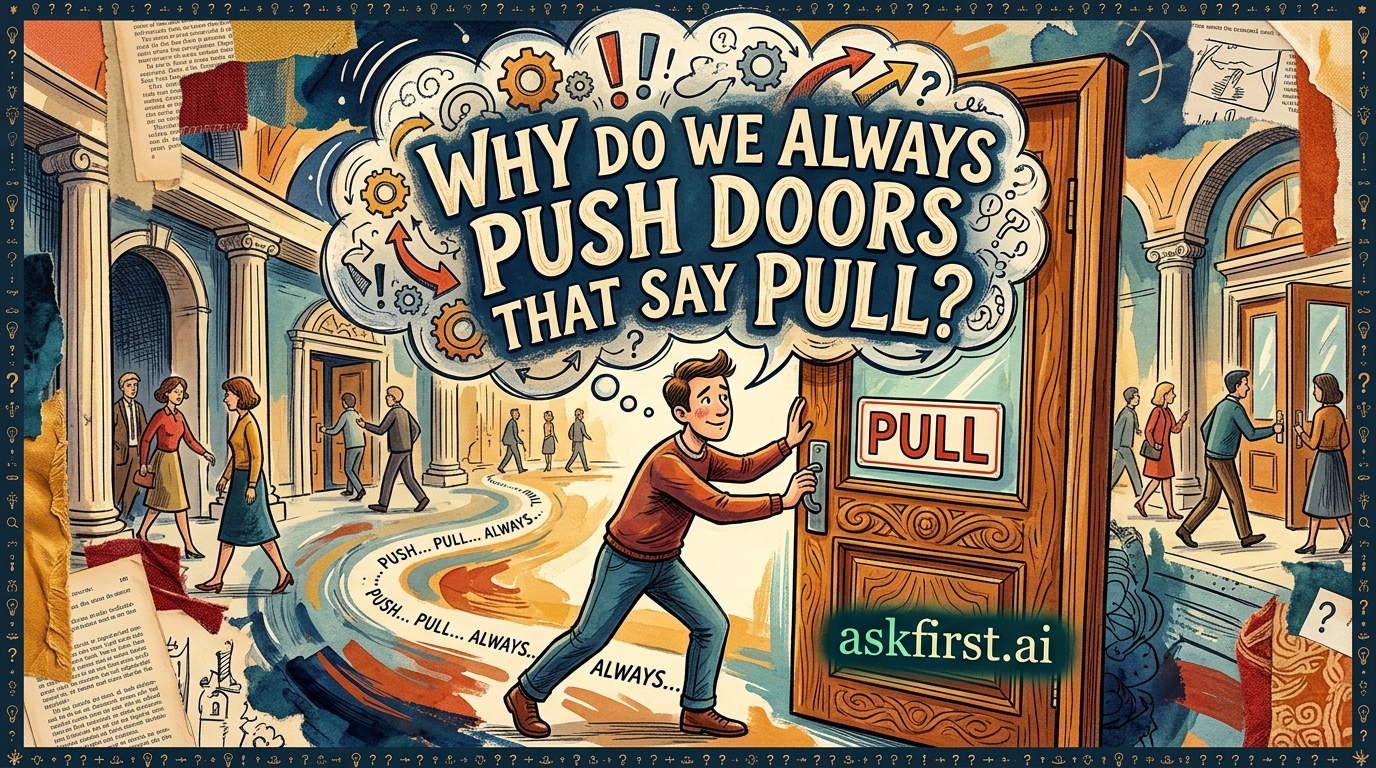
Human interaction with everyday objects is governed by complex cognitive processes that often operate beneath the level of conscious thought. The phenomenon of pushing a door that clearly indicates 'pull' is a classic example of a design failure known as a Norman Door, named after Don Norman, the pioneer of user-centered design. This occurrence reveals profound insights into human psychology, environmental design, and the subtle ways our brains process visual information versus physical affordances.
The Role of Affordances
The fundamental issue lies in what designers call affordances. An affordance is a visual clue about how an object should be used. For instance, a flat metal plate on a door signals that one should push it, while a vertical handle or a U-shaped bar naturally invites a pulling motion. When the physical structure of the door creates a 'push' affordance, the human brain is hardwired to follow that physical cue, regardless of the text printed on a sign. The brain prioritizes sensory and motor interaction over textual analysis because processing physical affordances is faster and more primitive than reading and interpreting language.
Cognitive Overload and Selective Attention
Human attention is a finite resource. In a high-traffic environment, individuals often enter a 'tunnel vision' mode, where the goal is simply to reach the destination—the other side of the door. When navigating a room, the brain creates a mental model of the expected action. If the object appears to be a 'push' door, the brain has already initiated the motor program to push before the eyes even register the linguistic instruction. By the time a person processes the word 'pull,' the muscles are already engaged in the pushing motion, leading to that awkward moment of correction.
The Conflict of Design vs. Semantics
- Sensory Dominance: Humans are evolved to navigate three-dimensional space using physical cues. Touching and manipulating physical objects is an older skill than reading text. When a visual clue (a handle) clashes with a symbolic clue (the word 'pull'), the sensory/physical signal often wins the internal battle.
- Habitual Processing: Most doors in public spaces are either push or pull, but there is no universal standardization. Because humans rely on habit to survive, we project our previous experiences onto new objects. If the last twenty doors were push-operated, the brain expects the twenty-first to be the same.
- The Power of Framing: Signage is often an afterthought in building design. If a door was designed to be pushed, but the fire code or security protocols require it to be pulled, the architect has created an 'error trap.' The design is effectively working against the user's natural instincts.
Why This Won't Go Away
The persistence of the 'pull' error isn't a lack of intelligence but a feature of how human cognition operates. We are 'predictive processing machines.' Our brains generate a model of reality and attempt to fit the environment into that model. When a door is poorly designed, it forces the brain to switch from an automated, subconscious mode (System 1 thinking) to a more deliberate, analytical mode (System 2 thinking), which is energy-intensive and prone to failure when we are in a hurry.
How Proper Design Mitigates Errors
To eliminate this frustration, designers use several evidence-based strategies:
- Eliminate Ambiguity: Remove the push-plate if the door must be pulled. If the surface provides no obvious area to push, the human mind will search for a handle to pull.
- Color and Contrast: Using high-contrast handles helps draw visual focus to the part of the object intended for interaction.
- Haptic Feedback: The surface texture or the resistance level of the door can provide pre-conscious warnings about its operation.
Conclusion
Next time you find yourself pushing a 'pull' door, recognize it not as a personal failure, but as a fascinating interaction between your neural programming and a design that missed the mark. Understanding that our brains favor physical affordances over text explains why we ignore signs and trust our instincts. Ultimately, the best doors are those that never require a sign at all, because their design dictates exactly how they should be operated, aligning seamlessly with human intuition.