The Science of Auditory Perception and Self-Recognition
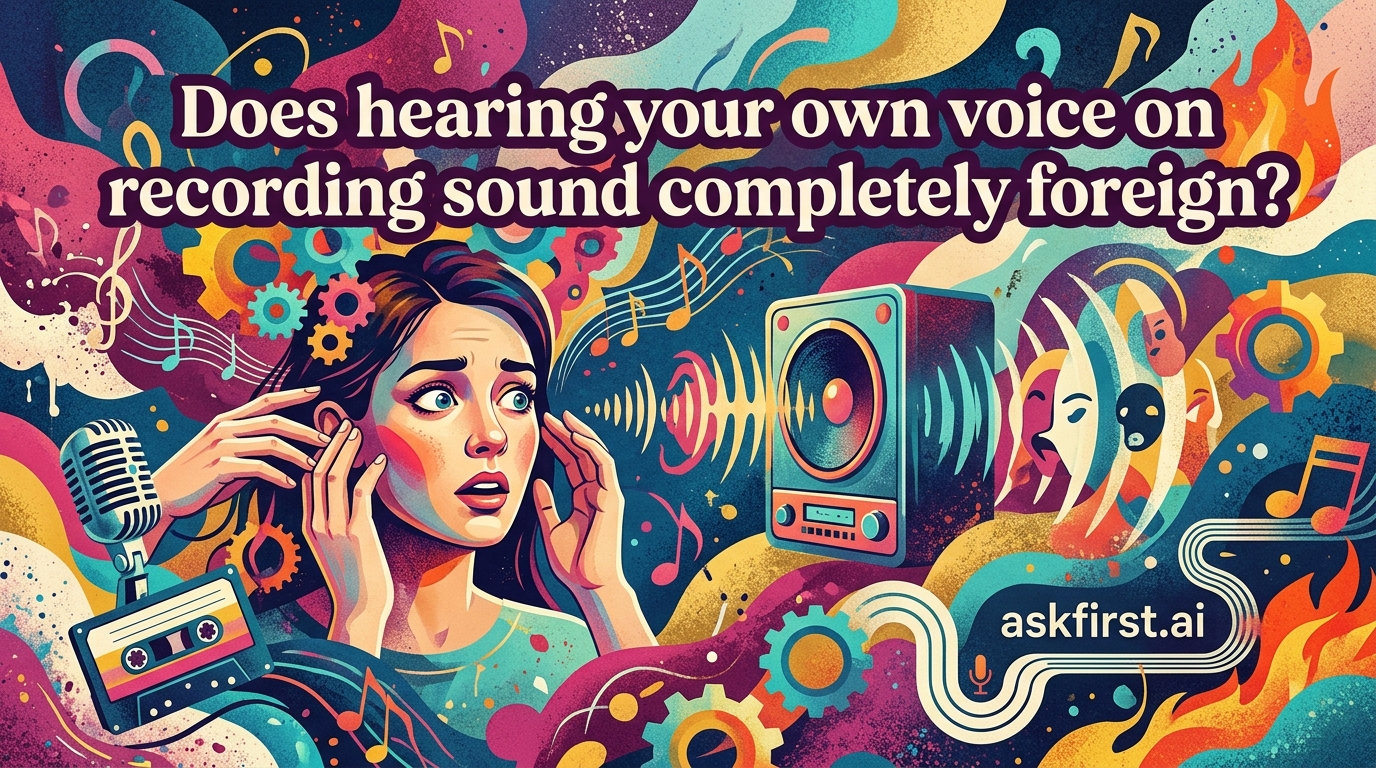
It is a near-universal human experience: the jarring, often uncomfortable sensation of hearing a voice recording of oneself. Many individuals feel a profound sense of detachment, as if the voice belongs to a stranger rather than their own identity. This phenomenon is not merely a matter of self-consciousness but a result of complex physiological, neurological, and acoustic processes that distinguish how sound travels to the brain.
The Mechanism of Bone Conduction vs. Air Conduction
To understand why a recording sounds 'wrong,' one must differentiate between the two ways sound reaches the inner ear (the cochlea). When people speak, they perceive their own voice through a combination of two pathways:
- Air Conduction: Sound waves exit the mouth and travel through the air to the outer ear canal, similar to how an audience hears a speaker.
- Bone Conduction: Vibrations from the vocal cords travel through the skull bones and soft tissues of the head directly to the inner ear.
Bone conduction emphasizes lower frequencies. Because the bones of the skull are efficient at transmitting lower-pitched sounds, the speaker hears a richer, deeper, and more resonant version of their voice compared to what is broadcast through the air. A recording device, however, captures only the sound transmitted through the air. It strips away the lower-frequency vibrations that the brain is accustomed to 'feeling' internally, resulting in a higher-pitched, thinner tone that feels unfamiliar.
The Psychological Component of Vocal Identity
Beyond the acoustics, there is a strong cognitive bias at play. Humans construct an 'internal model' of themselves. Part of this identity includes the expectation of what one sounds like. When a recording deviates from this internal model, the brain experiences a 'mismatch.' This is similar to the uncanny valley effect in robotics, where something almost human is perceived as distinctly unsettling.
Research suggests that this cognitive dissonance is further exacerbated by the lack of agency. When speaking, the brain is actively engaged in the process of production, predicting the sensory consequences of vocalization. During playback, the brain is relegated to the role of a listener, observing the sound without the corresponding internal motor-command data. This disconnect reinforces the impression that the voice is 'foreign.'
Emotional and Social Factors
Society often dictates that self-perception should be accurate, but auditory self-perception is inherently flawed. For many, this dissonance leads to 'vocal self-consciousness.' It is common to judge one's own voice as too high, nasally, or inconsistent with the personality one wishes to project.
However, it is vital to remember that listeners generally do not experience this discomfort. Other people recognize a recorded voice immediately as the speaker, because they have only ever heard that person through the air-conduction pathway. To the rest of the world, the recording is an accurate representation of the identity. The speaker is the only one who possesses a dual-pathway perception of their own voice, which causes the unique discrepancy.
Can This Perception Be Trained?
It is entirely possible to bridge the gap between internal perception and reality. This process, often utilized by voice actors, broadcasters, and linguists, involves the following strategies:
- Consistent Exposure: Repeatedly listening to recordings of one's own voice helps the brain update its internal model. Over time, the recording stops sounding like a stranger and starts sounding like a standard, acceptable variation of self.
- Active Modulation: By recording and analyzing the voice, individuals can identify specific habits—such as speaking pace, pitch, or clarity—and intentionally adjust them.
- Objective Analysis: Treating a vocal recording as a tool for data rather than a reflection of ego allows the mind to bypass the emotional response.
Summary: A Perfectly Normal Anomaly
Experiencing a sense of foreignness when hearing a recording is not a sign of a disordered identity; it is a testament to the fascinating complexity of the human auditory system. The disconnect is a byproduct of how evolution has prioritized bone-conduction stability for the sake of speech regulation and identity. Understanding that the 'stranger' in the recording is actually how the world hears the self can be a liberating realization. The voice is not alien; it is simply a perspective of the self that, until the advent of recording technology, was biologically impossible to access directly. Embracing this difference can lead to greater vocal confidence and a more sophisticated understanding of human communication.