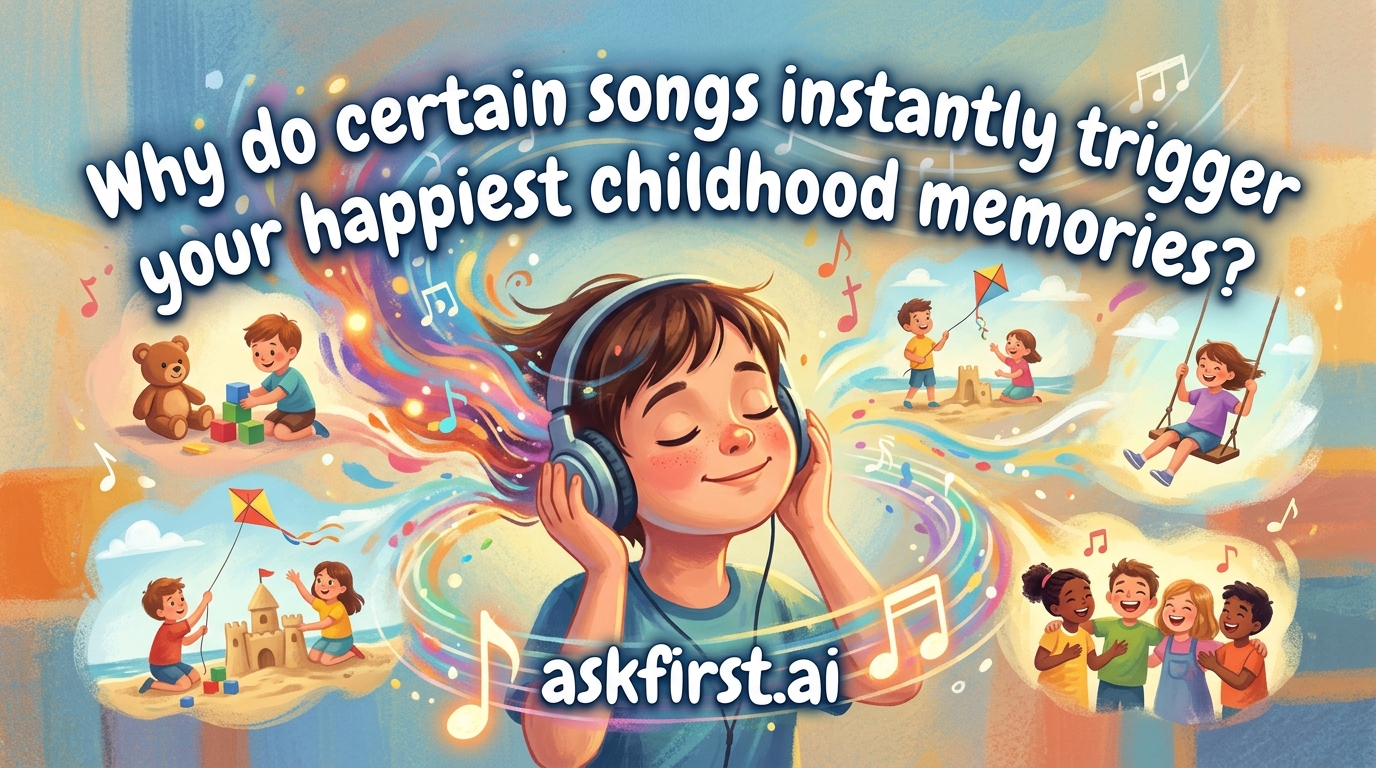
The Neuroscience of Sonic Time Travel
Music serves as a powerful neurological key, unlocking vaults of memory that otherwise remain inaccessible to the conscious mind. When a melody from childhood plays, the brain undergoes a complex process that bridges the gap between auditory perception and emotional recall. This phenomenon is rooted in the involuntary autobiographical memory process, where music acts as a potent stimulus that bypasses typical cognitive barriers to retrieve specific episodic details from the past.
The Role of the Medial Prefrontal Cortex
At the center of this mechanism is the medial prefrontal cortex (mPFC). Research in neuroscience, most notably studies published in journals such as Brain, indicates that this area of the brain is the junction where music, memory, and emotion intersect. Because the mPFC is one of the last areas of the brain to be affected by degenerative processes, it maintains a unique capacity to store and retrieve associations formed during formative years. When an individual hears a song associated with a significant childhood event, this specific region activates, triggering a cascade of neural activity that reconstitutes the sensory and emotional landscape of that period.
The Reminiscence Bump and Emotional Priming
Psychologists often refer to the 'reminiscence bump'—a tendency for people to have heightened memory recall for events occurring during their youth. While this phenomenon is often associated with late adolescence, childhood music triggers operate on a principle of emotional priming. Songs are not merely auditory signals; they are encoded in the brain alongside the neurochemical markers of the emotions felt at the time. If a child felt safe, joyful, or excited during a summer trip, the song playing in the background becomes a permanent 'tag' for those neurochemical states.
- Auditory-Limbic Coupling: Music engages the limbic system, which governs emotions. This creates a stronger connection than visual memory alone, as sound perception is processed in the brain's temporal lobes and directly interfaced with the hippocampus and amygdala.
- Dopaminergic Feedback: Listening to nostalgic music releases dopamine in the striatum, the reward center of the brain. This validates the 'happy' nature of the memory, reinforcing the desire to replay the song.
Why Music Beats Pictures
While photographs offer visual snapshots, music provides a continuous narrative structure. A song is an temporal object; it exists over time, much like the memory it represents. When the rhythm, melody, and lyrics align with a childhood experience, the brain perceives it as a 're-living' experience rather than a mere recollection. This process is known as mental time travel. Scientific findings suggest that auditory cortex stimulation during music exposure is remarkably robust compared to visual stimuli, making music the most reliable anchor for 'episodic retrieval.'
Evolutionary Significance
From an evolutionary perspective, the ability to store information linked to emotional highs—such as community bonding, social cohesion, and safety within a family unit—offered a survival advantage. By associating sound patterns with environments where social bonding was strong, the human brain developed a sophisticated filing system. Music became an shorthand for the social environment of the past. Today, this translates into the ability of a three-minute pop song to instantly transport an adult back to a specific living room, a family car, or a summer day in the distant past.
How to Leverage Your Sonic Landscape
Understanding the science behind music and memory provides a toolkit for emotional regulation.
- Curate for Well-being: Create 'anchor playlists' that contain tracks from periods of high personal growth and positive social connection. These can be utilized to improve mood during stressful transitions.
- Mindful Listening: Pay attention to how your body reacts to nostalgic audio. Recognizing the physical symptoms of nostalgia—such as increased heart rate or a surge of warmth—allows you to observe the process of emotional retrieval objectively.
- Preserve Memories: Share music with younger generations to create shared 'sonic markers' that can bond families across decades.
By engaging with the music of the past, you are not simply indulging in nostalgia; you are actively utilizing one of the most efficient neurological systems the brain possesses to cultivate joy, resilience, and a deeper sense of continuity across the lifespan.