The Philosophical Enigma of Qualia
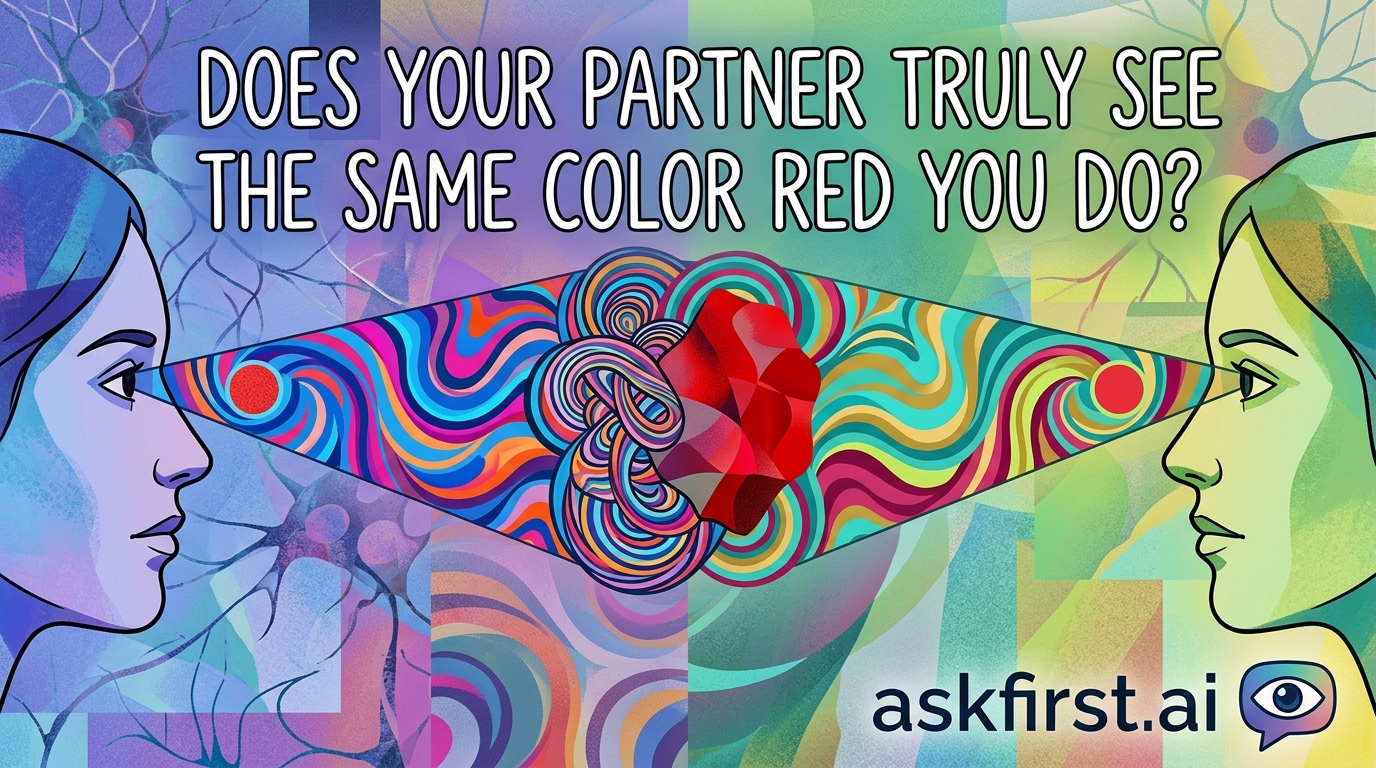
The mystery of whether two individuals perceive the exact same shade of red represents one of the most enduring puzzles in philosophy and neuroscience, known as the problem of qualia. Qualia refers to the subjective, individual instances of conscious experience—the redness of a rose, the bitterness of coffee, or the sound of a bell. While two people can agree that an object is 'red' based on shared linguistic labels, there is currently no objective way to verify if the internal mental experience of that color matches.
The Biological Machinery of Vision
To understand color perception, one must first look at the biology of the human eye. Most humans possess three types of cone cells in the retina, sensitive to different wavelengths of light: short (blue), medium (green), and long (red). When light hits these cones, electrical signals are sent to the visual cortex. However, the exact density of these cones varies from person to person. Genetic variations mean that the 'threshold' for activating a specific cone can shift, potentially altering the baseline perception of hue.
Neuroplasticity and Cultural Interpretation
Beyond basic anatomy, the brain plays a pivotal role in constructing our reality. Research suggests that language significantly shapes how we categorize and identify colors. For instance, cultures that lack a distinct word for 'blue' often struggle to distinguish it from 'green' in rapid testing scenarios. This indicates that the visual cortex does not operate in a vacuum; it is constantly influenced by environmental input, linguistic frameworks, and learned associations. If an individual has spent a lifetime associating 'red' with warmth, fire, and urgency, their neurological pathway for that color is reinforced differently than someone who views it as a purely aesthetic label.
The 'Inverted Spectrum' Thought Experiment
The classic philosophical thought experiment known as the Inverted Spectrum posits that a person could be born with their color perceptions swapped—what they see as 'red' would be what someone else sees as 'green.' Because both individuals learn the linguistic label 'red' for the longest wavelength, they would pass every color-blindness test and social interaction perfectly. This demonstrates the gap between objective light physics and subjective mental states. We observe the same light frequencies, yet the final 'render' on the mental screen remains a private experience.
Genetic and Environmental Factors
- Tetra-chromacy: A small percentage of the population possesses a fourth cone type, allowing them to distinguish subtle gradations of color that remain invisible to the average person. This genetic mutation highlights that human perception is not a fixed universal standard.
- Synesthesia: Some individuals experience 'chromesthesia,' where they see colors in response to sounds or textures. This further complicates the notion of a 'standard' visual experience, proving that brain wiring can lead to radically different interpretations of the same stimulus.
- The Aging Eye: As the human lens ages, it tends to yellow, which subtly shifts the color perception of the individual over time. A person in their sixties likely sees the world through a slightly different color filter than they did in their youth.
Why This Matters for Human Connection
Recognizing that our partners may perceive the world differently is not merely an intellectual exercise; it is an act of deep empathy. Accepting that someone else's 'red' might be slightly more vibrant, cooler, or tinged with a different neurological 'texture' humbles the observer. It acknowledges that human consciousness is a collection of individual universes, bound together by the bridges of language and shared reality. While we may never step inside another person's consciousness to compare the data directly, we can appreciate the nuanced beauty of our collective perspectives. Science tells us that while the light hitting our eyes is constant, the art created by our brains is entirely our own.