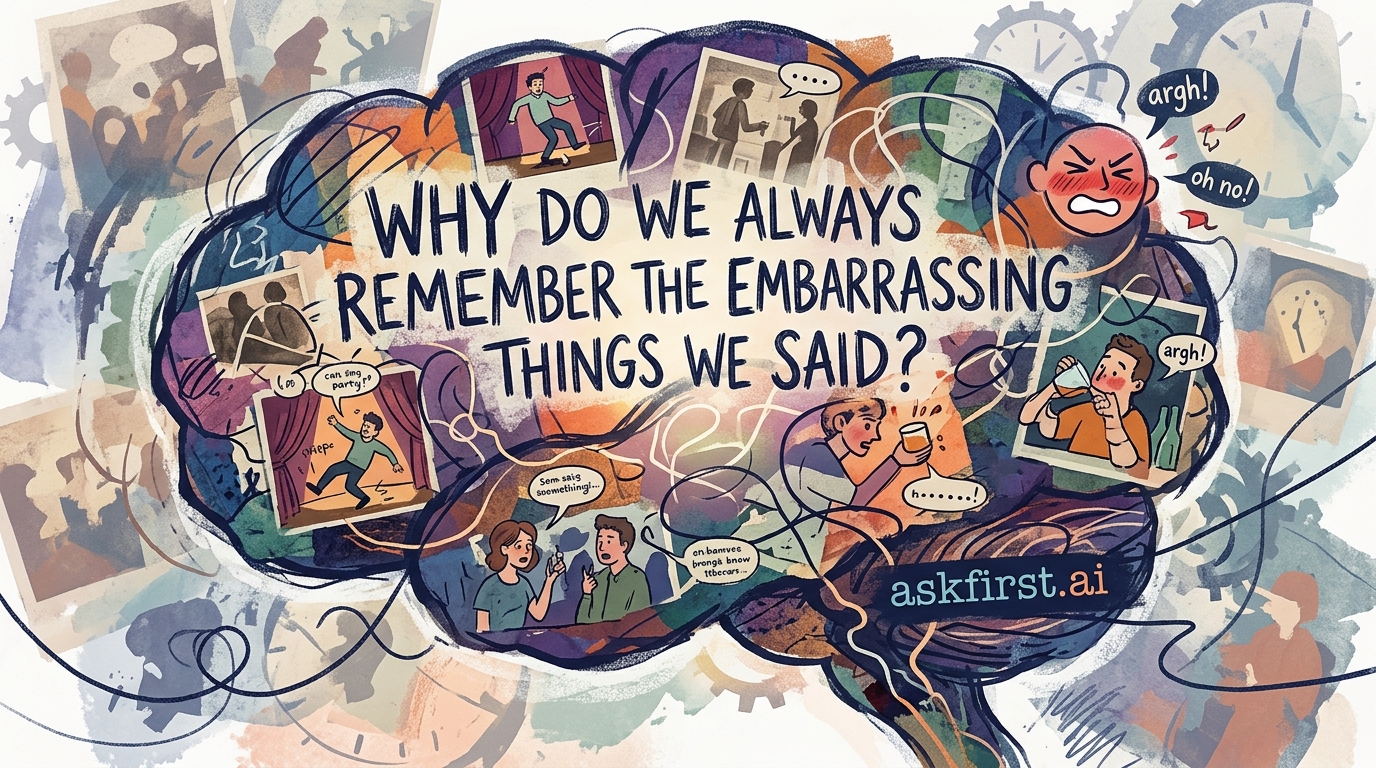
The Evolutionary Architecture of Regret: Why Social Blunders Linger
Human memory is not a perfect recorder of events; it is a highly selective tool designed for survival. When a person experiences a moment of acute social embarrassment, the brain triggers a neurobiological alarm that cements that memory with startling clarity. This phenomenon, often referred to as the spotlight effect or ruminative bias, serves a specific evolutionary purpose: social integration. In ancestral environments, being ostracized from a group was essentially a death sentence. Consequently, the brain developed an advanced early-warning system to prevent the repetition of behaviors that could lead to social exclusion.
The Neurobiology of Cringe
When a social faux pas occurs, the amygdala—the brain’s emotional processing center—goes into overdrive. It signals the release of stress hormones like cortisol and adrenaline, which sharpen memory formation. Simultaneously, the anterior cingulate cortex, which is involved in error detection and emotional regulation, activates to register the social violation. This biological reaction ensures that the brain prioritizes the retrieval of this specific memory over neutral experiences, creating a persistent, vivid mental recording that is easy to access and impossible to ignore.
The Psychology of the Spotlight Effect
One of the primary reasons we obsess over minor slips of the tongue is a cognitive bias known as the Spotlight Effect. Human beings naturally assume that they are the center of attention, leading to the false belief that observers are scrutinizing our every word and movement with the same level of intensity that we apply to ourselves. In reality, most people are preoccupied with their own internal dialogues and insecurities. Research in social psychology consistently shows that we significantly overestimate the degree to which others notice our mistakes. Understanding this discrepancy is the first step toward neutralizing the emotional sting of these memories.
Cognitive Dissonance and Self-Concept
Embarrassment arises when there is a clash between one’s 'ideal self' and the 'actual self' revealed during an awkward moment. This state of cognitive dissonance is uncomfortable. To resolve this tension, the brain continually replays the incident, attempting to re-process the event in a way that aligns with the desired self-image. This is why individuals often find themselves mentally editing past conversations, wondering, 'What if I had said this instead?' It is a subconscious attempt to rewrite the narrative to protect one’s ego and social standing.
Adaptive Value: The Silver Lining
While the persistent playback of embarrassing moments feels detrimental, it serves as a powerful mechanism for social calibration. By frequently visiting these memories, the brain performs a 'social simulation,' teaching the individual to identify social cues, adjust communication styles, and avoid repeating mistakes. In essence, the pain of the memory is the brain’s way of ensuring future social compliance. It is the primary feedback loop of emotional intelligence, refining social graces through the lens of trial and error.
Strategies for Mitigating Rumination
To move past the persistent recall of minor social blunders, consider the following evidence-based techniques:
- Perspective Shifting: Force the brain to view the event from the perspective of an objective observer. Would an outsider even remember this mistake five minutes later? Likely not.
- Cognitive Reappraisal: Instead of viewing the embarrassment as a failure of personality, reframe it as a sign of human growth. It signifies that the individual is actively engaging with the world.
- Mindfulness and Acceptance: Acknowledge the thought without judgment. Instead of fighting the memory, observe it as a transient neurological event. The more resistance applied to a thought, the more 'sticky' that thought becomes.
- The 'So What?' Test: Ask whether this specific memory will matter in one week, one month, or one year. Placing the event within a larger temporal context naturally shrinks its perceived importance.
Conclusion: Embracing the Human Condition
Ultimately, the ability to feel and remember embarrassment is a testament to the complexity of the human social brain. It is an indicator of empathy and a desire for meaningful connection. By understanding that these memories are not flaws but rather biological safeguards, individuals can begin to view their 'cringe' moments with a sense of perspective and self-compassion. The key lies in recognizing that while the brain is hardwired to dwell on the negative for survival, the conscious mind has the power to prioritize the present, allowing for liberation from the loops of the past.