The Neurobiology of Dream Reality
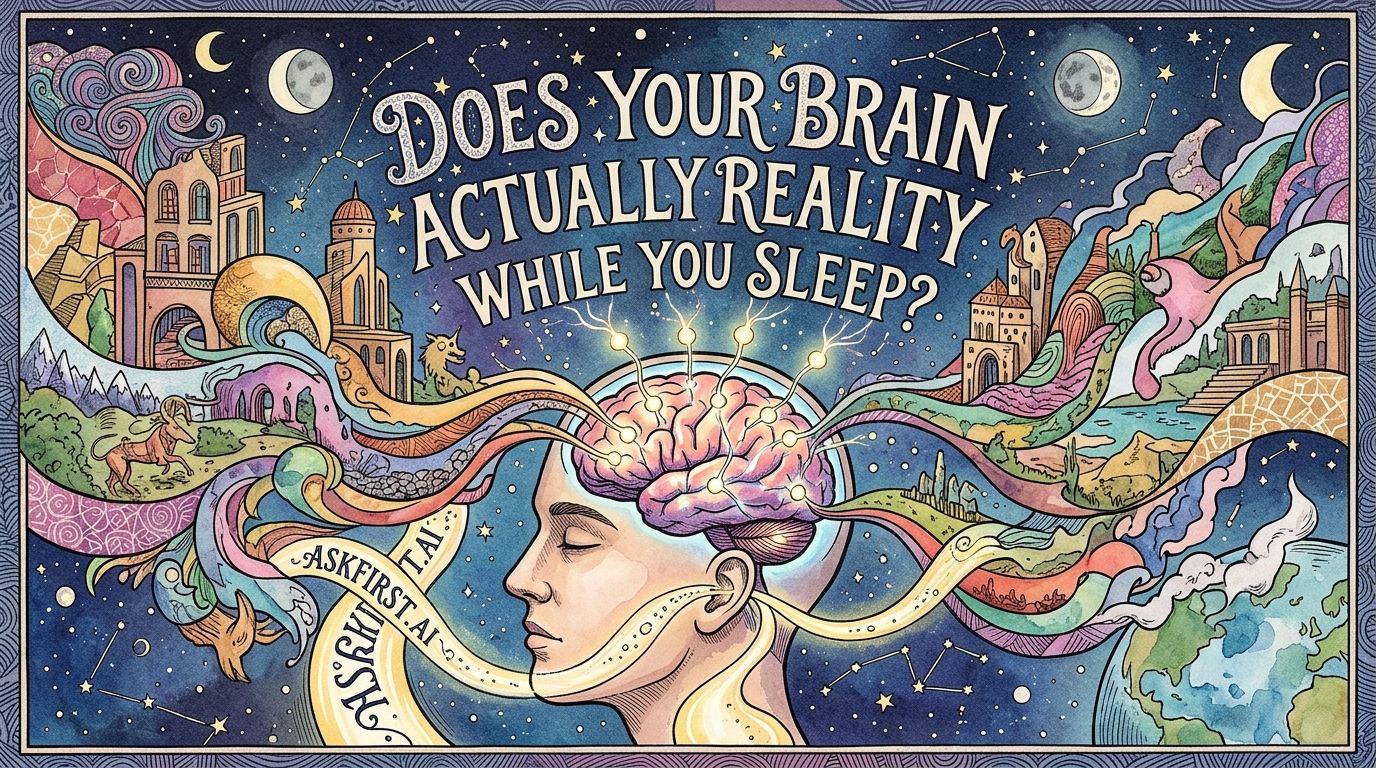
While the waking world is governed by sensory input, the dreaming brain operates in a state of self-generated simulation. During Rapid Eye Movement (REM) sleep, the human brain enters a physiological state that mimics wakefulness in terms of neural activity but disconnects from external sensory receptors. This results in the construction of a "virtual reality" where the dreamer perceives environments, emotions, and interactions as entirely genuine. Research suggests that the brain is not simply observing a film, but actively manifesting a complex, multisensory world using internal models of existence.
The Mechanism of Simulation
In the waking state, the primary visual cortex processes light hitting the retina. However, during dreams, the visual cortex is fueled by feedback loops from higher-order cognitive regions. The amygdala, which processes emotions, is highly active, while the prefrontal cortex, responsible for logical reasoning and self-awareness, remains largely dormant. This chemical imbalance is precisely why dreamers rarely question the bizarre physics or impossible transitions within a dream. The brain prioritizes the emotional narrative over logical consistency, creating a reality that feels more intense than life itself.
The Role of Predictive Coding
Modern neuroscience utilizes the theory of predictive coding to explain how we perceive the world. This theory suggests that the brain is a "prediction machine" that spends its day anticipating sensory inputs based on memory and experience. When the eyes close, these prediction loops do not shut down. Instead, they continue to run autonomously. The brain pulls from an expansive archive of memories, fears, and desires to hallucinate a stable environment. In this sense, the dream is a synthesis of previous reality processed through the subconscious filter, making the dream a creative reconstruction of everything the individual has ever known.
Why Dreams Feel Tangible
- Multisensory Engagement: The dream experience often includes auditory, tactile, and vestibular sensations. The motor cortex triggers patterns similar to movement, which is why people sometimes feel they are running or falling. The brain successfully convinces the body that these movements are real by overriding the sensory gating mechanisms that would otherwise confirm the sleeper is lying in bed.
- Emotional Salience: Because the limbic system is hyper-aroused during REM, the brain assigns high importance to every dream event. This emotional weighting cements the idea that the experience is significant and tangible.
- Lack of Reality Testing: With the dorsolateral prefrontal cortex inhibited, the brain loses its internal 'skeptic.' There is no mechanism to compare the dream's current input with physical laws, allowing the brain to accept the simulation as the absolute objective truth.
Comparing Waking and Sleeping States
It is essential to consider the philosophical question: how do we define 'reality'? If reality is the internal neural representation of data, then the dream state and the waking state differ only in their sources of information. Waking reality relies on external environmental data, while the sleeping reality relies on internal memory banks. Both are equally interpreted, categorized, and experienced as 'real' by the conscious mind while they are occurring. Studies on lucid dreaming demonstrate that when the prefrontal cortex is reactivated, the dreamer can recognize the simulation, further proving that the brain is a conscious creator of its own experienced world.
The Purpose of This Internal Reality
Why would the brain evolve such a complex mechanism for internal simulation? Many scientists argue that dreaming serves as an evolutionary sandbox. By allowing the brain to practice scenarios, process emotional trauma, and solve complex problems in a safe, risk-free environment, the brain refines its survival strategies for the waking world. It is a process of memory consolidation and cognitive rehearsal. The 'reality' created while sleeping is essentially the brain's way of stress-testing its capabilities, sharpening memory retrieval, and integrating new experiences into the personality.
Conclusion
To answer the query: Yes, the brain creates a fully immersive reality during sleep. By decoupling from the sensory world and activating its internal creative engines, the mind generates a subjective environment that is indistinguishable from external reality until the moment of awakening. This reveals the brain as a remarkably capable architect, constantly building the landscape of existence regardless of whether the eyes are open or closed.