The Neuroscience of Temporal Distortion in Romantic Love
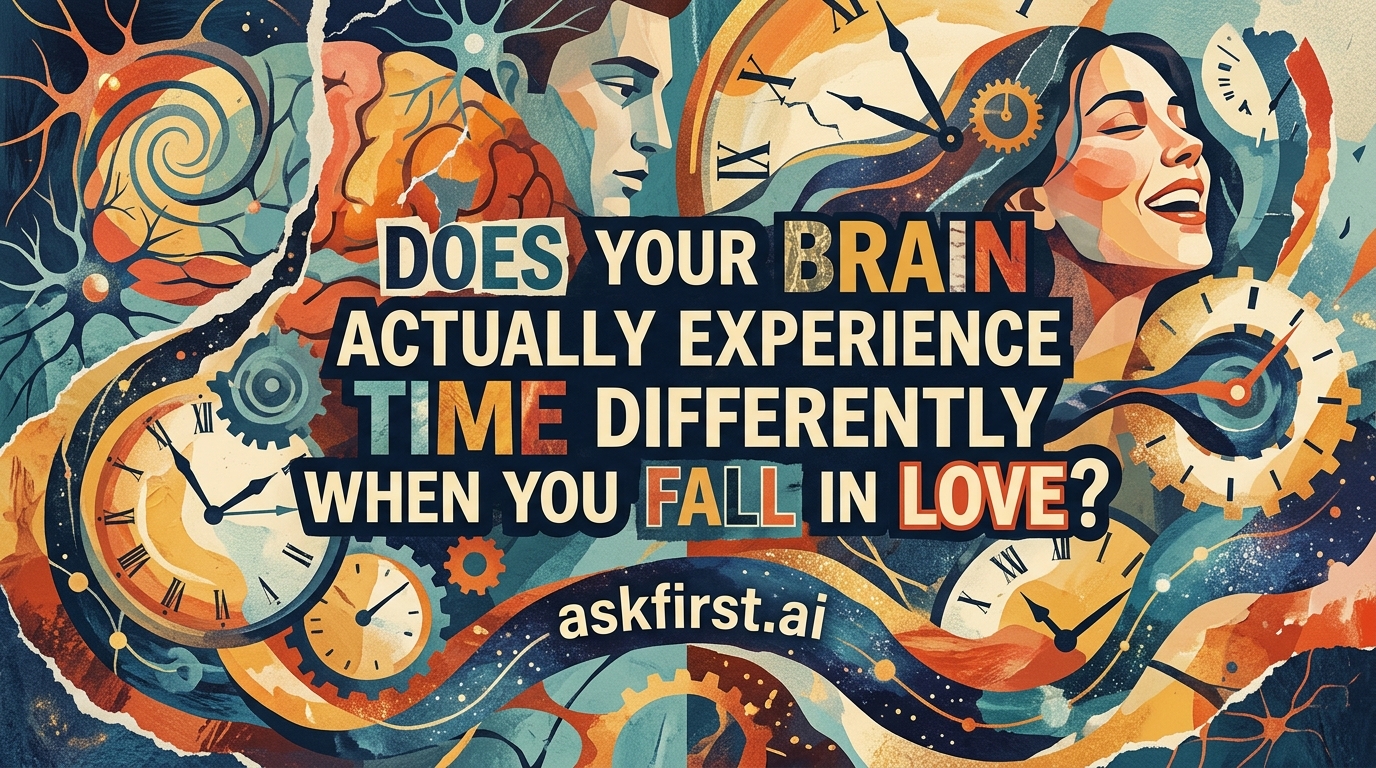
When an individual experiences the initial, overwhelming phase of romantic love, the brain undergoes a radical reconfiguration that extends beyond mere emotional states. Scientific inquiry into temporal perception—the way the human mind tracks and encodes the passage of time—reveals that the intense neurochemical surges associated with attraction can indeed distort the subjective experience of duration. This phenomenon is often described as time dilation or contraction, depending on the emotional valence of the situation.
The Role of Neurotransmitters
At the heart of this temporal shift are potent neurotransmitters such as dopamine, norepinephrine, and serotonin. In the early stages of romantic attachment, the brain’s reward circuitry, particularly the ventral tegmental area (VTA), becomes hyper-activated. This activation is associated with increased cognitive arousal and focus. According to the Attentional Gate Model of time perception, when an individual is highly stimulated or cognitively occupied by an emotional object—in this case, a new partner—the brain's internal 'pacemaker' speeds up. Consequently, the brain registers more 'ticks' of perceived time than are actually occurring in the physical world. This is why time often feels as though it 'flies' when one is in the company of a loved one; the high density of cognitive engagement and emotional intensity causes the conscious mind to process information more rapidly, leading to the subjective impression that time has passed quickly.
Neuroendocrinology and The 'Now'
Beyond dopamine, the hormone oxytocin plays a crucial role. Often referred to as the 'cuddle hormone,' oxytocin facilitates social bonding and decreases stress. Research indicates that elevated levels of oxytocin correlate with a shift in the Prefrontal Cortex, the area responsible for higher-order planning and temporal monitoring. When the Prefrontal Cortex is suppressed by the overriding influence of the Limbic System (the emotional center), the brain becomes less concerned with the rigid, linear measurement of time. Instead, the focus shifts to the immediate present—the 'phenomenological now.' This state of being fully immersed in the present moment often results in an experience where the subject loses track of standard chronometry entirely.
Psychological Theories: The 'Oddball Effect'
Psychologists have long studied the Oddball Effect, which posits that novel stimuli are processed more slowly and meticulously by the brain, leading to an expansion of subjective time. During the 'honeymoon phase' of a relationship, the world is saturated with novelty. Every gesture, conversation, and glance is an unfamiliar data point. Because the brain devotes significantly more processing power to encoding these novel emotional experiences, it perceives these moments as longer than they would be in a mundane, routine setting. Therefore, while time might feel short when one is having 'fun' (due to intense focus), it can also feel surprisingly dense and rich because the brain is creating vivid, high-fidelity memories of the encounter.
Practical Implications of Temporal Distortion
- Enhanced Memory Encoding: Because the brain prioritizes emotional novelty, memories formed during this phase of high temporal distortion are exceptionally resilient. This is why individuals often have near-perfect recall of the early days of a relationship years later.
- Cognitive Load: The feeling of time distortion is a direct result of cognitive overload. The brain is essentially 'bottlenecked' by the need to integrate new, powerful signals, which disrupts the automatic temporal monitoring system.
- Survival Mechanism: From an evolutionary standpoint, this intense focus and temporal warping may have served to prioritize mate selection and pair-bonding, ensuring that individuals dedicated sufficient attention to potential partners to ensure reproductive success.
Conclusion: The Subjective Nature of Reality
It is essential to understand that time is not a fixed, objective stream for the human mind. Instead, it is a construct pieced together by neurochemical signaling and cognitive focus. When falling in love, the brain is not merely 'feeling' differently; it is processing the reality of time itself through a lens of hyper-engagement. Whether time feels as if it is rushing by or slowing down into an expansive, meaningful moment, it is a clear testament to the profound power of human affection. This intersection of neuroscience and psychology serves as a poignant reminder that human perception is fragile, subjective, and deeply influenced by the emotions that define the human experience.