The Neurobiology of Collective Resonance
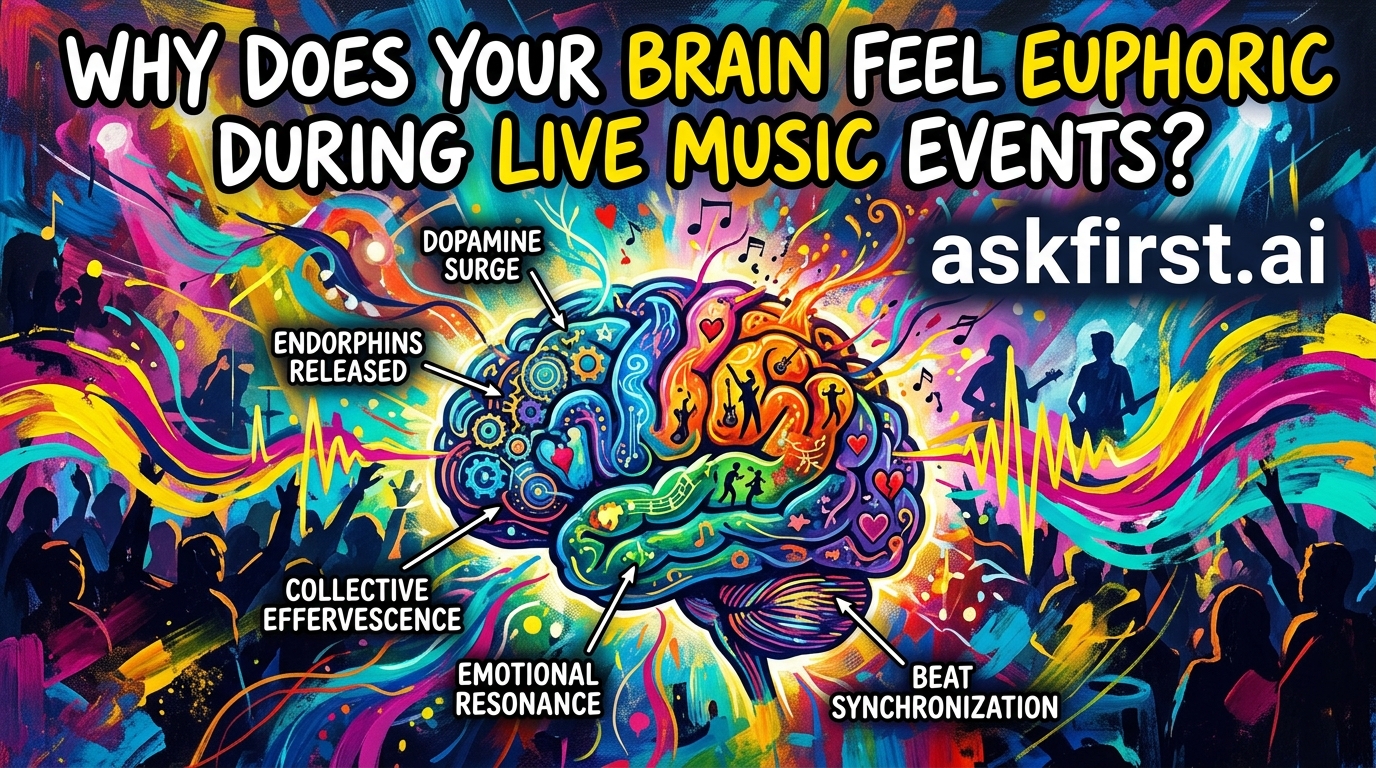
When a human being steps into a crowded concert hall, the brain undergoes a radical transformation that transcends simple auditory processing. The feeling of euphoria experienced during live music is not merely a preference; it is a complex biological response driven by the synchronization of brain activity, hormonal surges, and evolutionary social bonding mechanisms. Research in cognitive neuroscience suggests that live performance creates a 'collective effervescence,' a term coined by sociologist Émile Durkheim, which refers to the heightened state of emotional arousal experienced by individuals within a group performing shared rituals.
The Dopaminergic Cascade
At the core of the euphoria is the brain's reward circuitry, specifically the mesolimbic pathway. When the brain anticipates and experiences the structural patterns of music—rhythm, harmony, and melody—it triggers a release of dopamine in the striatum. In a live setting, this effect is amplified exponentially. Studies indicate that the physical presence of other people reacting to the same stimuli reinforces these dopamine pathways, creating a loop of anticipation and reward that is significantly more intense than listening to a recording alone. The brain treats the live music event as a significant social accomplishment, triggering a feeling of immense psychological satisfaction.
The Role of Oxytocin and Cortisol
Music acts as a social glue, and during live events, the hormone oxytocin plays a pivotal role. Known as the 'bonding hormone,' oxytocin release is stimulated by synchronized movement—such as dancing, clapping, or swaying—in tandem with others. This hormonal surge fosters a sense of communal trust and empathy, effectively reducing the levels of cortisol, the primary stress hormone. As the stress levels decline, the parasympathetic nervous system gains dominance, leading to feelings of deep peace and ecstatic joy. This is why a crowd of strangers can feel like a unified organism by the end of an evening; their neurochemistry has literally synced to the same frequency.
The Impact of Low-Frequency Sound
One cannot overlook the physical impact of low-frequency vibrations, or bass, in live music. The human body is highly receptive to vibrations in the 20 to 100 Hertz range, which can stimulate the vestibular system—the part of the inner ear that governs balance and spatial orientation. When these frequencies are pushed to high volumes, they create a physical sensation that 'shakes the core.' This sensory input is processed not just as sound, but as touch, triggering a physiological response that bridges the gap between auditory perception and tactile stimulation. This multi-sensory experience contributes to the feeling of being 'enveloped' by the music, which researchers believe reinforces the sensation of euphoria by making the experience feel all-consuming.
Synchronization: The Neural Beat
Modern neuroimaging has revealed that during live performances, audience members often exhibit neural entrainment. This is a phenomenon where the brain waves of the individuals in the audience begin to oscillate at the same frequency as the music and, crucially, as the brain waves of their neighbors. When neural rhythms align, the brain facilitates a smoother flow of information across regions associated with social cognition and emotion regulation. This state of 'flow' is characterized by a loss of self-consciousness, allowing the listener to step outside their personal ego and merge with the larger group. This reduction in the dominance of the 'default mode network'—the part of the brain that keeps us focused on our own internal worries and future planning—is why live music can feel so liberating.
Evolutionary Significance
Why does the brain crave this state? Evolutionary psychologists propose that shared musical experiences were essential for human survival. In early human societies, collective rhythmic activity signaled group cohesion, strength, and cooperation. Those who could synchronize effectively were more likely to survive, as they demonstrated the ability to act as a cohesive unit. Therefore, the brain evolved to provide a massive hit of 'feel-good' chemicals whenever we participate in these collective auditory rituals. It is a biological survival mechanism rebranded as entertainment. By making the experience feel euphoric, the brain ensures that humans will seek out these social bonding events repeatedly, strengthening the fabric of the community.
Summary of the Euphoric Cycle
- Dopamine Surge: Expectations and releases create a rewarding feedback loop.
- Oxytocin Release: Synchronized movement promotes social bonding and trust.
- Neural Entrainment: Brain waves synchronize with others, reducing internal ego-centrism.
- Vestibular Stimulation: Bass frequencies provide a tactile, immersive physical experience.
- Stress Reduction: The combination of sensory immersion and social connection suppresses cortisol.
In essence, the euphoria of live music is the brain's way of celebrating the profound biological power of connection. When you stand in that crowd, you are participating in an ancient physiological process that rewards unity, minimizes individual isolation, and floods your system with the biological tools necessary to feel, quite literally, one with the world around you.