The Eternal Nectar: Unlocking the Science of Honey’s Longevity
Honey is frequently cited as the only foodstuff capable of remaining edible for millennia. Archaeologists excavating ancient Egyptian tombs—most notably the tomb of Tutankhamun, dating back over 3,000 years—have discovered pots of honey that, while crystallized, remain chemically intact and perfectly safe for consumption. This phenomenon is not the result of magic or mystical preservation; it is the culmination of a precise evolutionary and chemical synergy between the biology of the honeybee (Apis mellifera) and the botanical sources they forage.
To understand why honey defies the natural laws of decay, we must examine the specific environmental and chemical barriers that prevent microorganisms from colonizing this golden substance.
1. The Power of Osmotic Pressure (Hygroscopic Nature)
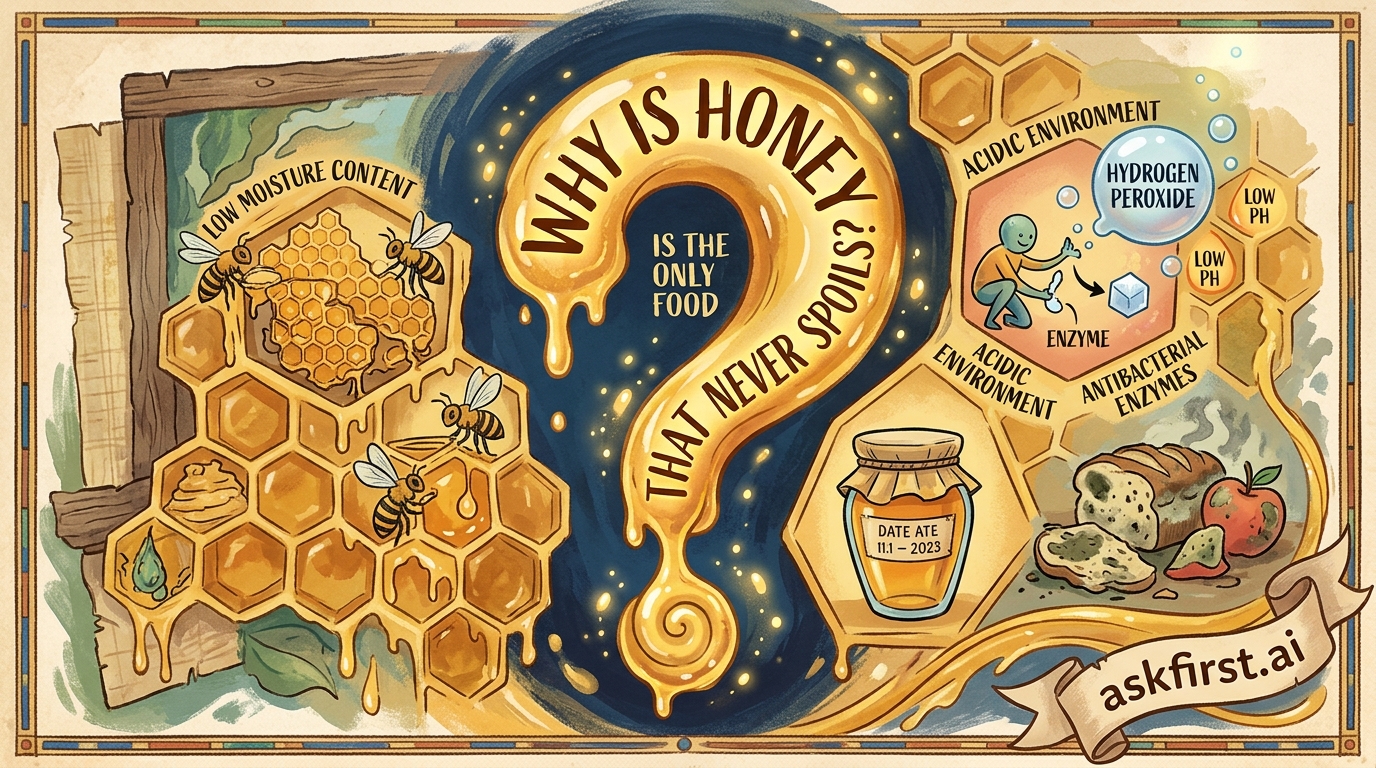
The primary reason honey does not spoil is its extremely low water content. Honey is essentially a supersaturated solution of sugars, primarily glucose and fructose. Because of this high sugar concentration, honey is hygroscopic, meaning it possesses the ability to draw moisture out of its surroundings.
When a microorganism—such as bacteria or yeast—attempts to land on honey, the honey acts like a biological sponge. The osmotic pressure exerted by the sugar molecules literally sucks the water out of the microbe’s cells through the process of osmosis. Without sufficient water, the microorganism becomes dehydrated and dies before it can reproduce or begin the process of decomposition. This mechanism is described in detail by Dr. Vaughn Bryant, a renowned palynologist at Texas A&M University, who has studied the preservation of organic materials in archaeological sites for decades.
2. The Bee’s Secret Weapon: Glucose Oxidase
The preservation process begins long before the honey reaches the jar. When worker bees collect nectar, they mix it with an enzyme secreted from their own hypopharyngeal glands called glucose oxidase.
As the bees process the nectar, this enzyme breaks down the glucose into gluconic acid and hydrogen peroxide. Hydrogen peroxide is a potent antiseptic; it creates a hostile environment for any bacteria that might survive the initial osmotic shock. This chemical defense system is detailed in the seminal work The Hive and the Honey Bee (published by Dadant & Sons), which remains the definitive encyclopedia on apiculture. By naturally producing a mild disinfectant within the honey, the bees essentially "sterilize" their food supply as they manufacture it.
3. The Role of pH and Acidity
Honey is naturally acidic, typically possessing a pH level between 3.2 and 4.5. This level of acidity is sufficient to inhibit the growth of most food-borne pathogens. While the sugar content provides the primary defense, the low pH creates a secondary barrier that prevents the colonization of bacteria that might otherwise thrive in neutral environments.
This acidic profile is a byproduct of the gluconic acid created by the glucose oxidase mentioned earlier. The combination of high acidity and low moisture creates a "triple-threat" environment—high osmotic pressure, low pH, and high oxidative potential—that is virtually impossible for common food-spoiling bacteria to overcome.
4. The Importance of Proper Sealing
It is critical to note that while honey is chemically resistant to spoilage, it is not impervious to external contamination if mishandled. Honey is hygroscopic, which means if it is left in an open container in a humid environment, it will absorb moisture from the air.
If the water content rises above approximately 18-20%, the osmotic pressure decreases, and the concentration of hydrogen peroxide is diluted. In this state, the honey is no longer protected, and natural yeasts present in the air can begin to ferment the sugars. This is why the ancient Egyptians and modern beekeepers alike prioritize airtight sealing. As noted in Honey: A Comprehensive Survey edited by Eva Crane, a leading authority on bee science, the stability of honey is entirely dependent on maintaining its low moisture content through hermetic storage.
5. Does Honey Ever Actually "Spoil"?
While honey does not rot, it can undergo physical changes that may lead people to believe it has expired. The most common change is crystallization. Because honey is a supersaturated sugar solution, the glucose molecules naturally want to separate from the water and form solid crystals.
Crystallization is a physical change, not a chemical one. The honey is still perfectly safe; in fact, many connoisseurs prefer the texture of crystallized honey. It can be easily reversed by gently warming the jar in a water bath, which melts the crystals back into a smooth, liquid state. This process is purely a matter of temperature and sugar saturation, not microbial decay.
Conclusion
The immortality of honey is a masterclass in natural chemistry. By manipulating moisture levels, utilizing enzymatic secretions like glucose oxidase, and maintaining an acidic environment, honeybees create a product that essentially denies life to any would-be spoilers. From the ancient civilizations of the Nile to the modern pantry, honey remains one of the few substances on Earth that transcends time. As long as it is kept away from excess moisture, it will remain as edible as the day it was harvested, serving as a testament to the sophisticated biological engineering of the honeybee.