The Evolutionary Purpose of Regret
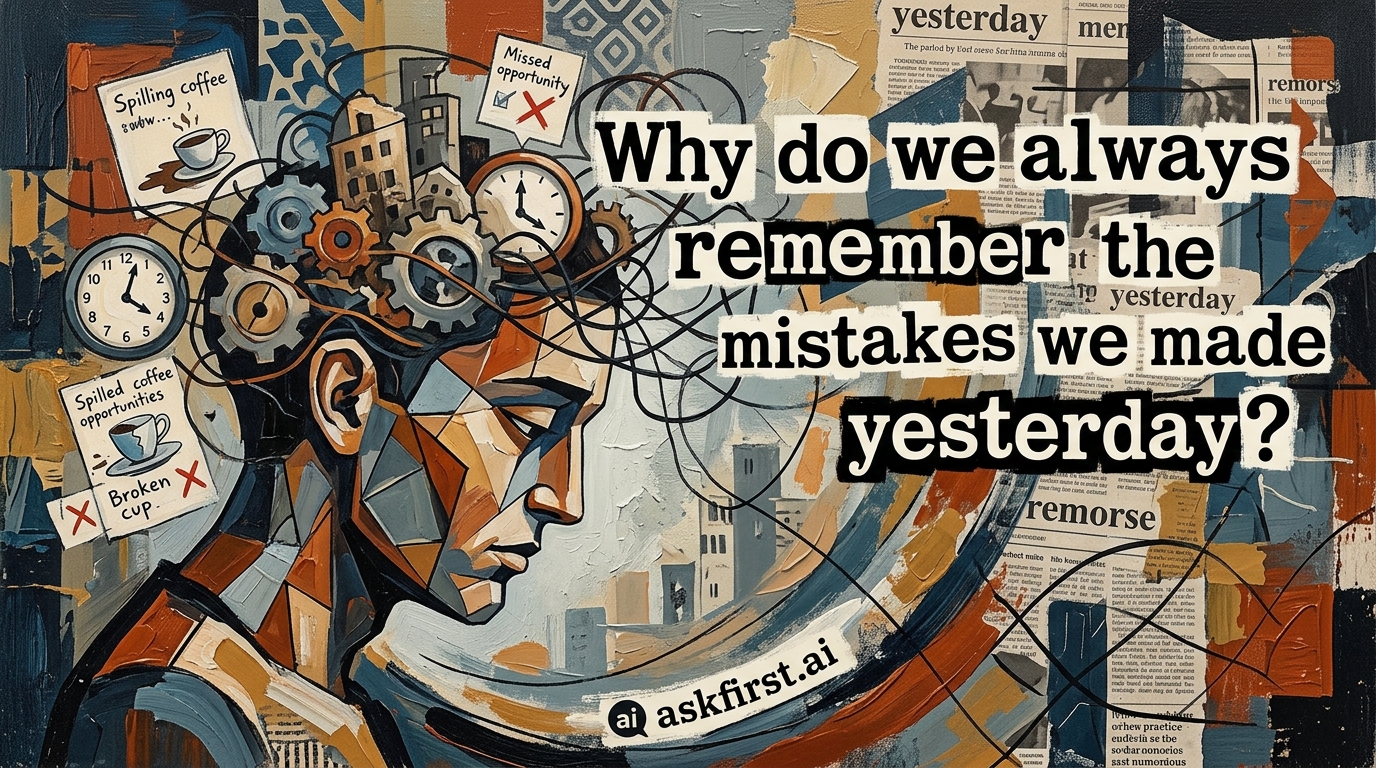
The human brain is not a static organ; it is a sophisticated, prediction-driven machine constantly recalibrating based on past data. The phenomenon of fixating on yesterday's mistakes—often labeled by psychologists as the 'negativity bias'—is not a flaw in human design but a survival mechanism honed over millions of years. This cognitive framework ensures that the brain prioritizes learning from errors over successes to prevent future harm.
The Science of Negativity Bias
Negativity bias is a documented psychological phenomenon where humans give more weight to negative experiences than positive ones. From an evolutionary standpoint, missing a meal was an inconvenience, but failing to notice a predator was a terminal event. Consequently, the brain developed an internal alert system that 'tags' mistakes with intense emotional spikes. This intensity serves as a high-priority flag in the hippocampus, ensuring that the memory of the error remains vivid, accessible, and ready for retrieval when similar scenarios arise.
Neuroplasticity and the 'Error-Monitoring' System
The brain utilizes a specialized network involving the Anterior Cingulate Cortex (ACC). This region functions like an internal quality control monitor. When an outcome fails to meet expectations, the ACC signals the brain to pause and analyze. This process, often referred to as error-related negativity (ERN), is essentially the brain's way of saying, 'Pay attention to this, because it cost you energy or status.' By dwelling on the mistake, the individual is effectively running a mental simulation to refine future decision-making parameters.
Why Yesterday Feels So Urgent
The concept of 'yesterday' acts as a cognitive trigger due to its temporal proximity. Recent memories are kept in the 'working memory' buffer for active processing. If a mistake occurred twenty-four hours ago, the brain is still in the active phase of reconciling that error against current goals. This mental 'looping' is the brain's attempt to optimize internal models of the world. Once the lesson is fully encoded and the emotional sting fades, the memory usually transitions from a vivid, intrusive thought to a background reference point for future behavior.
The Impact of Social Calibration
Beyond simple survival, humans are deeply social creatures. Many 'mistakes' are social in nature—a faux pas, a misinterpreted cue, or a lapse in judgment within a group setting. Social rejection was historically a threat to survival, which is why the brain treats social errors with the same alarm as physical threats. The 'cringe' feeling one experiences when remembering a social slip-up is actually an emotional indicator that the brain is recalibrating social navigation skills to ensure better group cohesion moving forward.
Strategic Reframing of Memory
To move past the cycle of rumination, one must distinguish between constructive reflection and maladaptive rumination. The former is the objective analysis of what happened and how to improve. The latter is an unproductive, circular obsession with the emotion of shame. Experts suggest the following strategies to transform lingering memories into growth:
- Cognitive Distancing: View the memory as an observer rather than an actor. Ask, 'What objective lesson does this provide?' rather than 'Why did I do that?'
- The 10-10-10 Rule: Evaluate if the mistake will matter in 10 minutes, 10 months, or 10 years. This puts the emotional charge into a logical perspective.
- Implementation Intentions: Convert the mistake into a clear 'if-then' plan. For instance, 'If I face this situation again, then I will respond differently.' This provides the brain with a specific path forward, satisfying the need for resolution.
The Myth of Perfection
Finally, the human tendency to focus on errors is often compounded by the 'Spotlight Effect,' the belief that others are paying more attention to our failures than they actually are. In reality, while the brain meticulously archives every slip, the rest of the world has likely already moved on. Understanding this creates the necessary psychological space to accept humanity's inherent imperfection. Perfection is not an evolutionary requirement for success; rather, the ability to iterate and improve through constant, small-scale failure is the hallmark of human intelligence. By embracing these moments of reflection as diagnostic data points, individuals can stop feeling haunted by yesterday and start utilizing those memories as a roadmap for excellence in the days to come.