The Cognitive Metamorphosis: How Coding Rewires the Mind
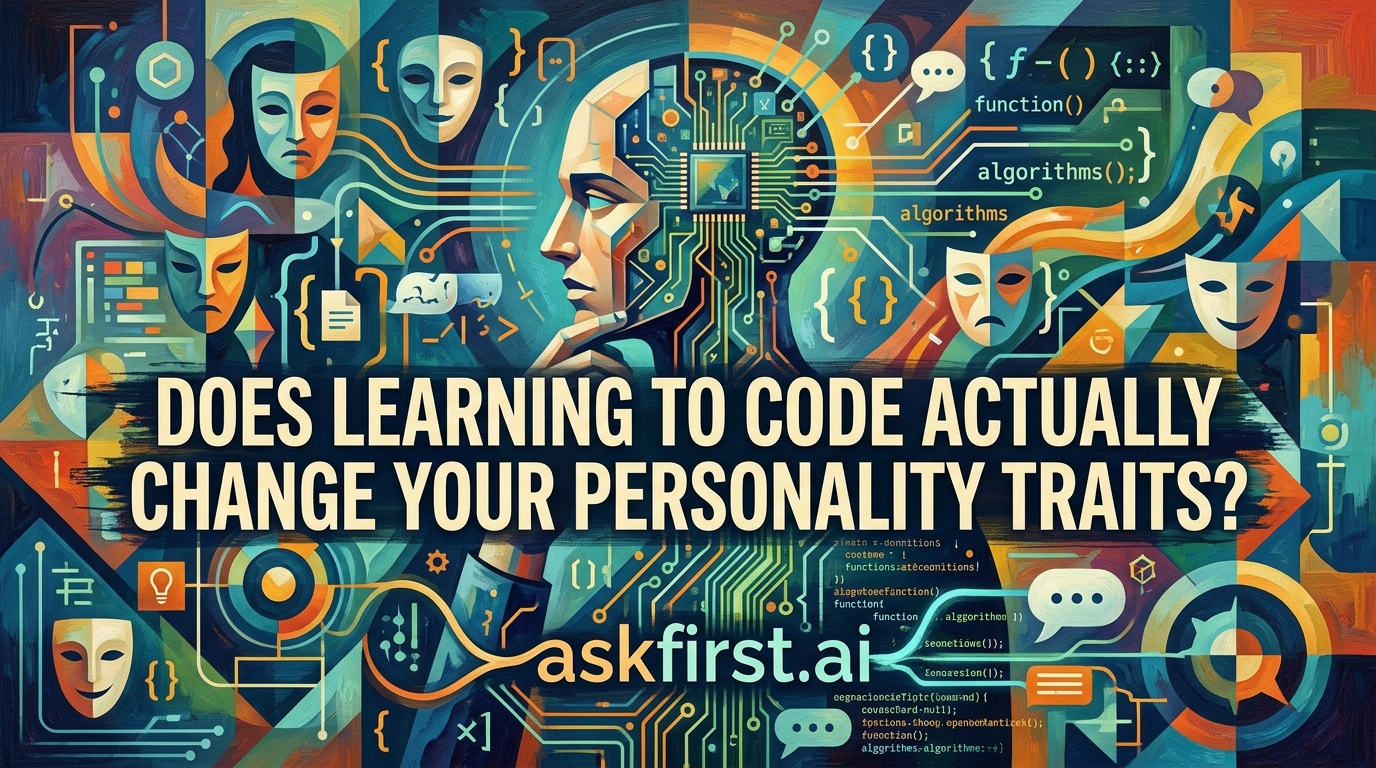
Recent psychological research and neuroplasticity studies suggest that learning to code is not merely a technical acquisition but a fundamental shift in how the brain processes reality. The endeavor to master programming languages influences executive functions, shifting an individual's problem-solving paradigm and potentially altering long-term personality traits. While personality is often viewed as stable, the cognitive demands of algorithmic thinking force the brain to adapt in ways that manifest as changes in behavioral tendencies, specifically in persistence, analytical reasoning, and tolerance for ambiguity.
The Neuroplasticity of Logic
When a novice begins coding, the brain undergoes a structural transformation. Neuroplasticity, the ability of the brain to form new neural connections, is triggered by the relentless pursuit of debugging—a process akin to a detective solving a mystery. This constant movement between abstract concepts (syntax and architecture) and concrete outputs (the functioning program) strengthens the prefrontal cortex, the area responsible for high-level planning and decision-making. As these neural pathways solidify, the individual often reports an increased capacity for 'systematizing,' a psychological trait defined by the drive to analyze or construct systems. Over time, this focus on modularity and structure often bleeds into personal life, leading to more organized daily habits and a more systematic approach to interpersonal conflict resolution.
Busting the Myth: The 'Solitary Nerd' Fallacy
Contrary to the outdated trope of the isolated coder, modern software engineering is inherently collaborative. The practice of pair programming and the necessity of managing complex open-source projects cultivate empathy and communication skills. Coding forces a shift from 'subjective feeling' to 'objective troubleshooting,' which can drastically alter how one perceives personal failures. Instead of internalizing a mistake as a character flaw, the coder learns to view it as a 'bug' to be identified, isolated, and rectified. This objective distance is a significant personality evolution, promoting emotional stability and resilience in the face of stressors that were previously considered overwhelming.
Key Psychological Shifts
- Enhanced Persistence (Grit): Programming requires intense focus over long durations. The feedback loop of failing to compile and finally succeeding creates a psychological reward system based on endurance rather than instant gratification. This translates to higher levels of perseverance in non-technical endeavors.
- Increased Tolerance for Ambiguity: A complex codebase is often messy, legacy-laden, and partially opaque. Coders learn to navigate this uncertainty without needing total clarity, a trait psychologists associate with high-functioning leaders and visionaries.
- Growth Mindset: The constant need to learn new frameworks and languages reinforces the 'Growth Mindset' popularized by Carol Dweck. A coder who successfully masters their third or fourth language begins to view their intelligence as a dynamic tool rather than a fixed limit.
The Philosophical Shift Toward Systems Thinking
Beyond individual traits, learning to code promotes a philosophical transition into 'systems thinking.' This is the ability to see the world not as a series of isolated events, but as a web of interconnected processes. When a person learns how an API interacts with a database, they begin to subconsciously look for the 'API' in their own social interactions. This reduces impulsive reactions because the brain is conditioned to pause and map out the potential downstream consequences of any given input. This shift does not make an individual 'robotic'; rather, it makes them more intentional. By analyzing the causal relationships in their environment, individuals become better at optimizing their work-life balance, choosing higher-leverage activities, and managing their finite cognitive resources.
The Long-Term Developmental Trajectory
Is this change permanent? Longitudinal data suggests that when a complex skill like programming is integrated into daily life for years, it modifies the baseline operating system of the mind. Much like an athlete develops a specific physiological posture, the programmer develops a mental posture of inquiry and reduction. This does not override the fundamental personality traits like extraversion or agreeableness, but it overlays a secondary layer of analytical maturity. An introvert might remain an introvert, but they become an introvert who is capable of structured self-advocacy; an impulsive person might learn the value of a planned 'step-by-step' approach.
Conclusion: The Coder’s Mindset as a Lifestyle
Learning to code acts as a cognitive gym. The changes in personality traits—specifically the rise in patience, systemic analysis, and emotional detachment from failure—are significant by-products of the craft. It is a powerful form of self-actualization that forces the individual to become the architect of their own logic. By understanding that the mind can be 're-compiled' through the acquisition of high-order skills, anyone can deliberately shape their personality toward a more resilient and objective version of themselves. Whether one becomes a professional software engineer or simply a hobbyist, the act of coding leaves an indelible mark on the psyche, proving that the tools we use truly do shape the architects themselves.