The Evolutionary Mechanism of Negativity Bias
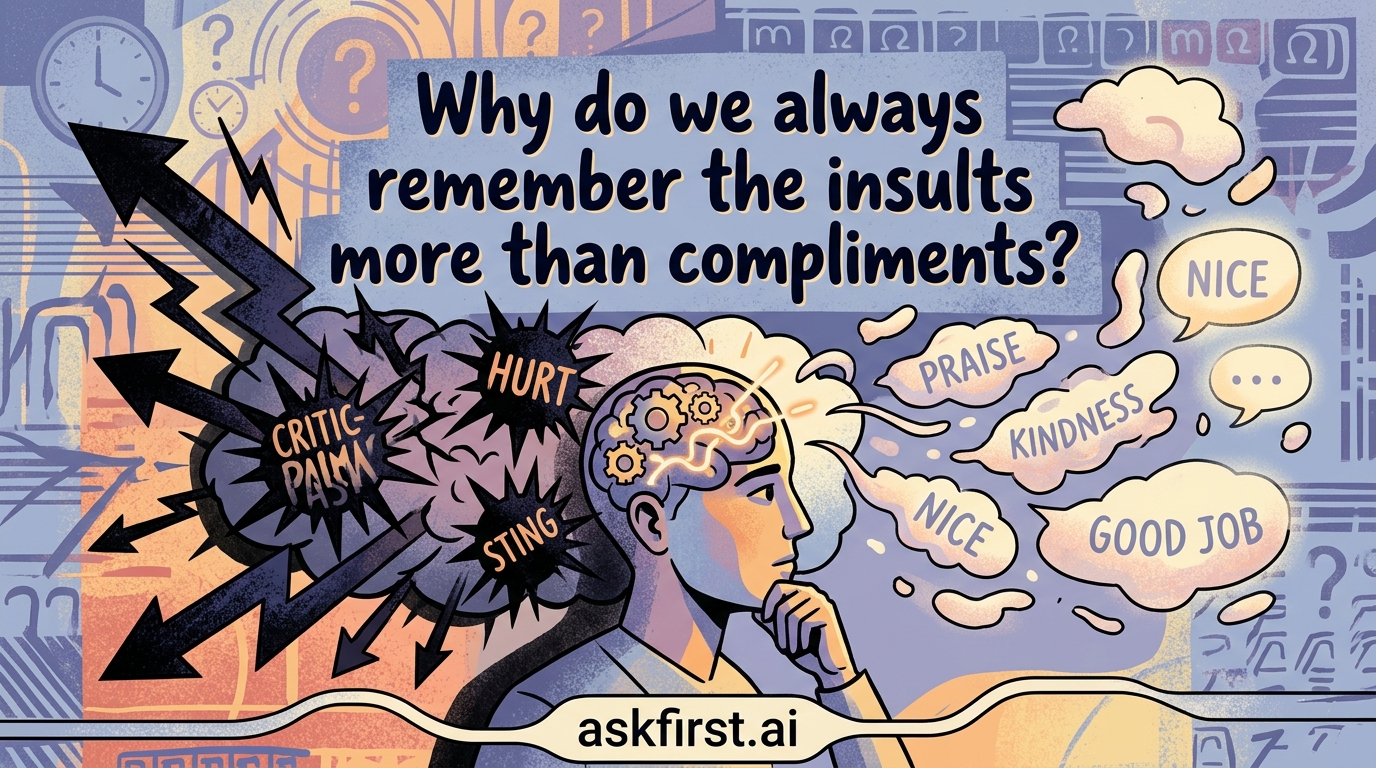
Human memory is not a recording device; it is a filter designed for survival. The psychological phenomenon where negative experiences, such as insults or criticism, carry more weight in our consciousness than positive affirmations is known as the Negativity Bias. This cognitive shortcut served as an essential evolutionary tool for early humans. In an environment teeming with life-threatening dangers—predators, starvation, or tribal exile—the failure to notice a threat was far more consequential than failing to notice an abundance of resources. Consequently, the brain evolved to prioritize 'negative' information because it acted as a signal for immediate danger or social exclusion.
The Neurobiology of Memory
At the neurological level, the amygdala—the brain's emotional processing center—is primarily responsible for this imbalance. Research indicates that the amygdala is more sensitive to negative stimuli and is activated more rapidly than it is by positive or neutral stimuli. When a person hears a compliment, the neural response is relatively fleeting. However, when one receives an insult, the brain triggers a heightened alert state, releasing cortisol and adrenaline. This physiological spike creates a 'vivid' memory trace. In neuroscience, it is understood that the intensity of the emotional reaction serves as a form of biological 'superglue' for memory consolidation. The brain essentially marks the insult as critical data that must be stored for future avoidance of similar social pain.
Social Survival and Peer Perception
Humans are fundamentally social creatures. During early evolutionary history, being ostracized from one's tribe was tantamount to a death sentence. An insult acts as a social marker of disapproval or potential rejection, which triggers the same neural pathways as physical pain. In contrast, a compliment—while beneficial for mood—does not signal an immediate threat to status or safety. Therefore, the brain processes insults with a level of urgency that suggests personal survival is at risk, forcing the mind to replay and ruminate on the critical comment to assess how to regain social standing or avoid repeat humiliation.
Cognitive Asymmetry in Modern Life
While our survival in the modern era rarely depends on escaping apex predators, this ancient mechanism remains hardwired. In a corporate or social setting, this results in a phenomenon where a single critique can overshadow dozens of positive reviews. Psychologists often refer to the '5:1 ratio,' a concept popularized by John Gottman, suggesting that even in healthy relationships, it takes approximately five positive interactions to counterbalance the long-term impact of one negative interaction. This mathematical asymmetry highlights the durability of negative memory.
Mitigating the Bias
Understanding that this reaction is a biological byproduct rather than a personality flaw allows individuals to manage it more effectively. Several techniques can help regulate the impact of negative memory:
- Cognitive Reframing: Consciously analyzing the motive behind an insult to determine if it stems from the critic's own frustration rather than one's personal worth.
- The Gratitude Journal: Actively recording positive affirmations forces the brain to dedicate time to 'encoding' positive stimuli, effectively countering the brain’s default bias toward the negative.
- Mindfulness Meditation: By cultivating the ability to observe thoughts without identifying with them, individuals can diminish the emotional charge attached to negative memories.
Conclusion: The Memory Filter
Ultimately, the disproportionate focus on insults is not an indicator of weakness, but a testament to how aggressively the human brain seeks to protect its integrity and status. By acknowledging that this focus on the negative is a relic of our evolutionary past, we can consciously choose to give compliments the weight they deserve. Memory is shaped by survival, but wisdom is shaped by the intentional redirection of that focus toward personal growth and self-affirmation. Even in an era defined by safety, the brain remains a cautious guard, constantly scanning for the 'insults' that were once synonymous with social threats, urging us to learn from the negative while purposefully building upon the positive.