The Evolutionary Basis of Social Discomfort
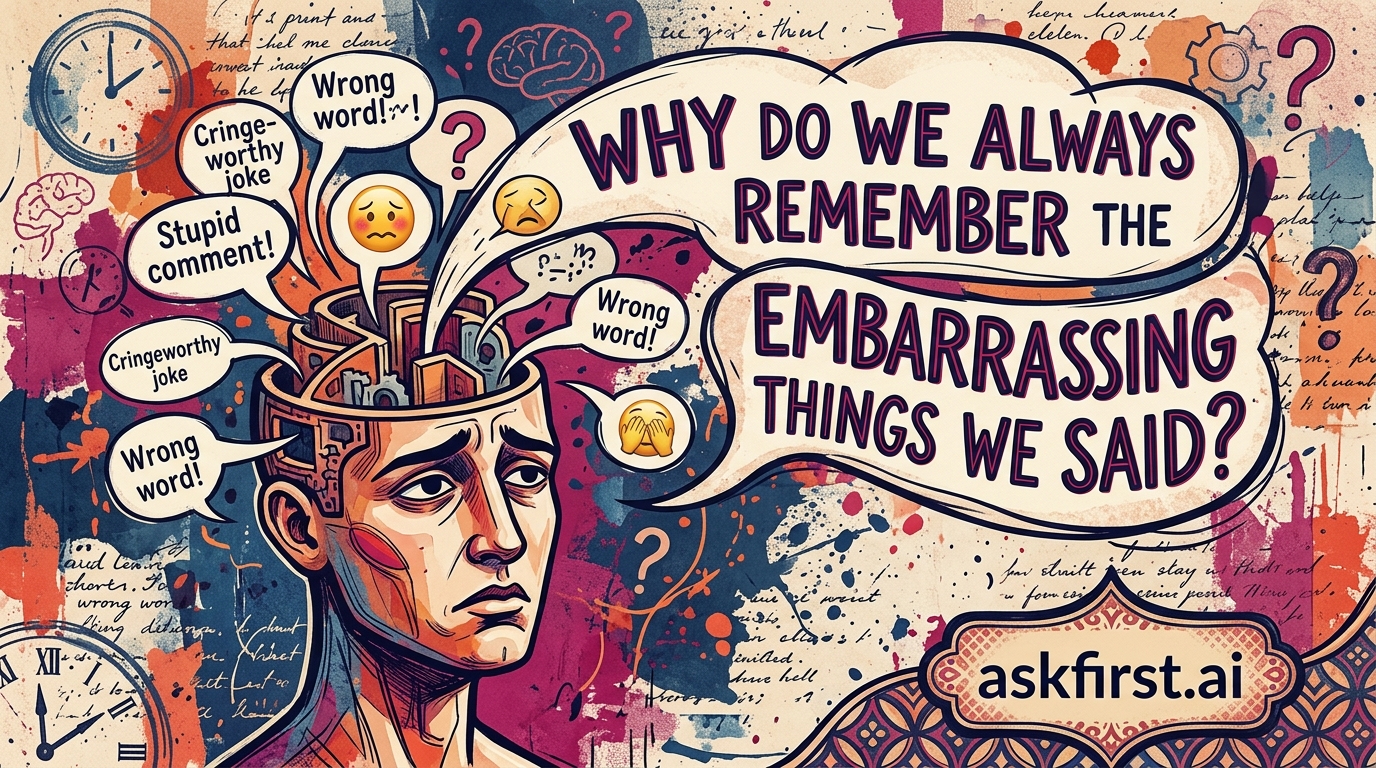
The phenomenon of ruminating on past embarrassments is a deeply ingrained cognitive process rooted in the evolutionary necessity of social survival. Humans are inherently social creatures; historically, belonging to a tribe was essential for survival. Being cast out due to social failure or perceived incompetence could be a death sentence. Consequently, the brain developed a 'social radar'—a sophisticated mechanism to ensure adherence to group norms and social cohesion. When a breach of these norms occurs—an embarrassing comment, a social gaffe, or an awkward stumble—the brain tags the event as a critical learning opportunity.
The Spotlight Effect and Cognitive Bias
One primary reason people dwell on these moments is the Spotlight Effect. This psychological bias causes individuals to overestimate how much others notice their actions or flaws. While a person might obsess over a minor comment made three years ago, the listeners likely forgot that comment within seconds. This disconnect occurs because the individual is the constant center of their own universe, making their mistakes appear disproportionately magnified compared to how the world actually perceives them. Understanding the Spotlight Effect is the first step toward releasing the hold of these memories.
The Role of the Default Mode Network (DMN)
When the brain is not focused on an external task, it enters the Default Mode Network (DMN). This state is responsible for autobiographical memory, daydreaming, and self-reflection. Unfortunately, the DMN frequently shifts into a mode of 'repetitive negative thinking.' Because the brain is programmed to solve problems, it revisits these embarrassing moments as if they are puzzles to be solved, attempting to re-process the outcome to ensure it does not happen again. This recursive loop is often mistaken for personality-driven anxiety, but it is actually a biological byproduct of the brain's attempt to optimize future social interactions.
Why Emotional Memories Stick
Neuroscientifically, memories tied to intense emotions are stored more durably. The amygdala, which processes emotions, and the hippocampus, which creates new memories, work in tandem. When an embarrassing moment triggers a "fight-or-flight" response—causing blushing, heart racing, or nervousness—the amygdala signals that the event is high-priority. The brain encodes this event with extra detail to ensure the individual learns a lesson and avoids future social punishment. This is known as emotional arousal modulation. The tragedy is that while this mechanism is meant to aid learning, it often leads to rumination.
Managing the Narrative: Strategies for Growth
To move past the cycle of embarrassment, consider these evidence-based techniques:
- Cognitive Reappraisal: Instead of viewing the memory as a catastrophic failure, reframe it as a sign of growth. Ask, 'What has changed in my life since that event?' Recognizing one's progress often shrinks the size of the original error.
- Reality Testing: Practice the habit of asking whether the memory serves a constructive purpose. If the answer is no, visualize the memory fading into a neutral landscape. This is a form of cognitive distancing that reduces emotional intensity.
- Embracing Imperfection: Recognize that social errors are universal. Perfection is a social myth; humans build closer bonds through vulnerability. Acknowledging that 'everyone else has these moments too' shifts the focus from shame to shared human experience.
The Paradox of the "Cringe" Response
The uncomfortable physical feeling that accompanies the memory of an embarrassing moment—the 'cringe'—is actually a signal of improved self-awareness. People who lack empathy or social awareness rarely dwell on their past mistakes. Therefore, the ability to feel embarrassed is actually a testament to an individual's social intelligence and capacity for self-regulation. By reinterpreting these memories not as scars of failure, but as data points in a long-term development project, one can effectively lower the volume of the internal critic.
Conclusion
While the human tendency to remember embarrassing moments is persistent, it is not a flaw in design. It is an artifact of a brain that prioritizes social survival. By combining an understanding of the DMN and the Spotlight Effect with mindful cognitive reframing, individuals can regain control over their internal narrative. The goal is not to stop the brain from remembering, but to change how the individual reacts to the memory. By shifting from self-criticism to neutral observation, those painful recollections lose their power, allowing for a more confident and resilient engagement with the world.