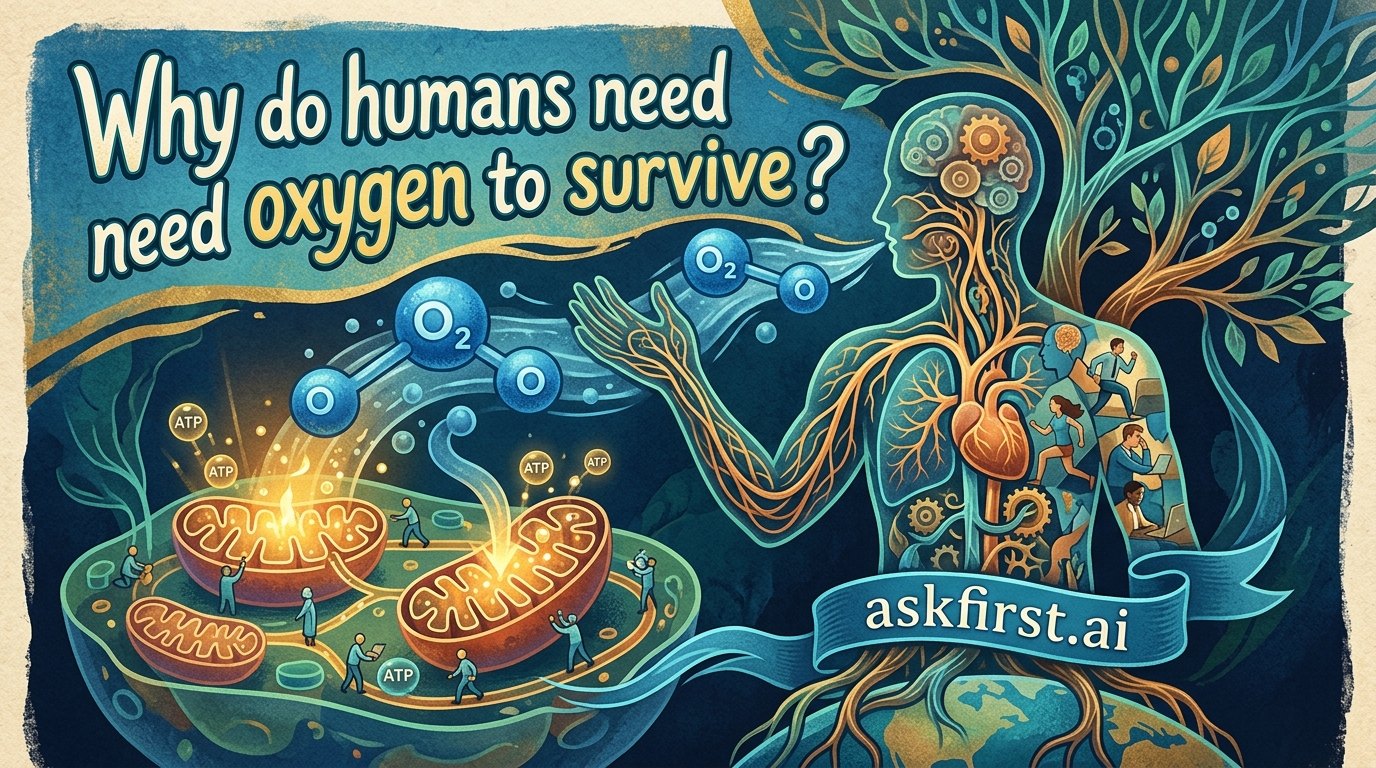
The Fundamental Necessity: Why Oxygen is the Engine of Human Life
To understand why humans require oxygen, one must delve into the microscopic world of cellular biology and the intricate dance of chemical reactions that sustain our existence. Oxygen is not merely a gas we breathe; it is the terminal electron acceptor in the process of aerobic respiration, the primary method by which our cells generate the energy required for every heartbeat, thought, and muscle contraction. Without a constant supply of this diatomic molecule, the complex machinery of human life grinds to a halt within minutes.
The Biochemistry of Respiration: ATP Production
The primary reason humans need oxygen is to facilitate the production of Adenosine Triphosphate (ATP). ATP is the universal "energy currency" of all living cells. According to David L. Nelson and Michael M. Cox in their seminal textbook, Lehninger Principles of Biochemistry (W.H. Freeman and Company, 7th Edition), the process of cellular respiration involves the breakdown of glucose through glycolysis, the citric acid cycle (also known as the Krebs cycle), and finally, the electron transport chain (ETC).
While glycolysis can occur without oxygen, it is incredibly inefficient, yielding only two molecules of ATP per molecule of glucose. In contrast, when oxygen is present, the ETC—located in the inner mitochondrial membrane—can operate at full capacity. Oxygen acts as the final destination for electrons passing through the chain. By accepting these electrons and combining them with hydrogen ions, oxygen is converted into water. This reaction creates a proton gradient that drives the synthesis of approximately 30 to 32 molecules of ATP. Without oxygen to clear these electrons, the ETC becomes "clogged," energy production plummets, and the cell faces an energy crisis that leads to rapid death.
The Role of Oxidative Phosphorylation
The process described above is known as oxidative phosphorylation. It is the most efficient metabolic pathway for extracting energy from the food we consume. As Dr. Bruce Alberts explains in Molecular Biology of the Cell (Garland Science, 6th Edition), the evolution of complex, multicellular life was only possible because of the efficiency afforded by oxygen-dependent respiration.
Think of a cell as a sophisticated factory. If the factory lacks oxygen, it is forced to rely on "emergency generators" (anaerobic glycolysis), which produce massive amounts of lactic acid as a byproduct. This acidity disrupts cellular function and damages vital proteins. Oxygen serves as the "clean fuel" that allows the factory to run at maximum efficiency without accumulating toxic waste products. This is why tissues with high metabolic demands—such as the human brain and the myocardium (heart muscle)—are the first to suffer during periods of oxygen deprivation (hypoxia).
Oxygen and the Prevention of Cellular Toxicity
Beyond energy production, oxygen plays a paradoxical but vital role in maintaining the balance of cellular chemistry. While free radicals (reactive oxygen species) are often discussed as harmful, the human body has evolved robust antioxidant defense systems to manage them. The necessity of oxygen is inherently tied to the structural integrity of our proteins and DNA.
In the absence of oxygen, the cell’s internal pH drops significantly due to the buildup of lactic acid. This shift in acidity denatures enzymes—the biological catalysts that perform thousands of tasks, from replicating DNA to repairing cell membranes. By maintaining the aerobic pathway, oxygen helps preserve the optimal pH balance within the cell, ensuring that these delicate molecular machines continue to function correctly.
The Systemic Perspective: Transport and Delivery
The human body is an integrated system designed specifically to deliver oxygen to every corner of the anatomy. The respiratory system, consisting of the lungs and airways, facilitates the exchange of gases across the alveolar-capillary membrane. Once in the blood, oxygen binds to hemoglobin, a protein found in red blood cells.
As noted by Arthur C. Guyton and John E. Hall in Textbook of Medical Physiology (Elsevier, 13th Edition), the affinity of hemoglobin for oxygen is a masterclass in biological engineering. Hemoglobin picks up oxygen in the high-pressure environment of the lungs and releases it in the low-pressure, high-demand environment of the tissues. This sophisticated delivery mechanism ensures that even the most remote tissues, such as the tips of our fingers or the neurons in our prefrontal cortex, receive the vital oxygen required for their survival.
Conclusion: The Breath of Life
In summary, humans require oxygen because it is the essential catalyst for the most efficient energy-producing reactions in biology. It is the bridge that allows us to convert the chemical energy stored in nutrients into the kinetic energy required for life. From the microscopic actions of the electron transport chain to the macroscopic function of the heart and lungs, oxygen acts as the silent fuel that powers every aspect of the human experience. When we consider the metabolic demands of a complex brain and a mobile body, it becomes clear that oxygen is not simply a biological preference; it is the fundamental requirement that allows us to thrive as complex, sentient beings. Without it, the chemical reactions that define "living" would simply cease to occur.