The Cognitive Metamorphosis: How Programming Reshapes Human Personality
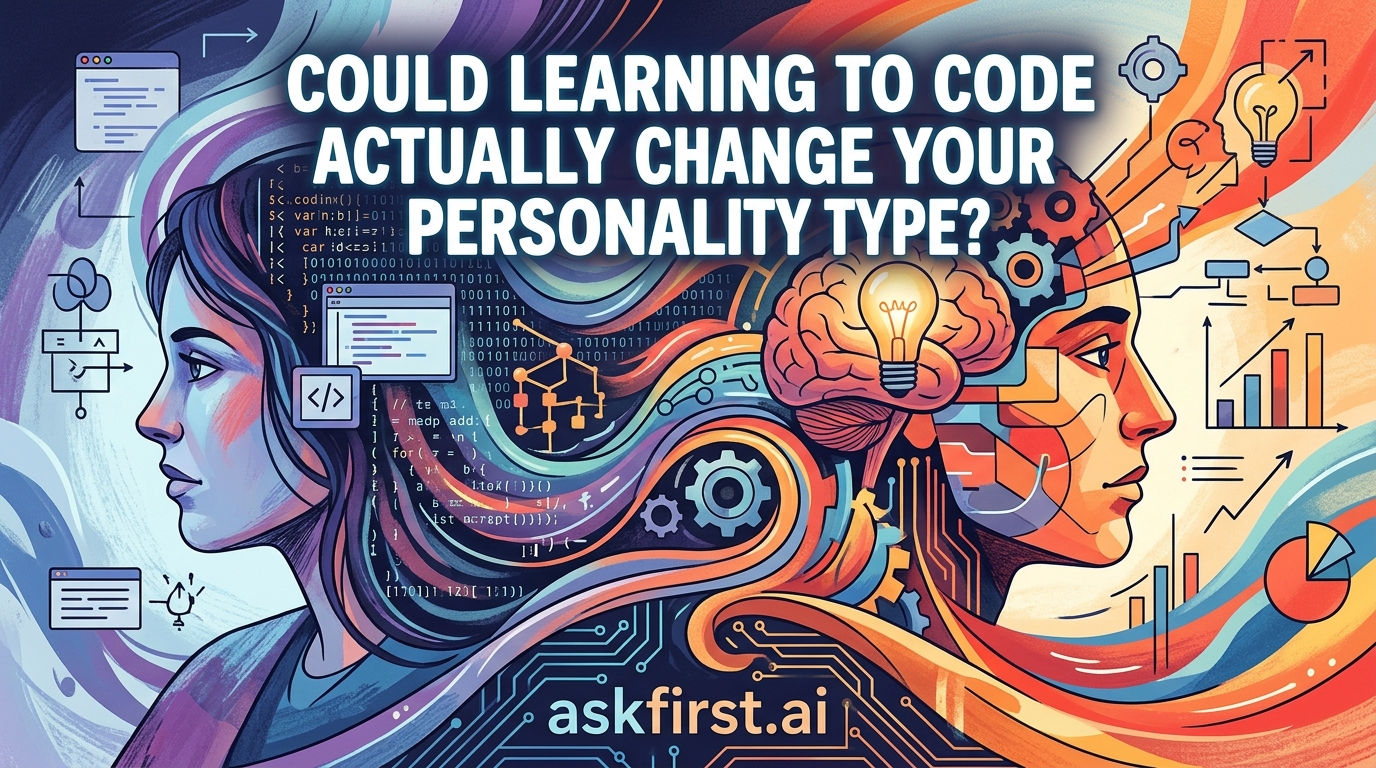
For decades, personality traits—often categorized by frameworks like the Big Five or the Myers-Briggs Type Indicator—were viewed as relatively static characteristics solidified in early adulthood. However, modern research into neuroplasticity suggests that the human brain remains remarkably malleable throughout a lifespan. Engaging in intensive, logic-heavy intellectual pursuits, such as learning to code, acts as a profound catalyst for neurological and behavioral change. By systematically altering how an individual perceives problems and interacts with systems, programming effectively shifts personality traits.
The Analytical Shift: From Intuition to Systematization
Coding is not merely about writing syntax; it is an exercise in structured logical rigor. When a novice coder begins the journey of software development, they are forced to shift from an intuitive, fluid decision-making process toward a systematic approach.
- Deconstruction Skills: Programmers learn to break complex problems into infinitesimal, manageable units. This habit often migrates into daily life, where individuals become more methodical and less prone to impulsive reactions.
- Patience and Resilience: Debugging is the crucible of the programmer. The constant cycle of trial, error, and failure builds psychological resilience. Over time, this transforms the trait of 'frustration susceptibility' into 'persistence orientation.'
The Big Five Personality Perspective
Psychologists utilizing the Big Five model have observed that intensive cognitive training can influence specific dimensions of personality:
- Conscientiousness: This is perhaps the most heavily impacted trait. Coding requires meticulous attention to detail, organization, and long-term planning. Individuals who were once naturally disorganized often report that the demands of maintaining clean, functional code manifest as increased tidiness and reliability in their personal lives.
- Openness to Experience: Programming demands constant learning. Technologies evolve rapidly, requiring developers to embrace new paradigms and tools. This fosters a natural curiosity and an 'open' mindset, as the individual becomes accustomed to moving outside their comfort zone to solve novel problems.
- Emotional Stability: The mastery of complex systems can lead to increased self-efficacy. When an individual discovers they possess the agency to build tools that control digital environments, it creates a sense of confidence that mitigates anxiety, leading to higher levels of emotional regulation.
The Neuroplasticity Factor
At the biological level, learning to code influences the structural integrity of the brain. Studies indicate that learning a complex new skill increases the density of white matter in regions associated with logical processing and executive function. This is a clear indicator that the 'self' is not a fixed point, but a process. When a person spends thousands of hours thinking like a computer—calculating dependencies, managing memory usage, and optimizing processes—the neural pathways that support these activities become dominant.
Social and Communication Shifts
Personality is also defined by social interaction. The stereotype of the 'solitary coder' is fading; modern software development is inherently collaborative, relying on Agile methodologies and constant team feedback. Coding requires communicating abstract technical concepts to non-technical stakeholders. This transition often forces introverted individuals to develop 'social dexterity,' bridging the gap between deep analytical thought and persuasive communication. This evolution suggests that coding encourages a more integrated personality, balancing technical depth with social intelligence.
The Myth of the 'Born' Coder
One significant psychological hurdle is the belief that programming is only for a specific 'logical' personality type. This is a fallacy. Personality is a feedback loop. By choosing to learn coding, an individual initiates a loop where the environment (the language and the logic) shapes the actor. The 'logical personality' is often a result of the work put into becoming a programmer, rather than a prerequisite for starting. The dedication to understanding syntax, logic, and structure inevitably reconfigures how an individual thinks about life, relationships, and problem-solving.
Conclusion: The Ever-Evolving Self
Ultimately, learning to code is an act of intellectual evolution. It provides a unique sandbox for personality development that few other disciplines offer. By demanding precision, patience, and a recursive approach to failure, programming helps to sharpen the mind and stabilize the character. Whether or not one becomes a professional software engineer, the journey into the architecture of thought is transformative. It is not just the code that is being written; it is the person behind the screen who is being rewritten, line by line, into a more disciplined, resilient, and analytical version of themselves.