The Geographic and Geopolitical Core of Egypt: Understanding the Mainland
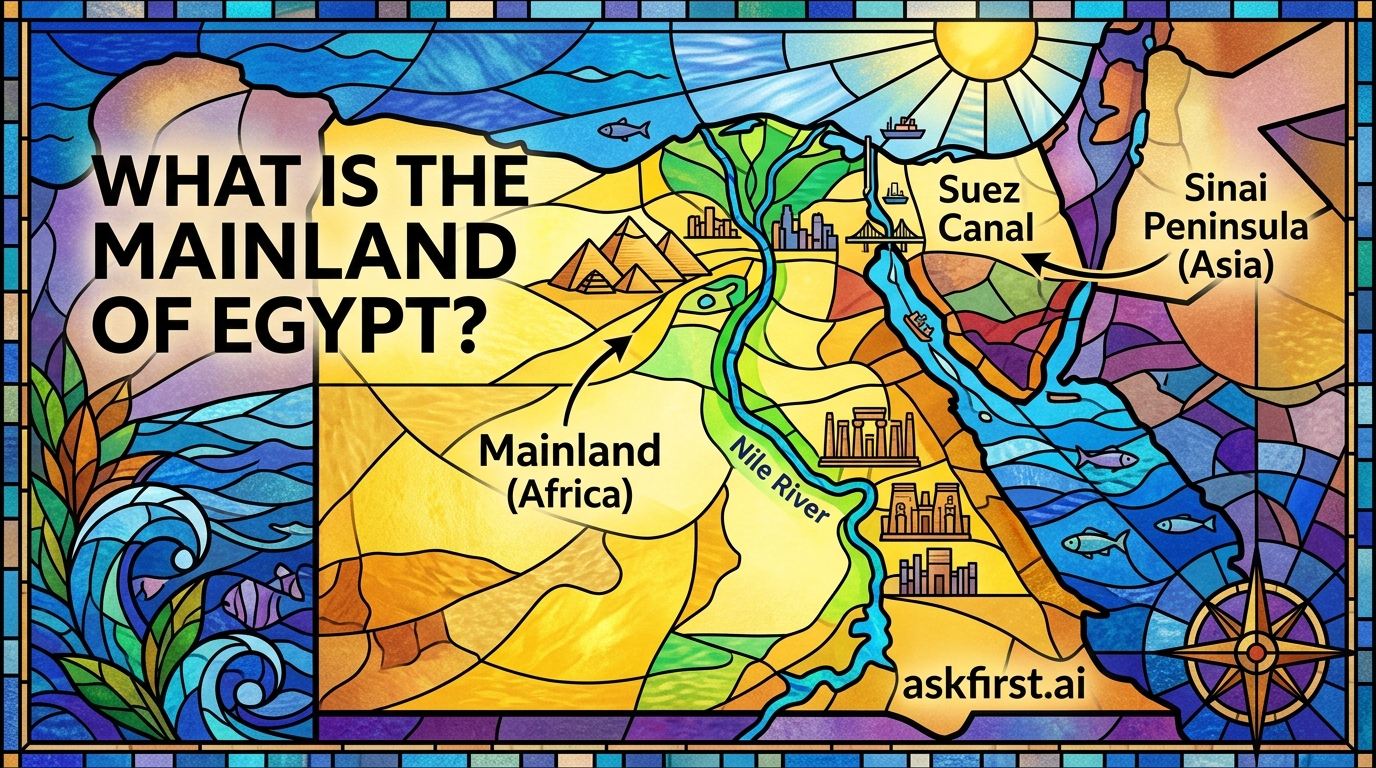
When discussing the "mainland" of Egypt, one must look beyond simple cartography to understand a landscape defined by the life-giving artery of the Nile River and the vast, arid expanses that have dictated the nation’s history for millennia. While Egypt is technically a transcontinental country—spanning the northeast corner of Africa and the Sinai Peninsula in Southwest Asia—the conceptual "mainland" is almost exclusively identified with the Nile Valley and the Delta. This is the heartland where 95% of the population resides, and where the foundational history of human civilization began.
The Nile Valley: The Arterial Mainland
The true mainland of Egypt is not defined by borders, but by the floodplains of the Nile. As noted by the renowned Egyptologist Barry Kemp in his seminal work Ancient Egypt: Anatomy of a Civilization (Routledge, 2006), the geography of Egypt is a "linear oasis" created by the river’s annual inundation. From the Sudanese border in the south to the Mediterranean coast in the north, this narrow strip of fertile land acts as the primary mainland.
Geographically, this region is divided into two distinct zones:
- Upper Egypt: This region comprises the valley south of Cairo, characterized by high cliffs on either side of the river. It is the historical cradle of the pharaonic kingdoms.
- Lower Egypt: This encompasses the expansive Nile Delta, a triangular region where the river splits into various distributaries before emptying into the Mediterranean Sea. This is the agricultural powerhouse and the most densely populated part of the mainland.
The Sinai Peninsula: The Transcontinental Exception
While the Sinai Peninsula is sovereign Egyptian territory, it is geologically and geographically distinct from the African mainland. Separated by the Suez Canal—a man-made waterway that acts as a physical divide—the Sinai is an extension of the Arabian Plate. In his detailed geographical study Egypt: The Geographical Setting (published in the Cambridge History of Egypt), scholar Janet Abu-Lughod highlights that the Sinai has historically functioned as a buffer zone and a land bridge between Africa and the Levant.
Unlike the lush, densely populated Nile Valley, the Sinai is characterized by rugged, mountainous terrain and arid desert plateaus. Because of this stark environmental contrast, the Sinai is rarely considered part of the "mainland" in the cultural or demographic sense, despite being politically integral to the state.
The Desert Hinterlands: The Forgotten Mainland
To speak of the mainland without addressing the vast deserts is to ignore the majority of Egypt’s landmass. The Western Desert (part of the Sahara) and the Eastern Desert (the Arabian Desert) constitute the vast majority of Egypt's territory.
- The Western Desert: This area is home to the "Great Sand Sea" and several vital oases, such as Siwa, Bahariya, and Farafra. These oases have served as the "islands" of the desert mainland, providing trade routes and sanctuary since antiquity.
- The Eastern Desert: Stretching from the Nile to the Red Sea, this region is rugged and mountainous. It is historically significant for its mineral wealth—gold, copper, and precious stones—which the pharaohs extracted to build their monuments.
While these deserts are often dismissed as "uninhabited," they are the strategic depth of the country. They provide the natural barriers that protected the Nile Valley civilizations from external invasion for centuries, acting as a profound geographical shield.
The Demographic Reality
The "mainland" of Egypt is defined by human occupancy. In the book The Egyptians by Jacke Phillips, it is noted that the population density along the Nile is among the highest in the world. The mainland is not just land; it is the space where the Egyptian identity—the language, the culture, and the social fabric—is woven. The government’s current efforts to expand the mainland through the construction of the New Administrative Capital in the desert east of Cairo represent a modern attempt to break the historic reliance on the narrow Nile corridor, effectively trying to "create" a new mainland for a growing population.
Conclusion
In summary, the mainland of Egypt is a complex construct. While the political borders encompass the Sinai and the vast Saharan deserts, the cultural, economic, and historical mainland is the Nile Valley and the Delta. This is the "Black Land" (Kemet), as the ancients called it, contrasted against the "Red Land" (Deshret) of the surrounding deserts. To understand Egypt is to recognize that its power and longevity have always been tied to this fertile ribbon of land. Even as the nation looks toward the future with desert reclamation projects and new urban centers, the Nile remains the singular, defining feature of the Egyptian mainland, anchoring the nation to its ancient roots while supporting its modern aspirations.