The Foundation of Cinematic Preference
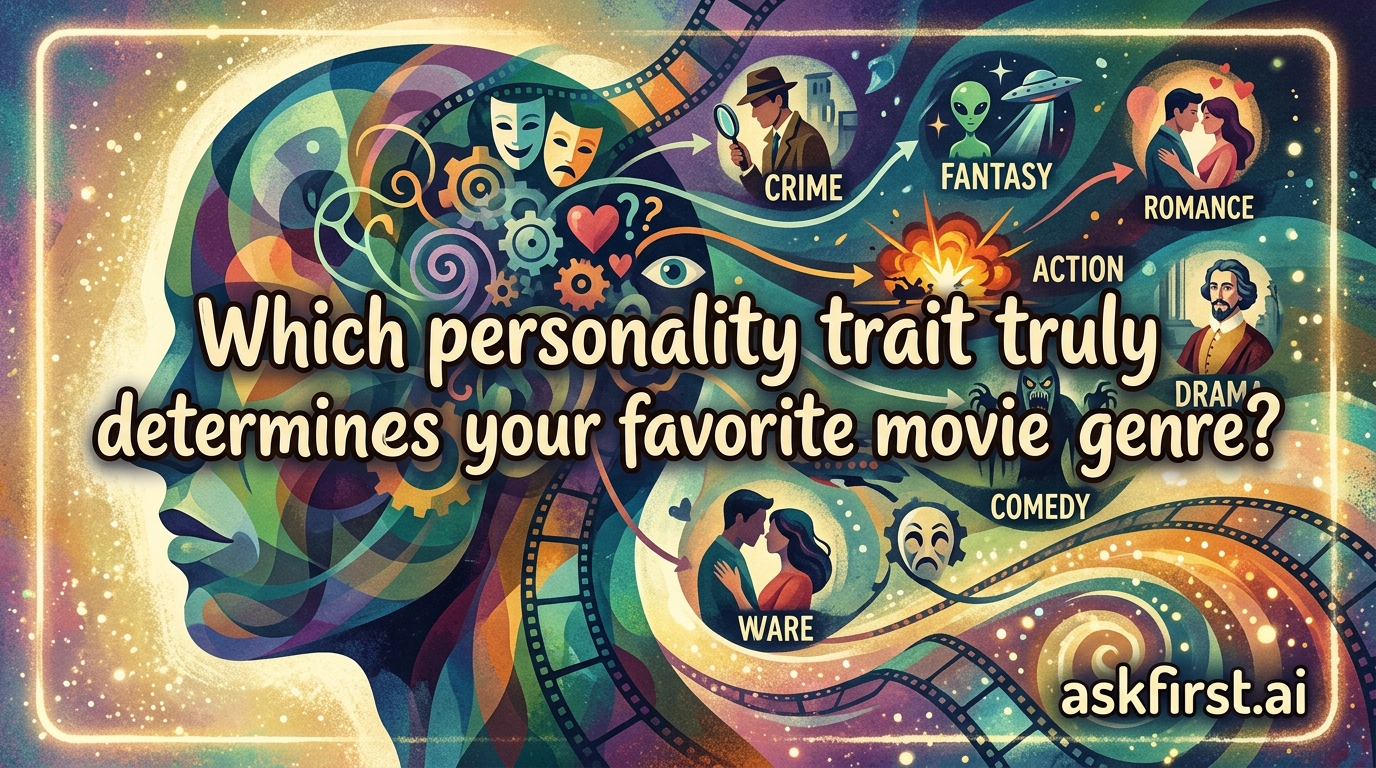
Cinema acts as a mirror to the human soul, and the question of why specific individuals gravitate toward horror while others prefer heartwarming dramas has long fascinated psychologists. While personal experience plays a role, modern personality theory suggests that one specific trait is the primary driver of movie genre preference: Openness to Experience. Part of the 'Big Five' personality model, this trait captures a person's propensity for curiosity, imagination, and a willingness to engage with abstract or non-traditional ideas. Individuals high in Openness tend to seek out complex, challenging, and intellectually stimulating cinema, such as cerebral science fiction, experimental art films, or avant-garde documentaries.
The Role of Openness in Narrative Engagement
Those scoring high on the Openness scale possess a cognitive architecture that thrives on ambiguity. In film, this manifests as a preference for non-linear storytelling, surrealist imagery, and unconventional plot structures. When a viewer high in Openness watches a film like Inception or a surrealist masterpiece by David Lynch, their brain experiences heightened arousal. They do not seek comfort in the predictable; instead, they seek the 'intellectual itch' that occurs when a narrative defies established logic. This trait allows the viewer to suspend disbelief more easily and empathize with characters whose lives are far removed from their own mundane realities.
Other Big Five Traits and Their Influence
While Openness is the primary determinant for complexity, other personality dimensions contribute significantly to genre affinity:
- Extraversion: Often correlates with a preference for high-energy films, such as action-packed blockbusters or loud, fast-paced comedies. Extraverts tend to enjoy cinema that mirrors social interaction, high stimulation, and kinetic energy.
- Agreeableness: Individuals high in this trait frequently gravitate toward 'feel-good' movies, romantic comedies, and dramas that emphasize altruism, social bonding, and human connection. The emotional resolution provided by these genres aligns with an agreeable personality's focus on maintaining harmony.
- Conscientiousness: Those who score high in this area often appreciate structured narratives, historical accuracy, and biopics. They may find satisfaction in films that follow a clear, logical progression or that impart historical knowledge and moral discipline.
- Neuroticism: Contrary to the myth that sensitive people avoid stress, individuals with higher levels of neuroticism are sometimes drawn to horror or thrillers. Psychological research suggests that for these individuals, horror films provide a safe, controlled environment to process anxiety—a concept known as 'recreational fear.'
Psychological Hooks and The 'Sensation Seeking' Factor
Beyond the Big Five, a specific sub-trait known as Sensation Seeking acts as a filter for genre preference. Sensation seekers desire high-intensity experiences and novel stimuli. This is why horror and extreme action genres remain evergreen; they provide a physiological 'rush' similar to a rollercoaster. When a viewer with high sensation-seeking needs selects a film, they are often unconsciously looking for a spike in dopamine. If a genre is perceived as 'safe' or 'formulaic,' these viewers often lose interest, further reinforcing the connection between innate psychological needs and cinematic choice.
The Intersection of Culture and Cognition
It is vital to note that while personality is an internal driver, culture acts as the external catalyst. A person with high Openness in one society might be drawn to political thrillers, while another in a different cultural context might prefer visually abstract mythopoeic epics. However, the underlying mechanism remains consistent: the brain seeks to satisfy its specific personality-driven needs through the lens of screen narrative. Whether it is the need for intellectual expansion (Openness) or the need for emotional catharsis (Agreeableness), the screen serves as a feedback loop for the psyche.
Conclusion: The Everlasting Connection
Your favorite movie genre is not merely a product of 'taste,' but a reflection of your underlying psychological architecture. By understanding the dominance of traits like Openness to Experience, one can gain deeper insight into personal motivations and cognitive patterns. The next time you find yourself clicking on a specific film, remember that it is the expression of your core self looking for a story that resonates with your internal design. Whether you are a seeker of complexity or a lover of harmony, the movies are a definitive map of who you are and how you process the world around you.