The Neurobiology of Romantic Mismatch
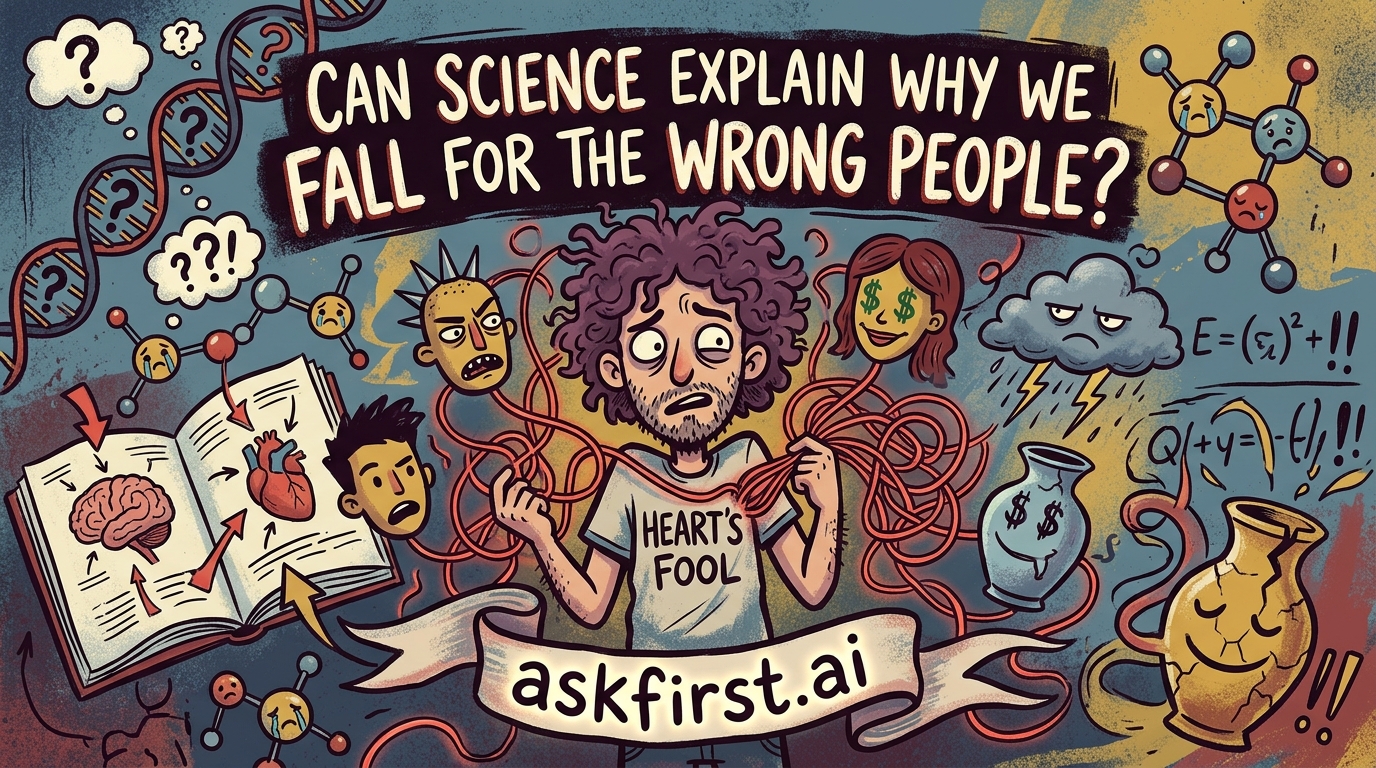
The phenomenon of repeatedly choosing partners who are emotionally unavailable, incompatible, or fundamentally detrimental to personal well-being is a subject of intense scientific scrutiny. Far from being a simple failure of judgment, falling for the 'wrong' person is often the result of complex neurobiological processes, deep-seated psychological conditioning, and evolutionary imperatives that frequently override rational decision-making.
The Role of Familiarity and Imprinting
One of the most robust psychological theories is the concept of repetition compulsion. Coined in the context of psychoanalysis, this theory suggests that individuals are subconsciously drawn to partners who replicate the emotional dynamics of their early caregivers. If a person grew up in an environment where affection was intermittent or conditional, the brain may learn to equate 'love' with 'struggle' or 'pursuit.' Consequently, when an adult encounters a secure, healthy, and available partner, the lack of dramatic highs and lows can feel 'boring' or unstimulating to a nervous system accustomed to high-cortisol volatility. In this sense, the 'wrong' person feels familiar, and in the brain’s hierarchy, familiarity often registers as safety, even if that familiarity is functionally harmful.
The Dopamine Reward Loop
Neuroscience reveals that the early stages of infatuation are driven by a powerful surge of dopamine, the brain's primary reward neurotransmitter. When attraction is paired with uncertainty—a hallmark of 'wrong' partners—it triggers a phenomenon known as intermittent reinforcement. This is the same psychological principle that powers slot machines and addictive social media loops. When the reward (the partner's affection) is unpredictable, the dopamine response is significantly stronger than if the reward were consistent. The brain enters a state of 'craving' that mirrors clinical addiction, making it physically difficult to detach from individuals who offer only occasional validation.
Evolutionary Mismatches and Attachment Styles
From an evolutionary perspective, human mating strategies were not originally designed for modern long-term romantic happiness but for reproductive survival. Attachment theory further explains this: individuals with 'anxious-preoccupied' attachment styles often find themselves irresistibly drawn to those with 'avoidant' attachment styles. This creates a painful, persistent dance where the anxious individual works harder to gain closeness, while the avoidant individual retreats to maintain their perceived autonomy. Both parties are simply acting out ingrained behavioral patterns that, while ancient in their protective intent, are poorly suited for the realities of healthy modern partnership.
Breaking the Cycle: Scientific Strategies
Understanding that this attraction is rooted in biology rather than a fundamental flaw in one's character is the first step toward change. Cognitive Behavioral Therapy (CBT) and Schema Therapy offer effective frameworks for identifying these destructive patterns. By deconstructing 'schemas'—long-term, deeply embedded patterns of thinking—individuals can learn to recalibrate their internal 'attraction radar.'
- Recognize the Signs of 'Chemistry' as Caution: Often, what is perceived as 'intense chemistry' is actually the activation of anxious attachment. Healthy attraction should feel calm, consistent, and safe.
- Evaluate Historical Data: Take an objective look at previous partners. Identify the recurring traits that led to dissatisfaction and consciously classify those traits as 'red flags' rather than 'challenges to overcome.'
- Prioritize Secure Bases: Seek out partners who provide emotional stability. While this might initially feel 'underwhelming' to a dysregulated nervous system, it allows the prefrontal cortex—the logical, reasoning part of the brain—to properly evaluate the long-term viability of the relationship.
Conclusion: Rewiring the Neural Architecture
Science demonstrates that humans are not doomed to repeat the same relationship errors indefinitely. The brain possesses a high degree of neuroplasticity, the ability to form new neural pathways through repeated, conscious practice. By actively choosing partners who embody secure traits—even when the 'spark' feels different—it is possible to habituate the brain to prioritize stability over volatility. Ultimately, the quest for the 'right' partner is not about finding someone who fixes the past, but about finding someone with whom the future can be built on a foundation of mutual regulation and enduring, consistent care.