The Subconscious Architecture of Affection
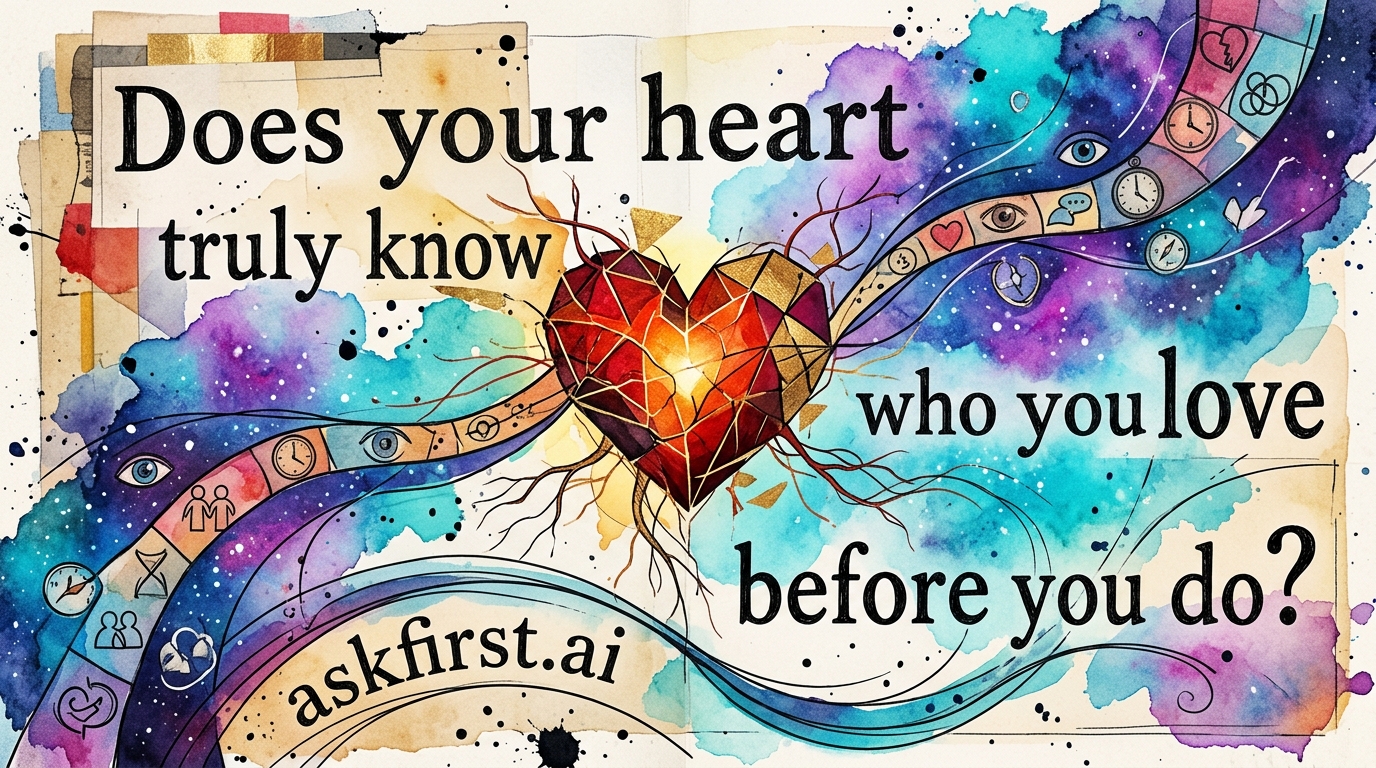
Human intuition regarding romantic attraction is often shrouded in mystery, yet modern psychology and neuroscience suggest that the heart—or more accurately, the subconscious brain—processes emotional connections long before the conscious mind registers the sentiment. This phenomenon, often referred to as the 'gut instinct' of love, functions as a highly sophisticated predictive mechanism.
The Neurobiological Foundations of Pre-conscious Love
Research in neuroimaging demonstrates that the brain exhibits activity in the ventral tegmental area (VTA) and the caudate nucleus—the brain's reward centers—in response to stimuli long before an individual claims to be 'in love.' When a person encounters someone who aligns with their subconscious emotional criteria, the brain releases a cocktail of neurochemicals, including dopamine and norepinephrine. These chemicals induce a state of physiological arousal—a faster heart rate, increased focus, and a sense of exhilaration—which precedes the cognitive label of 'love.'
Key Mechanisms of Early Recognition
- The Limbic System's Role: The amygdala and hippocampus process emotional memory and social cues, allowing the brain to recognize potential partners based on past associations and innate preferences without needing direct conscious evaluation.
- Pheromonal Communication: Though often subtle, biological signals related to the Major Histocompatibility Complex (MHC) suggest that humans are hardwired to detect genetic compatibility through olfactory cues. The brain decodes these signals subconsciously to foster attraction toward individuals who offer genetic advantages.
- Micro-expression Analysis: The subconscious brain excels at reading micro-expressions—fleeting facial movements that reveal genuine intent. If someone is deemed 'safe' or 'desirable,' the nervous system relaxes, allowing for the beginning of emotional attachment before the ego has even weighed the social or logical pros and cons.
Why Consciousness Lags Behind
The conscious mind is designed to process information logically, weigh consequences, and adhere to social norms. It is often slower than the limbic system, which operates on a survival-based, rapid-response model. This lag creates the classic feeling of being 'surprised' by one's own feelings. The phenomenon of 'falling' in love is actually the conscious mind catching up with the emotional conclusion already reached by the subconscious.
The Role of Narrative Construction
Psychologists emphasize that once the subconscious has identified an attachment, the conscious mind immediately begins building a narrative to justify it. This is known in cognitive psychology as post-hoc rationalization. An individual might suddenly notice the 'intellectual depth' or 'humor' of a person, but these are often secondary attributes used to support the primary, visceral pull established moments or days earlier.
Expert Perspectives: The Predictive Heart
Renowned researchers, such as Dr. Helen Fisher, have argued that attraction systems operate like appetites. Much like hunger, which directs attention toward food before the mind has fully decided on a meal, romantic attraction directs focus toward specific individuals. This 'love at first sight' or 'unexplained pull' is a biological directive system.
- Predictive Processing Theory: Some neuroscientists suggest the brain is a prediction machine. It holds a template of a desired partner based on past experiences and core values. When the brain encounters someone who matches this template, it bypasses standard filters to capture attention immediately.
- Self-Discovery Through Observation: Often, the conscious mind discovers its own desires by observing the behaviors of the body. Noticing that one is consistently seeking out a specific person, feeling nervous in their presence, or experiencing heightened joy during brief interactions is the body's way of informing the conscious mind of the heart's true orientation.
Conclusion: Trusting the Biological Signal
Understanding that the heart possesses its own intelligence—a rapid, neuro-chemical processing center—alleviates the confusion often associated with attraction. By recognizing that the subconscious is continuously mapping out emotional preferences, individuals can better appreciate the depth and speed of human connection. The feeling of 'knowing' who one loves before it is spoken aloud is not a mystical occurrence; it is the natural, efficient conclusion of a sophisticated biological system designed to prioritize social and emotional bonds. The next time a sudden, inexplicable shift occurs in emotional temperature toward another, consider it the subconscious finally inviting the conscious mind to the conclusion it reached long ago.