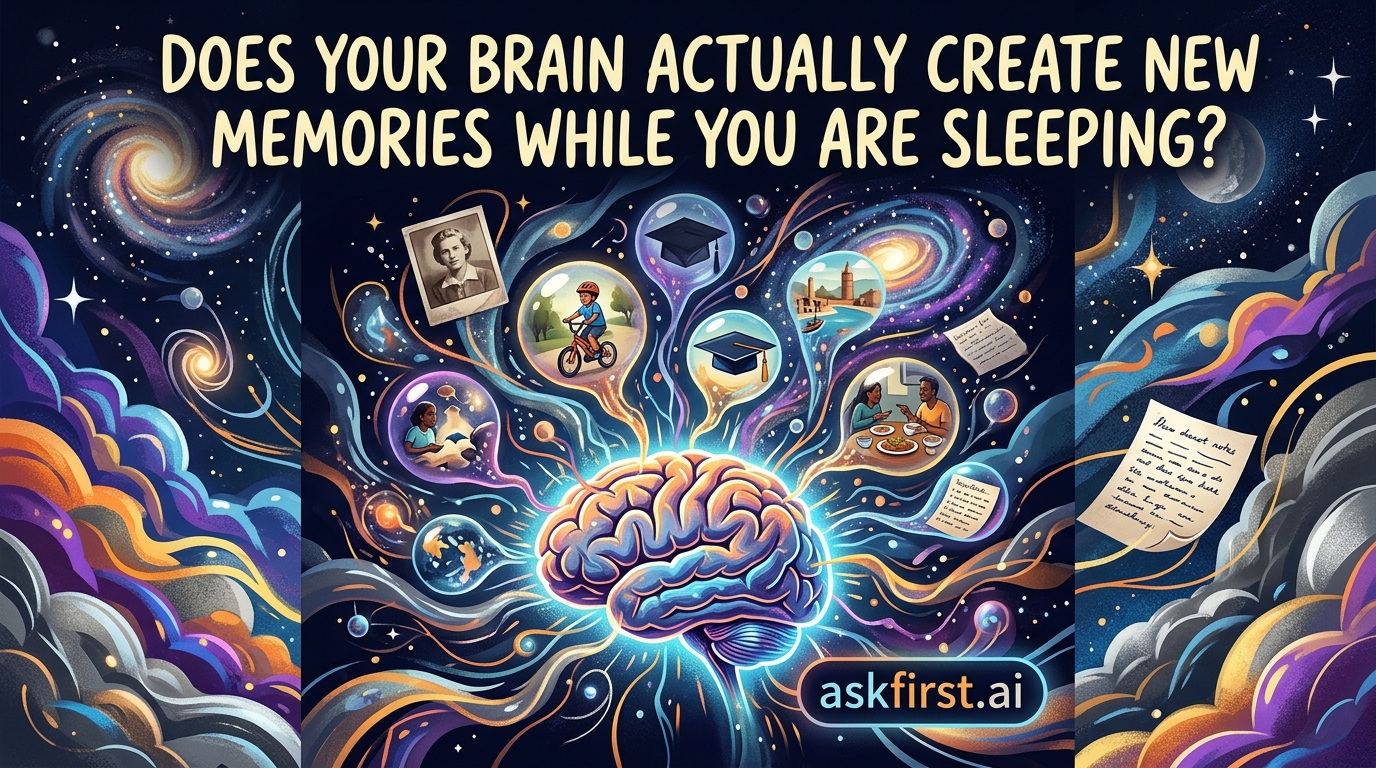
The Architectural Marvel of Sleep-Dependent Memory Consolidation
Contrary to the common belief that sleep is merely a state of passive rest, the human brain operates with profound intensity during the night. The concept of memory creation while sleeping is nuanced; rather than simply 'recording' new information like a video camera, the brain performs a sophisticated process known as memory consolidation. During this phase, the brain stabilizes, integrates, and encodes the events of the day into long-term storage, effectively transforming fragile neural patterns into robust internal frameworks.
The Mechanisms of Nocturnal Learning
Research in neurobiology, particularly studies involving hippocampal activity, reveals that the brain undergoes 'replay' phenomena. When an individual learns a new skill or encounters a new fact during the day, the neurons associated with that experience fire in a specific sequence. During deep sleep—specifically Non-Rapid Eye Movement (NREM) stage 3, also known as slow-wave sleep—these sequences repeat at accelerated speeds. This process essentially broadcasts information from the short-term storage area, the hippocampus, to the long-term storage region, the neocortex.
- Hippocampal-Neocortical Dialogue: This internal communication acts as a filter. The brain discards irrelevant background noise while strengthening the synaptic connections related to crucial experiences.
- Synaptic Homeostasis: Sleep allows the brain to prune away unnecessary synaptic connections that accumulated during the day, preventing 'cognitive overload' and ensuring that only the most significant memories are preserved for long-term use.
Why Sleep Is Essential for Cognitive Evolution
If the brain did not engage in this nocturnal maintenance, the result would be a failure of learning. Without sleep, the brain suffers from encoding deficits. This is why individuals who pull 'all-nighters' to study often find that the information remains on the surface and is quickly lost. In contrast, integrating sleep intervals into a learning schedule fosters superior retention and allows the brain to draw complex connections between disparate pieces of information—a phenomenon known as 'insight.'
The Role of REM Sleep in Creative Synthesis
While deep sleep is critical for factual memory (declarative memory), Rapid Eye Movement (REM) sleep plays a unique role in creative synthesis and emotional processing. During REM cycles, the brain enters a state of high arousal, similar to wakefulness, but disconnected from sensory input. This allows the prefrontal cortex—the center of logic—to disengage, while the limbic system—the center of emotion—remains highly active.
This specific environment allows the brain to test associations that would be deemed 'illogical' during the day. It is during REM sleep that the brain frequently solves problems that stumped a person during their waking hours, effectively allowing the brain to draft new, creative memories that integrate old knowledge with new insights.
Expert Recommendations for Memory Optimization
To maximize the efficiency of the brain during its sleep-dependent consolidation process, consider the following strategies based on neuroscientific findings:
- Prioritize Consistent Sleep Cycles: Because memory consolidation happens in specific, timed stages, fragmented sleep can interrupt the 'replay' of neural sequences.
- Avoid Disruptive Stimuli: Exposure to high-intensity blue light or high-stress activities before bed can disrupt the onset of slow-wave sleep, potentially limiting the volume of information the brain can stabilize.
- Active Recall Before Rest: Engaging in active recall or reflection shortly before sleep can 'prime' the brain for which neural pathways to prioritize during the night’s consolidation process.
The Evolutionary Significance of Sleep
From an evolutionary perspective, the energy cost of being unconscious for hours at a time is high. However, the survival value of memory consolidation is arguably higher. A creature that learns from experience—whether it is a foraging route, the identification of a predator, or the nuances of social interaction—gains a profound competitive advantage. Therefore, sleep is not a luxury or a cessation of activity; it is a primary functional state of life.
In conclusion, while the brain does not technically 'create' memories from nothing while asleep, it acts as a master sculptor. It refines the raw stone of the day’s experiences into the finished, lasting monuments of human knowledge. The nocturnal brain is a bustling engine of reconstruction, ensuring that every sunrise finds the individual not just rested, but structurally updated for the challenges of the future. Understanding this process demystifies the biological necessity of rest and underscores the vital importance of protecting one's sleep hygiene for long-term cognitive health.