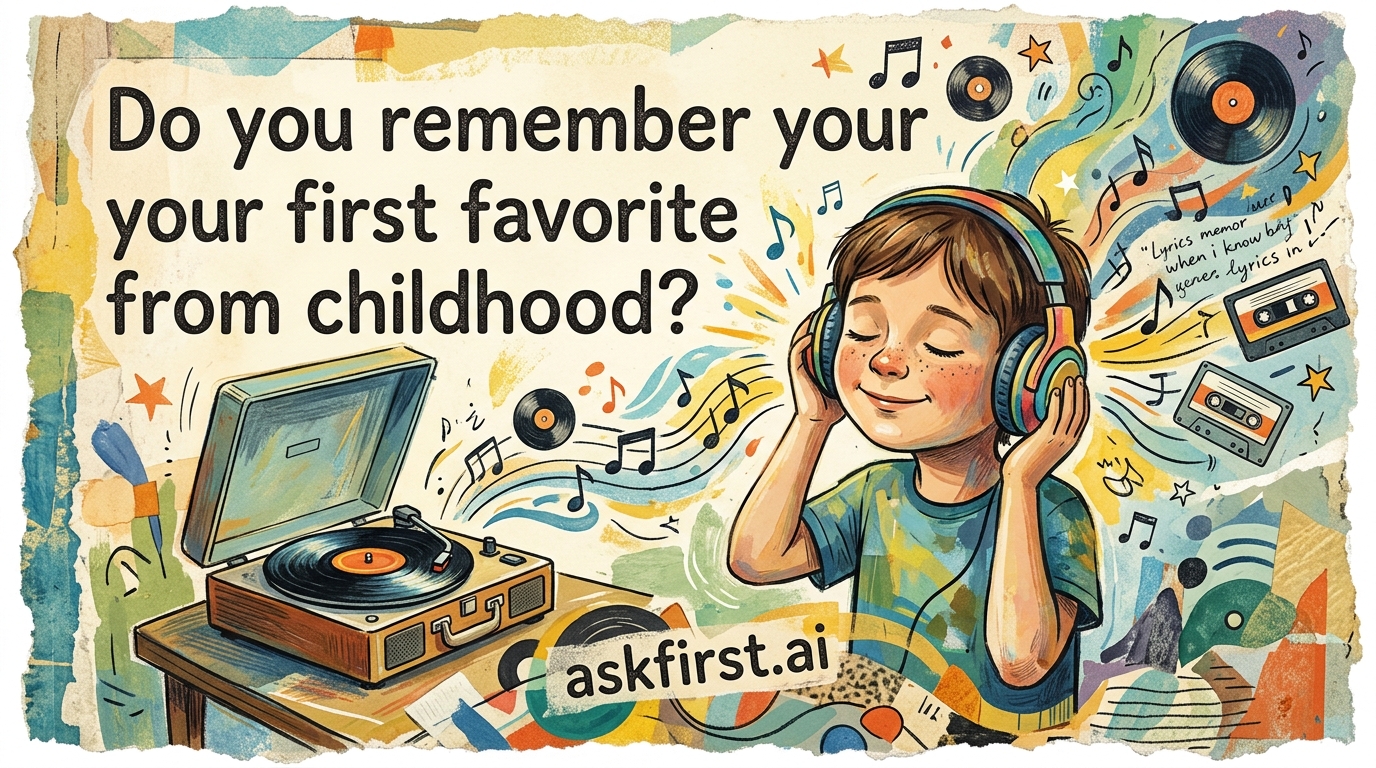
The Neurobiology of Early Musical Imprinting
The phenomenon of the "first favorite song" represents a fascinating intersection of developmental psychology, neurology, and cultural sociology. When a child identifies a specific melody or lyrical narrative as their favorite, the brain is undergoing a period of intense synaptic pruning and myelination. This developmental stage makes the brain particularly susceptible to "musical imprinting," a process where auditory stimuli are etched into long-term memory with high emotional valence.
Why Childhood Music Remains Immutable
Research suggests that music heard during the formative years—typically between the ages of 5 and 14—creates a "reminiscence bump." During this time, the brain's emotional centers, such as the amygdala and the hippocampus, are highly reactive to new experiences. When a specific song coincides with a period of high physiological arousal or social bonding, the neural pathways associated with that auditory pattern are reinforced repeatedly. Consequently, hearing these tracks decades later can trigger a neurochemical release of dopamine, effectively transporting an individual back to their childhood self.
- The Hippocampal Connection: The brain utilizes the hippocampus to retrieve episodic memories associated with the music.
- Dopaminergic Feedback: Familiar melodies trigger the brain’s reward system, explaining why individuals often feel a sense of comfort or euphoria when revisiting these tracks.
The Role of Repetition and Predictability
Children thrive on predictability and patterns. Music that features simple melodic structures, repetitive choruses, and strong rhythmic pulses is easier for a developing brain to encode. This is why lullabies and early childhood pop songs are often the first to claim the title of "favorite." The child finds safety in the ability to anticipate the next note. This cognitive mastery creates a positive feedback loop: the more the child can successfully predict the song, the more they enjoy it, and the more they choose to listen to it, further cementing it into their identity.
Psychological Hooks: Why We Attach Identity to Songs
Music serves as an external scaffolding for the developing ego. Before a child has the vocabulary to describe their emotions or complex social standing, they use music as a shorthand for who they are. If a child listens to a specific genre, it often reflects the environment provided by caregivers or early peer groups. This shared sonic experience creates a sense of belonging. The "favorite song" is essentially a mnemonic device for the self.
Busting Myths: Is Musical Taste Fixed?
A common myth posits that musical taste is determined solely by genetics. While individual differences in auditory processing exist, the environmental influence of childhood is far more significant. Studies in social psychology indicate that exposure is the primary driver of preference. If a specific melody was played consistently during family rituals or significant playdates, the brain assigns that melody a high "survival value" or social importance. It is not necessarily that the composition is objectively superior; it is that the composition is contextually significant.
Creating a Lifelong Soundtrack
To understand the significance of early musical favorites, one must view them as "auditory fossils." They serve as windows into the emotional state of a younger, less burdened self. In professional and academic settings, researchers often use these early favorites to help patients suffering from memory-related disorders, as music bypasses damaged cognitive areas to stimulate the brain's emotional architecture.
- Cognitive Preservation: Music acts as an anchor for neural integrity.
- Emotional Regulation: Re-listening to childhood favorites can lower cortisol levels by providing a familiar, safe sonic space.
In summary, the first favorite song acts as a baseline for the development of individual aesthetic identity. It is a testament to how profoundly the human brain encodes emotional context alongside melody. Whether it was a high-energy pop track or a gentle nursery rhyme, that song likely helped define the early parameters of joy and memory. Understanding this connection allows for a deeper appreciation of why, even into the twilight years, the heart still beats in rhythm with the echoes of childhood.