The Psychology of Persistent Regret
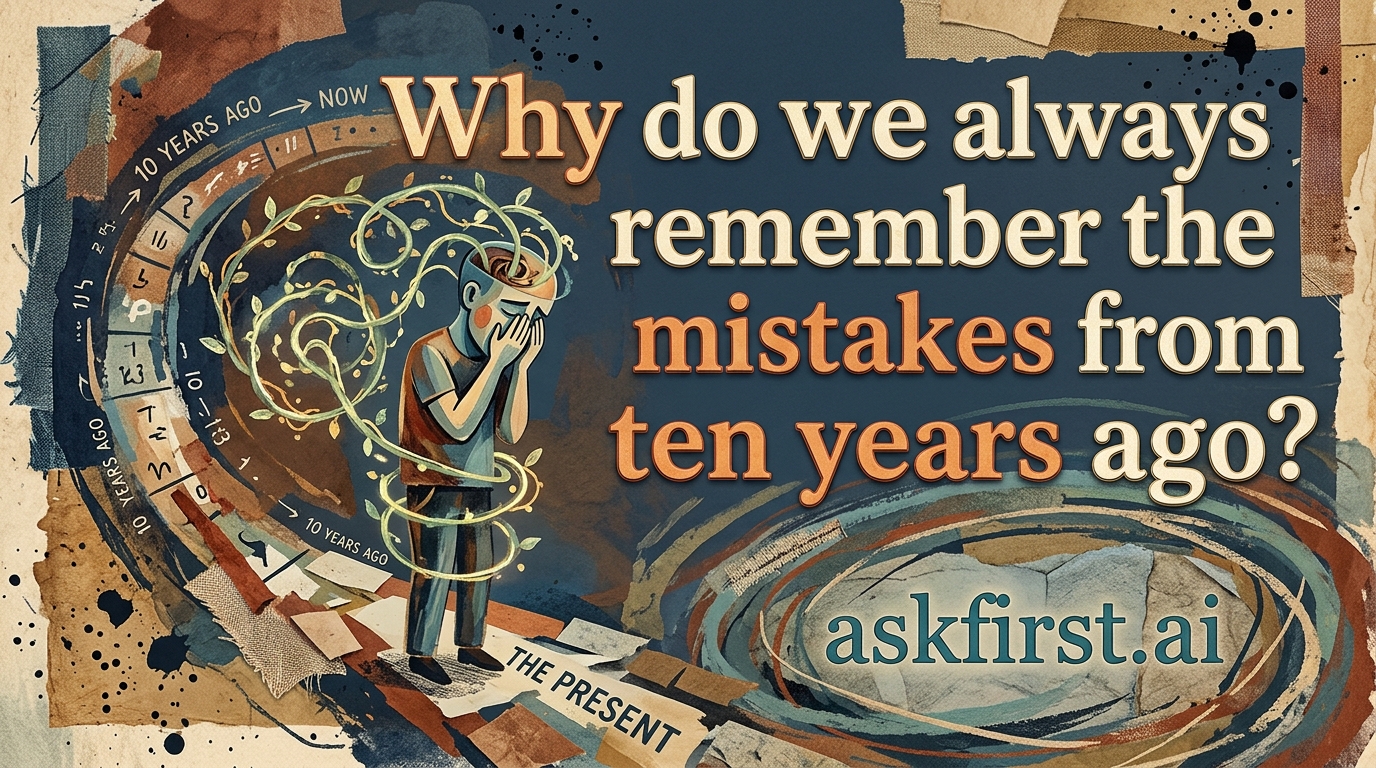
The phenomenon of ruminating on past errors, often referred to as the Zeigarnik Effect, suggests that humans naturally remember uncompleted or interrupted tasks better than completed ones. When a mistake occurs, it creates a psychological 'tension' because the situation lacks a sense of closure. The brain, functioning like a complex prediction engine, continuously revisits these unresolved data points to extract lessons that might prevent future misfortune. This is not merely a flaw in human engineering but a profound evolutionary safeguard.
The Role of Emotional Intensity
Memory is not a static archival system; it is a reconstructive process deeply influenced by the Amygdala, the brain's emotional center. When a mistake is accompanied by embarrassment, fear, or profound social anxiety, the emotional spike acts as a chemical highlighter. Neurotransmitters like norepinephrine and cortisol solidify these neural pathways, making them exceptionally resistant to decay. Scientific research indicates that negative events are encoded with higher priority than positive ones because, throughout human history, avoiding a dangerous error was more vital to survival than basking in a minor success. This 'negativity bias' ensures that mistakes from a decade ago feel as vivid as if they occurred yesterday.
Cognitive Dissonance and Self-Identity
Another critical factor is Cognitive Dissonance. Individuals possess an idealized version of themselves. When a past action blatantly contradicts that self-image, the brain struggles to reconcile the discrepancy. The mind repeatedly loops the memory to analyze how that event 'should' have happened to better align with the current concept of the self. By dwelling on the mistake, the psyche attempts to repair the breach in identity, effectively asking, 'How could I have been that person?' This cognitive exercise is an attempt to update internal programming, even if the event itself is long beyond repair.
The Spotlight Effect
Many people suffer from the Spotlight Effect, a psychological tendency to overestimate how much other people notice our actions. Even ten years later, individuals believe that their peers might still be harboring memories of their past failures. This false belief keeps the memory 'fresh' because the mind treats it as a persistent social threat. Understanding that most people are far too occupied with their own personal narratives to remember the minor blunders of others is the first step toward releasing the grip of these memories.
Strategies for Cognitive Reappraisal
To move past the persistent recall of old mistakes, experts suggest several evidence-based techniques:
- Objective Re-framing: View the memory from the perspective of an outside observer rather than through your own eyes. This 'distanced' perspective reduces emotional reactivity and allows for a more rational assessment of the event.
- Integration as Data: Rather than viewing the memory as a badge of shame, categorize it as a data point. Ask, 'What specific skill did this experience build in me?' By labeling the experience as a lesson, you shift the memory from the emotional brain to the logical brain.
- Self-Compassion Practices: Research shows that those who practice self-compassion are less likely to experience chronic rumination. Recognizing that all humans are prone to error reduces the ego's need to protect itself from the memory.
The Evolutionary Benefit
It is vital to acknowledge the utility of memory. While the emotional sting of a ten-year-old error is unpleasant, it serves as a sentinel. The brain keeps these files open to ensure that the environment is thoroughly mapped for potential risks. However, once a person acknowledges that the 'threat' has been neutralized and the lesson has been extracted, the brain is often more willing to relegate the memory to long-term storage. By actively analyzing the mistake and consciously noting the growth that followed, the necessity for the brain to keep the 'alert' active decreases significantly.
In conclusion, remembering old mistakes is a testament to the brain's tireless effort to improve itself. Through a combination of neuroplasticity, emotional signaling, and the constant quest for identity alignment, the mind ensures that we learn from our past. By mastering the art of constructive reflection, individuals can transform these lingering memories from sources of regret into foundations for future wisdom and resilience.