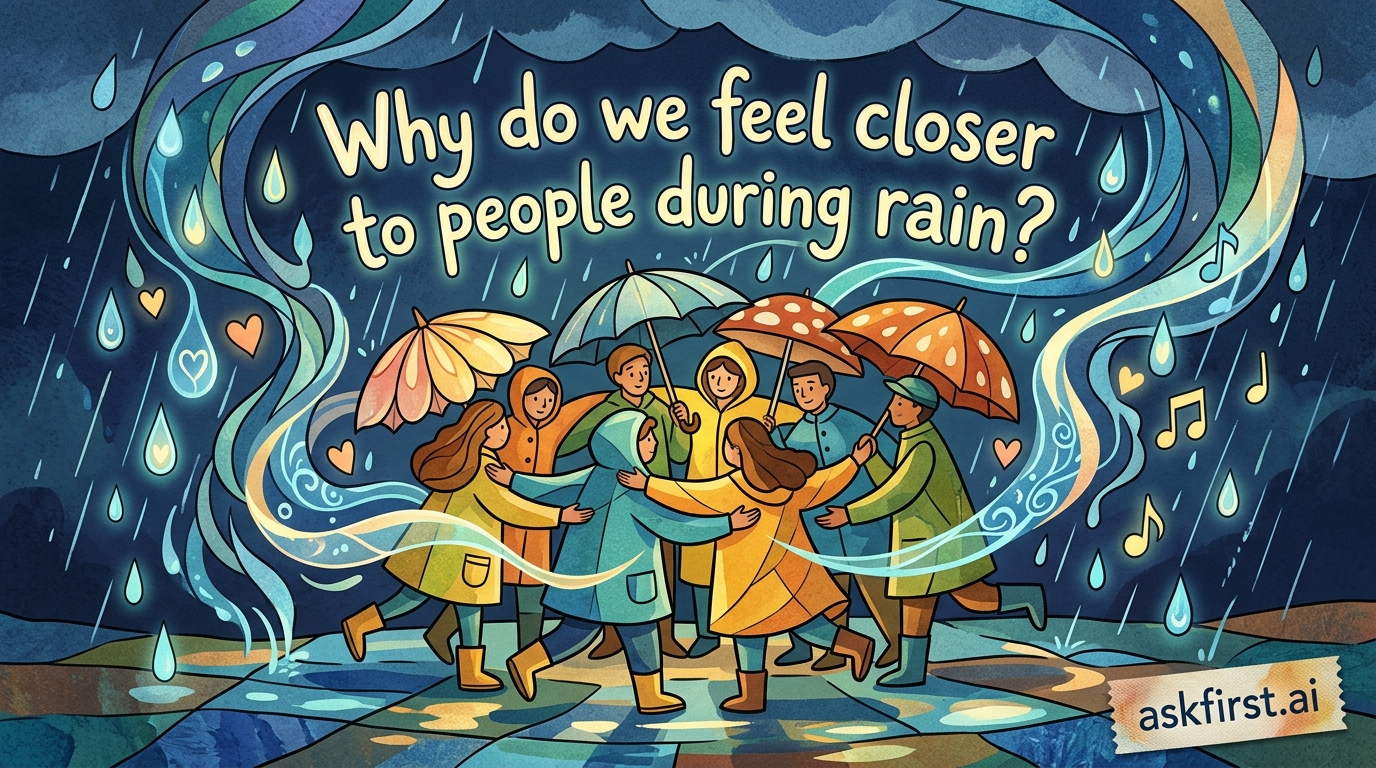
The Psychology of Atmospheric Intimacy
The phenomenon of feeling heightened closeness to others during rain is a profound intersection of evolutionary biology, sensory processing, and environmental psychology. While often dismissed as mere poetic sentiment, the tendency for individuals to seek or feel increased connection during rainy weather is rooted in fundamental human survival mechanisms and neurological responses.
The Evolutionary Urge for Shelter
From an evolutionary perspective, rain represents a shift in environmental conditions that necessitates protection. For early humans, rain signaled a threat to thermal regulation and shelter integrity. This external pressure triggered an instinctual 'tend-and-befriend' response, a theory proposed by psychologist Shelley Taylor. Unlike the 'fight-or-flight' response, which involves individualistic survival, the 'tend-and-befriend' mechanism encourages social gathering to ensure communal warmth, resource sharing, and heightened security. When the world outside becomes unpredictable or harsh, the proximity of other humans becomes a literal and psychological buffer against the elements.
Sensory Deprivation and Auditory Focus
Rain alters the sensory landscape of our immediate surroundings in several significant ways:
- White Noise Effect: The steady rhythmic patter of rain acts as a natural white noise, which masks sudden, jarring, or distracting environmental sounds. This auditory smoothing helps the brain lower its alertness levels, allowing for deeper focus on the immediate interpersonal environment.
- Visual Softening: Rain reduces visibility and softens sharp edges in the landscape, often drawing the focus of participants inward. This reduction in distal environmental input forces the brain to redirect its attention to the immediate social circle.
- Increased Olfactory Awareness: Petrichor—the pleasant, earthy scent produced when rain falls on dry soil—triggers positive emotional responses in many cultures. This sensory input contributes to a relaxed state of mind, lowering barriers to vulnerability.
The Impact of Co-Regulation
Psychologically, human beings are wired for emotional co-regulation. When an external change occurs, such as a shift in weather, we often subconsciously synchronize our internal states with those in our immediate proximity. During rain, the tendency to stay indoors creates a 'contained environment.' This lack of alternative options encourages active engagement with those present. This proximity fosters a phenomenon known as 'synchrony,' where individuals begin to match their speech patterns, breathing, and even subtle postural cues. This biological alignment creates a powerful, often unspoken sense of rapport and emotional intimacy.
Cognitive Load and Romantic Idealization
Research in environmental psychology suggests that 'cozy' weather conditions reduce the cognitive load associated with navigation and external vigilance. When we do not need to constantly monitor our surroundings for external changes, we allocate more mental resources toward deep conversation and empathy. Furthermore, the cultural narrative of 'rainy day romance'—perpetuated through art, literature, and film—acts as a psychological anchor. This cultural conditioning primes the mind to associate rain with connection, thereby reinforcing the actual feeling of closeness when it occurs.
Why This Feeling Remains Evergreen
This experience is fundamentally grounded in human biology rather than current trends or events. Regardless of the decade, the human brain continues to prioritize the internal 'hearth' during environmental instability. The feeling of intimacy during rain is a timeless manifestation of the social animal’s need for secure attachment. By shifting the focus from the vast, complex world to the small, manageable sphere of a single room shared with others, rain provides a natural context for genuine social bonding. It creates an environment where 'social lubrication' occurs organically, stripping away the friction of modern, hurried life and leaving behind the core elements of human presence: conversation, shared experience, and mutual support. Whether occurring today or in the year 2050, the cognitive and biological pathways triggered by the sound of rain will continue to draw people together, proving that intimacy is as much a product of our environment as it is of our hearts.