The Psychology of Auditory Preferences
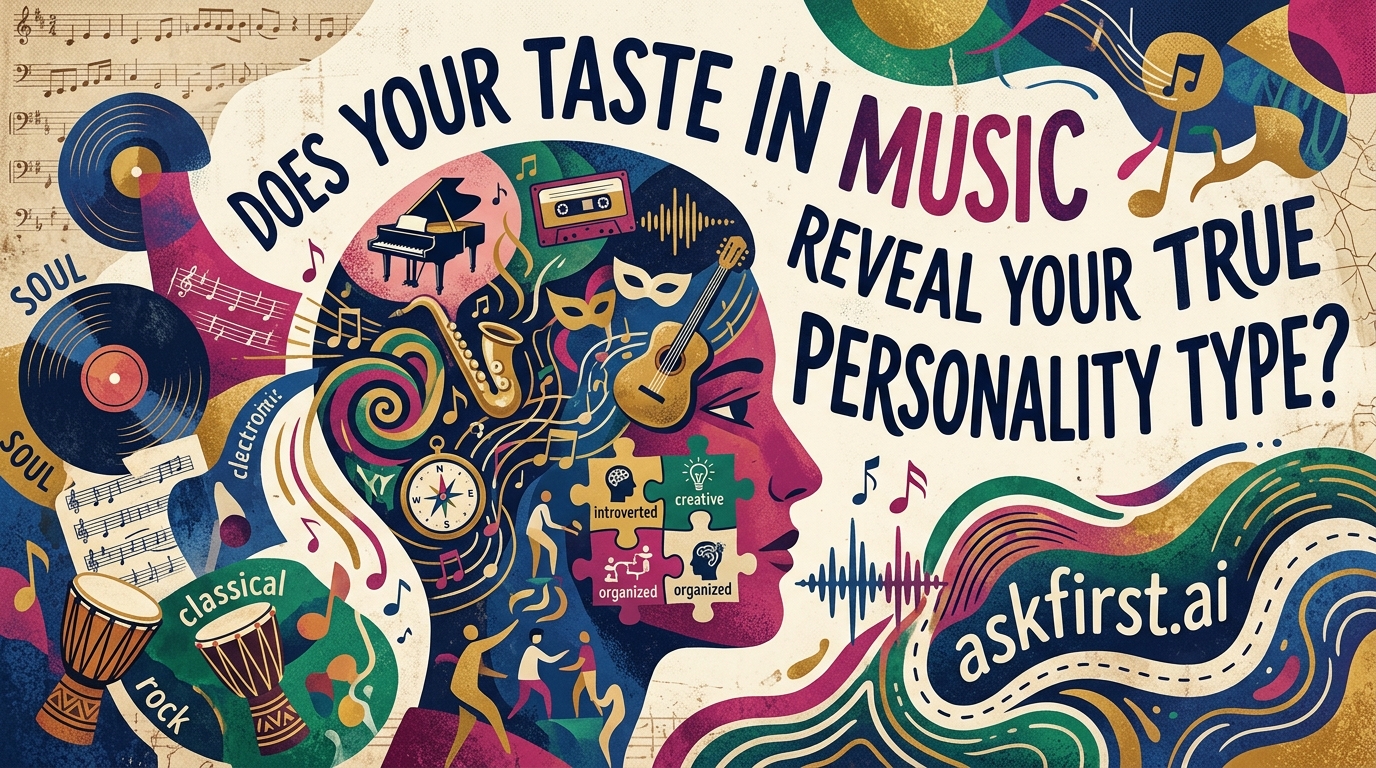
Musical taste has long been regarded as a window into the inner workings of the human mind. Recent psychological research suggests that the songs occupying a playlist are not merely aesthetic choices but are deep-seated reflections of cognitive processing styles, emotional regulation strategies, and core personality traits. Studies conducted by the University of Cambridge, involving over 200,000 participants globally, have provided empirical evidence linking musical preference to the 'Big Five' personality dimensions: Openness to Experience, Conscientiousness, Extraversion, Agreeableness, and Neuroticism.
The OCEAN Model and Auditory Patterns
The Big Five framework provides a robust lens through which to examine these connections. The findings are often counter-intuitive, suggesting that musical complexity serves as a marker for intellectual curiosity.
- Openness to Experience: Individuals scoring high in openness gravitate toward complex, intricate, and intellectually stimulating genres such as classical, jazz, and progressive rock. These listeners find beauty in sonic texture and harmonic dissonance, viewing music as a canvas for cognitive exploration rather than simple background noise.
- Extraversion: Extraverts often demonstrate a preference for upbeat, energetic, and rhythmic music. This preference is linked to a higher physiological arousal threshold. Genres like pop, dance, and hip-hop provide the sensory stimulation necessary to maintain an elevated mood, aligning with the extravert's desire for social connectivity and high-energy environments.
- Agreeableness: Listeners who score high in agreeableness show an affinity for mellow, acoustic, and soft melodies. The lyrical content often reflects themes of love, social harmony, and positive emotions. This preference mirrors an underlying drive toward empathy and cooperative social interactions.
The Science of Cognitive Empathizers vs. Systemizers
One of the most profound discoveries in this field is the distinction between 'empathizers' and 'systemizers.'
Empathizers are defined by their ability to recognize and respond to the mental states of others. They typically prefer 'mellow' music characterized by negative valence, low energy, and deep emotional sincerity. This includes R&B, soft rock, and folk. The focus here is on the emotional narrative conveyed by the artist.
Systemizers are defined by their propensity to analyze and construct rules within systems. They exhibit a distinct preference for 'intense' music featuring high arousal, technical complexity, and structural patterns. Examples include heavy metal, complex jazz, or avant-garde electronic music. Systemizers find stimulation in the mathematical precision and intricate layering inherent in these compositions.
Why Music Serves as a Personality Mirror
Music functions as a non-verbal language that bypasses social defenses. When a person listens to a specific song, they are often selecting a digital surrogate for their emotional state. This choice acts as a 'digital footprint' of their psyche.
- Emotional Regulation: Music is used as an external tool to manage internal arousal. A person who feels anxious might choose calming, ambient soundscapes to lower their heart rate, demonstrating a proactive approach to mental health.
- Identity Construction: People often use music as a badge of tribal affiliation. By consuming and sharing specific genres, individuals project their values to their social circles, signaling shared ideologies or aesthetic preferences.
- Biological Resonance: The auditory cortex does not process sound in isolation; it interacts deeply with the reward systems of the brain. The release of dopamine in response to music varies depending on an individual’s personality, suggesting that personality dictates the neurochemical 'reward' received from specific sounds.
The Persistence of Taste Over Time
While musical taste can evolve, foundational preferences formed during late adolescence often remain stable. Psychologists refer to this as the 'neural imprint' period. Even as society evolves, the structural characteristics of music—its tempo, density, and complexity—continue to align with a person’s baseline temperament. A quiet, contemplative individual is unlikely to suddenly pivot to chaotic, hyper-aggressive noise, even if their social circle shifts, because their fundamental processing style remains consistent.
Conclusion: Beyond the Soundtrack
In essence, music acts as a high-fidelity diagnostic tool. By analyzing an individual’s preferred musical structures, psychologists can glean significant insights into how that person perceives the world, processes information, and navigates social hierarchies. While one's personality is multifaceted and complex, the choices made in the silence of one's headphones offer a remarkably honest reflection of the self. Music is not just entertainment; it is an intimate autobiography written in frequency and time.