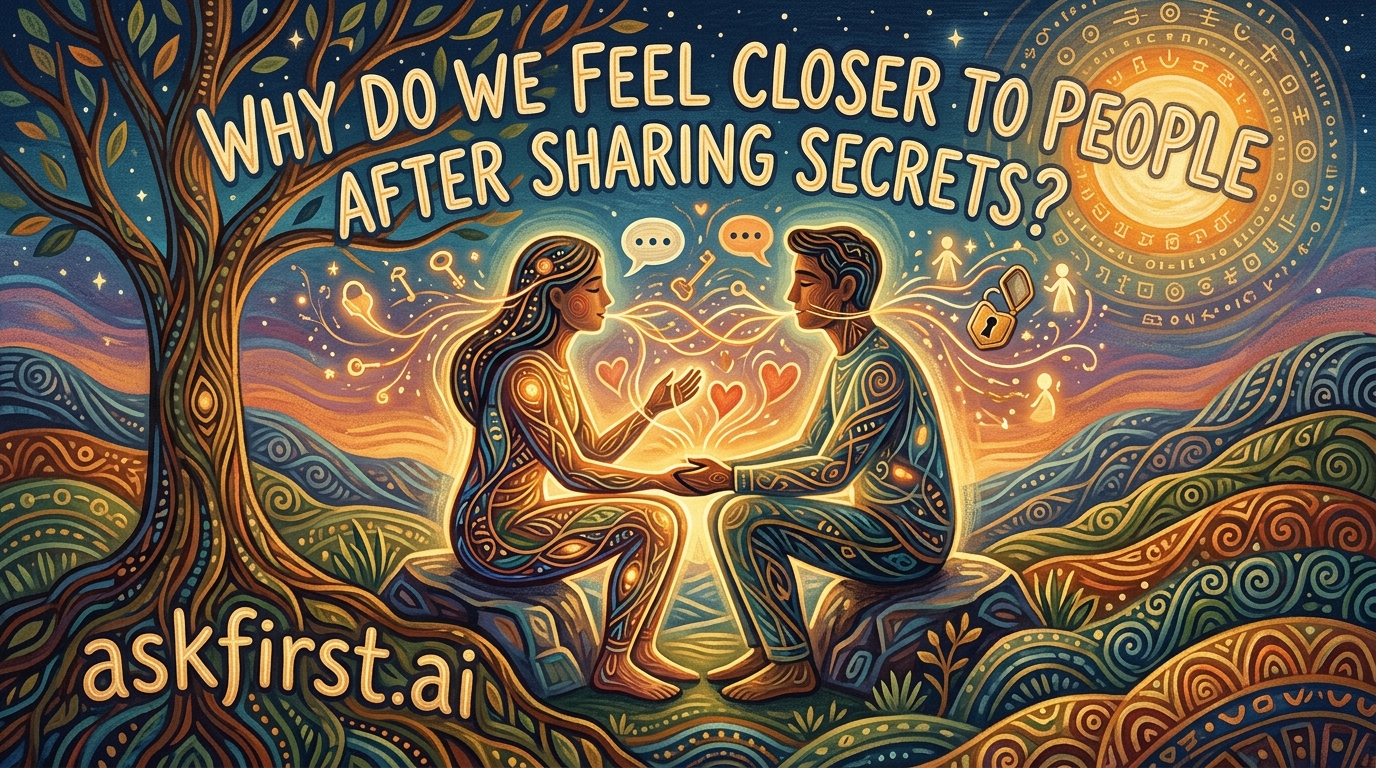
The Evolutionary and Psychological Power of Vulnerability
Human connection is the fundamental architecture of our survival, yet the mechanics behind how we build deep intimacy remain a subject of profound fascination. The act of sharing a secret is not merely a conversational exchange; it is a complex psychological maneuver that triggers specific neurobiological and social pathways. When two individuals share confidential information, they participate in an act of vulnerability that effectively resets the social contract between them, transitioning the relationship from the surface-level to the significant.
The Neurobiology of Trust and Oxytocin
At the core of this phenomenon lies the hormone oxytocin, often referred to as the 'bonding hormone.' Research in social neuroscience suggests that when an individual chooses to disclose personal information, the listener perceives this as a sign of trust. In response, the brain releases oxytocin, which facilitates feelings of safety, empathy, and social bonding. This physiological reaction reduces the activity of the amygdala, the brain's fear center, allowing both parties to feel a sense of psychological security that is unattainable through mundane small talk.
The Principle of Reciprocal Disclosure
Social psychology emphasizes the 'reciprocity norm' as a cornerstone of human interaction. When a secret is shared, it creates a subtle, subconscious pressure—not of obligation, but of mirroring. By opening a window into one's private world, an individual implicitly invites the other party to do the same. This dynamic creates a reciprocal cycle of vulnerability that gradually strips away the 'social masks' individuals wear in public. As these barriers fall, the perceived authenticity of the relationship increases, leading to a sense of profound closeness.
The 'Secret-Keeper' Dynamic
There is a distinct psychological weight associated with holding information for someone else. When an individual is entrusted with a secret, they become a co-author of a shared narrative. This shifts the relationship from one of passive association to one of active partnership. The keeper of the secret now possesses an 'informational asset' that binds them to the discloser, creating a unique psychological pact. This alliance-building mechanism was likely an evolutionary advantage, as ancient humans who could share intimate knowledge were better equipped to identify reliable partners for survival.
Why It Works: Breaking the Illusion of Perfection
In an age dominated by curated online personas, the sharing of a secret serves as a radical rejection of perfection. Secrets often involve human fallibility—mistakes, fears, or unpolished ambitions. By revealing these aspects, individuals prove to one another that they are human. This realization allows for the phenomenon of 'acceptance,' where the sharer realizes they are still valued despite their perceived flaws. This creates a powerful emotional feedback loop:
- Validation: Feeling understood without judgment.
- Exclusivity: Recognizing that this information is not shared with the general public, thus elevating the status of the relationship.
- Safety: Confirming that the other person acts as a protector of personal integrity.
Practical Applications for Deepening Bonds
Understanding the science behind secret-sharing provides actionable insights into how individuals can foster deeper connections in professional and personal life. While the concept of 'secrets' might imply extreme sensitivity, it is more accurately viewed as 'self-disclosure.' Applying this knowledge involves:
- Starting Small: Gradual disclosure allows trust to build incrementally, preventing the psychological shock of overwhelming a new acquaintance.
- Active Listening: The closeness felt by the sharer is equally dependent on the listener's reaction. A non-judgmental, curious, and empathetic response is essential to reinforcing the bond.
- Honoring Confidentiality: Nothing dismantles trust faster than the betrayal of a secret. Maintaining the sanctity of the information is the ultimate proof of commitment to the relationship.
Conclusion
Sharing a secret is a daring act of emotional currency. It represents a pivot point where two individuals agree to see each other not just for who they project themselves to be, but for the complex, multifaceted people they actually are. Through the combined effects of neurochemical release, the pressure of reciprocity, and the fundamental human need for validation, secret-sharing serves as the primary engine for turning casual acquaintances into lifelong confidants. By embracing this vulnerability, individuals tap into one of the most potent drivers of human intimacy, ensuring that the bonds they form are both resilient and deeply meaningful.