The Biological Precursor to Affection: Decoding the Subconscious
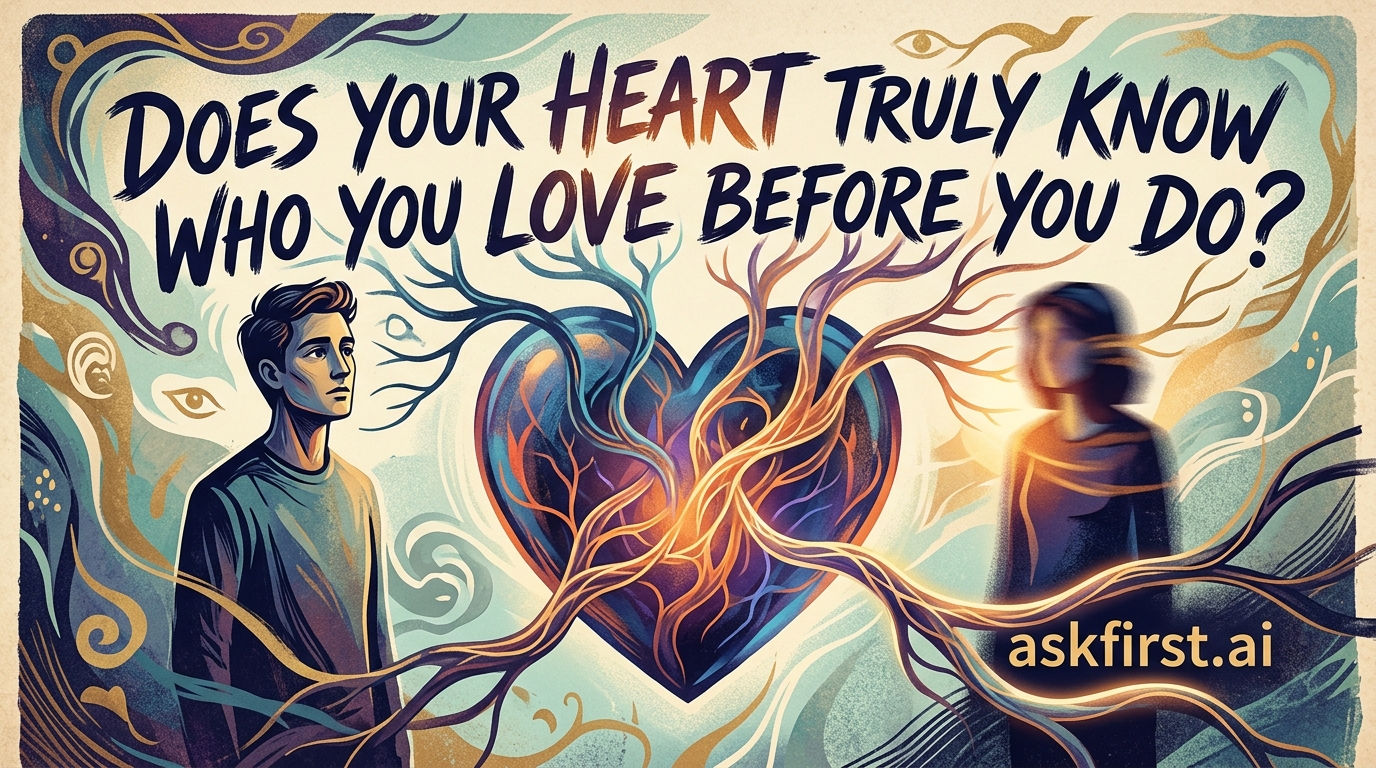
The phenomenon of falling in love often feels like a sudden lightning strike, a moment where the veil is lifted and clarity descends. However, neurobiology and evolutionary psychology suggest a far more gradual process occurring beneath the threshold of conscious awareness. The heart, metaphorically representing the complex interplay between the autonomic nervous system and the limbic brain, often registers attraction long before the logical mind registers a coherent thought. This process involves a sophisticated sequence of physiological responses, hormone releases, and subconscious pattern matching that dictates attraction before a person even realizes they are smitten.
The Neurobiology of Implicit Attraction
Research into human behavior suggests that the brain utilizes "thin-slicing"—a concept popularized by psychologist Malcolm Gladwell—to make rapid decisions based on limited information. When an individual encounters a potential partner, the brain processes subtle cues including pheromones, micro-expressions, body language, and vocal tonality. These data points are synthesized in the orbitofrontal cortex and the amygdala. If these cues align with pre-existing internal templates of compatibility or attraction, the brain triggers a cascade of neurochemicals.
- Dopamine Surge: Even before an individual admits attraction, the mesolimbic pathway experiences a dopamine reward burst. This creates a subtle craving to be near the person, a feeling often mistaken for mere curiosity.
- Oxytocin and Vasopressin: These "bonding hormones" begin to modulate social perception, making the other individual appear more trustworthy and physically appealing long before an emotional commitment is acknowledged.
- Autonomic Mirroring: Heart rate variability and pupil dilation are early physical indicators of attraction. Studies show that when two people are unconsciously attracted to one another, their physiological rhythms often synchronize, a phenomenon known as "physiological coupling."
Psychological Myths and the Delay of Consciousness
The delay between the subconscious registration of love and conscious realization exists for critical evolutionary reasons. The logical, prefrontal cortex is designed for safety, caution, and long-term planning. If the brain allowed every flicker of attraction to instantly transition into conscious realization, human decision-making would be paralyzed by constant romantic preoccupation. Therefore, the brain acts as a filter. It requires a certain "accumulation of evidence" before it alerts the conscious mind.
This delay serves as a protective mechanism. It allows the mind to verify if the potential partner is a suitable candidate for long-term attachment before the intensity of romantic love compromises rational judgment. People often experience a 'gut feeling' that precedes their intellectual understanding. This is not mystical; it is the intellect finally catching up to the sensory data that the body has already processed and filed as 'significant.'
The Role of Evolutionary Mapping
From an evolutionary perspective, human beings are programmed to seek partners who increase the likelihood of survival and genetic legacy. Subconscious attraction is heavily influenced by MHC (Major Histocompatibility Complex) gene signatures, which are detected through scent. Scientific studies indicate that individuals are more attracted to those whose immune system profiles are complementary to their own. This is a process that occurs entirely outside the conscious realm. When someone claims, 'I just felt a pull toward them,' they are often responding to biological biological imperatives that the heart recognizes long before the mind can formulate an explanation.
Practical Implications for Modern Relationships
Understanding that the subconscious acts as a pioneer for the conscious mind changes how one approaches modern dating and partnership. It emphasizes the importance of 'tuning in' to one's physical reactions.
- Listen to the 'Nervous System' Signal: If a person feels calm yet invigorated in the presence of another, that is a positive biological marker of alignment.
- Avoid Over-Rationalization: Since the heart often processes data faster, relying solely on a 'checklist' of requirements can hinder the organic development of a connection.
- Value Early Instincts: The initial, inexplicable excitement about a person is often the manifestation of biological recognition.
In conclusion, the heart does indeed hold a deeper, more ancient knowledge than the analytical mind. By the time one sits down to contemplate whether or not they are falling in love, the heart has already finished the evaluation and set the internal processes into motion. Human love is not merely a social construct or a sudden spark; it is a meticulously choreographed, biological event that the conscious mind only gets to witness after the main act has already begun. Recognizing this timeline helps bridge the gap between our impulsive feelings and our intellectual understanding, allowing for a more harmonious experience of human connection.