The Neuroscience of Rejection: A Shared Neural Pathway
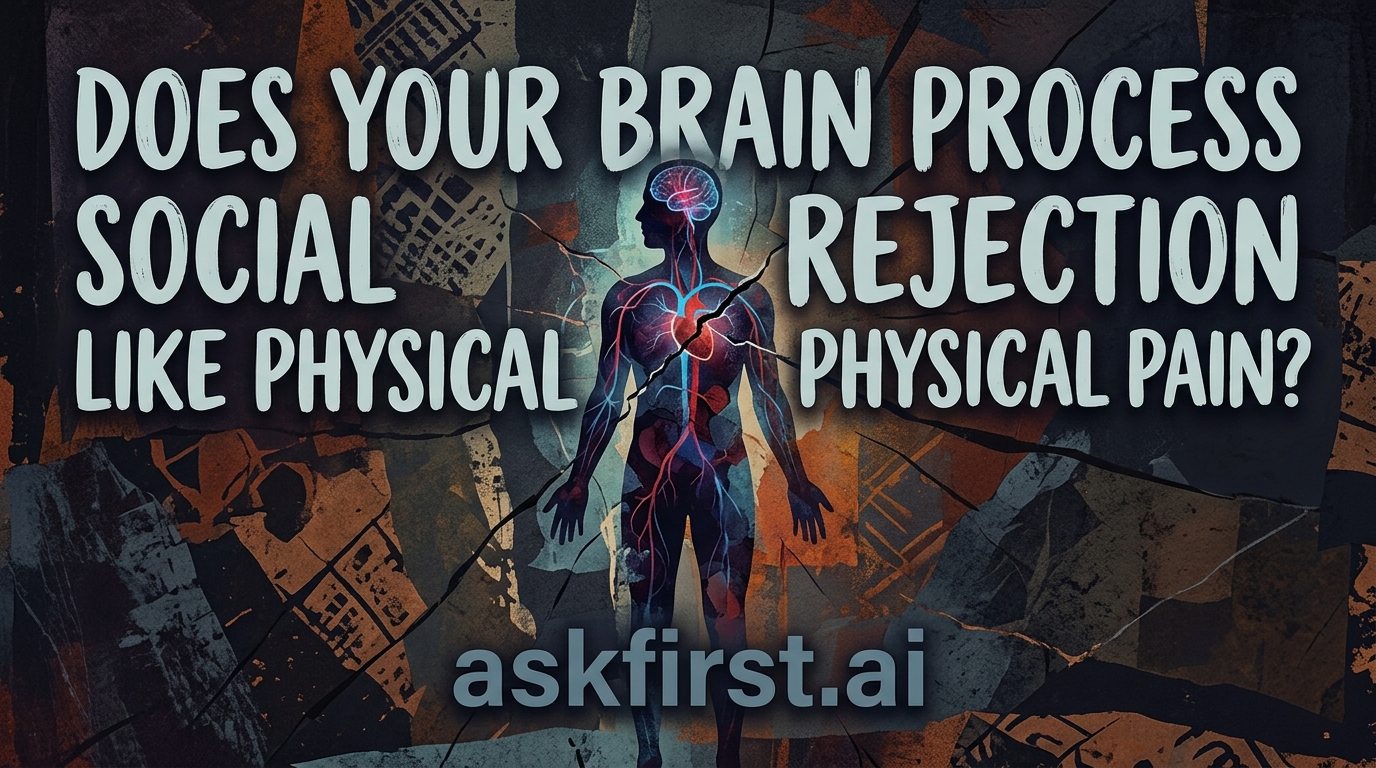
The short answer to this compelling question is an emphatic yes. Neuroscientific research suggests that the human brain utilizes remarkably similar neural circuits to process both physical injury and the sting of social exclusion. This evolutionary design is not an accident; it is a vital mechanism for human survival that highlights the deep social nature of the species.
The Discovery of the Pain Matrix
In landmark studies, researchers utilizing functional magnetic resonance imaging (fMRI) identified that the dorsal anterior cingulate cortex (dACC)—a region typically associated with the affective, or unpleasant, component of physical pain—is hyper-active during instances of social rejection. This phenomenon was famously demonstrated in experiments involving the "Cyberball" game, where participants were ostensibly excluded from a virtual game of catch. The scans revealed that the dACC and the anterior insula, two regions essential to the brain’s 'pain matrix,' light up in response to the social slight exactly as they do when one touches a hot stove or experiences physical distress.
Why Did Evolution Connect These Systems?
To understand why this overlap exists, one must look toward evolutionary psychology. For early humans, belonging to a tribe was not merely a matter of social comfort; it was a matter of life or death. The inability to hunt, gather, or defend oneself alone made social ostracization effectively a death sentence. By hardwiring social pain into the same physical pain processing system, nature created an incredibly effective 'early warning system.' When a person senses the threat of rejection, the brain triggers a visceral, painful response, urging the individual to repair the social bond immediately. It acts as an 'alarm' that protects the integrity of the social group, which in turn protects the individual.
The Qualitative Difference: Remembering the Sting
While the brain processes both types of pain through shared circuits, there is a fascinating nuance in how they are experienced over time. This is where the biological distinction becomes apparent.
- Physical Pain: When an individual cuts their finger, the brain processes the injury, but the memory of that specific sensation typically fades quickly. One rarely experiences the exact physiological pain of a paper cut months after the event.
- Social Pain: Social rejection is distinct because it is 'relived.' The brain’s ability to recall and mentally simulate social rejection causes a reactivation of the same neural regions. One can feel the same intense, burning sensation of a rejection from years ago simply by ruminating on the memory. This capacity for mental replay makes social pain uniquely persistent and, in many cases, more damaging to long-term mental health.
The Biochemical Response: Endogenous Opioids
Adding to this complexity is the role of endogenous opioids. The brain naturally releases these chemicals to dampen physical pain and promote social bonding. Research has shown that social interaction stimulates the release of these opioids, acting as a natural buffer. When a person is rejected, the sudden withdrawal of this 'social soothing' effect contributes to the sensation of pain. This explains why people often turn to comfort foods or seek out familiar relationships when they are feeling lonely or marginalized; they are essentially attempting to trigger an opioid response to counteract the 'social pain' they are currently suffering.
Practical Implications for Modern Life
Understanding that social pain is neurologically equivalent to physical pain changes the way we approach mental health and interpersonal relationships:
- Validation: It is scientifically accurate to tell someone suffering from rejection that their pain is 'real.' It is not 'all in their head' in a figurative sense; it is physically manifested in the brain’s architecture.
- Emotional Regulation: Recognizing that social rejection triggers a fight-or-flight mechanism helps individuals practice mindfulness. When the alarm sounds, understanding that it is an evolutionary relic rather than a catastrophic physical event can lower the intensity of the reaction.
- Empathy: Realizing that social exclusion is fundamentally painful for everyone encourages more inclusive behavior in professional and social environments. Knowing that a coworker or friend feels the sting of exclusion on a visceral level promotes a more supportive social ecosystem.
Conclusion
The architecture of the human brain proves that we are inherently social creatures. The overlap between physical pain and social rejection is a testament to the fact that connection is a basic human need, placed right alongside food and water in the brain's priority hierarchy. By respecting this biological reality, we can navigate the complexities of our social lives with greater empathy, resilience, and insight.