The Evolutionary Purpose of Regret
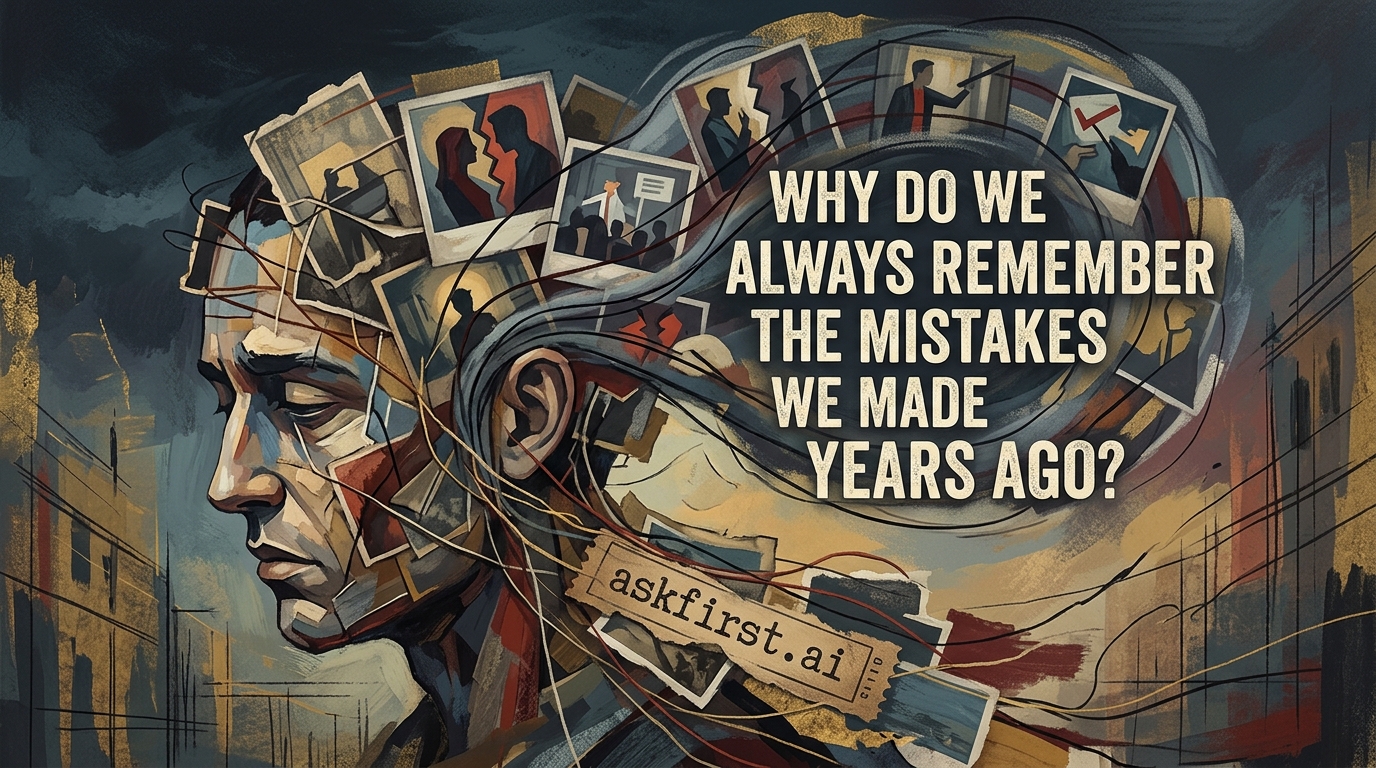
The phenomenon of ruminating on past errors is not a glitch in human psychology; it is a sophisticated, albeit uncomfortable, evolutionary feature. Known in psychological circles as the 'Zeigarnik Effect' and 'Negative Bias,' the tendency to hold onto memories of past mistakes serves as a biological alarm system. Our ancestors needed to remember dangerous mistakes—such as eating a toxic berry or misjudging a predator’s proximity—to ensure survival. In the modern world, this mechanism remains hyper-vigilant. When a social or professional error occurs, the brain marks that neural pathway with a 'high-priority' flag, ensuring that the experience is not easily forgotten.
The Role of Emotional Intensity
Memory is not a objective recording device; it is a reconstruction process heavily influenced by emotion. Psychologists suggest that memories linked to strong negative emotions, such as shame, embarrassment, or fear, are encoded more deeply in the hippocampus and the amygdala. This process is known as 'arousal-biased competition,' where emotional intensity acts like a highlighter for the memory. Because the mistakes made years ago were likely accompanied by intense feelings of self-consciousness, the brain preserves these narratives with vivid, high-definition detail compared to neutral memories of routine days.
Psychological Mechanisms at Play
- The Zeigarnik Effect: This principle posits that people remember uncompleted or interrupted tasks better than completed ones. A mistake often represents an 'unresolved' emotional cycle, where the brain feels it did not reach a satisfactory conclusion or 'fix' the error, thus keeping the memory active in the foreground.
- The Negativity Bias: Humans are evolutionarily wired to pay more attention to negative experiences than positive ones. Studies show that the brain's electrical activity is greater when processing negative stimuli. This bias ensures that we learn from threats, but it also means that a single embarrassing moment can carry more weight than a decade of successes.
- Rumination and Self-Verification: Sometimes, the brain keeps replaying mistakes as a way of attempting to solve them retrospectively. This internal loop is an attempt at self-correction, even if it is no longer productive.
Distinguishing Regret from Growth
It is essential to differentiate between healthy reflection and toxic rumination. Healthy reflection involves looking at a mistake, extracting the lesson, and applying that wisdom to future behavior. This is a functional use of memory that facilitates personal development. Conversely, rumination is the repetitive, non-productive cycling of the same negative event without moving toward a resolution or acceptance.
Practical Strategies to Manage Persistent Memories
- Reframing: Instead of asking 'Why did I do that?', ask 'What specific skill or knowledge did I gain from that experience?'. This shifts the focus from emotional self-flagellation to objective learning.
- The 'Third-Person' Technique: Studies have shown that visualizing a past mistake as if viewing it from the perspective of an outside observer or a friend reduces the emotional intensity. By distancing the self, the brain treats the memory as a story rather than a current threat.
- Self-Compassion: Embracing the idea that mistakes are the mandatory 'tuition' of the school of life allows for the neutralization of shame. Recognizing that everyone—including high-achieving figures—carries a repertoire of past blunders can foster a sense of shared humanity.
The Final Verdict
The persistence of these memories is a testament to the brain's commitment to self-improvement. While it often feels like a burden, remembering past errors is the brain’s way of ensuring that history does not repeat itself. By acknowledging that these flashes of memory are just the mind's internal 'update logs' rather than indicators of poor character, one can transform intrusive thoughts into valuable insights. Understanding that this process is universal helps dissolve the isolation often felt when replaying these moments. Ultimately, these memories serve as the bedrock upon which current maturity and future wisdom are constructed.