The Psychology of the 'Norman Door' Phenomenon
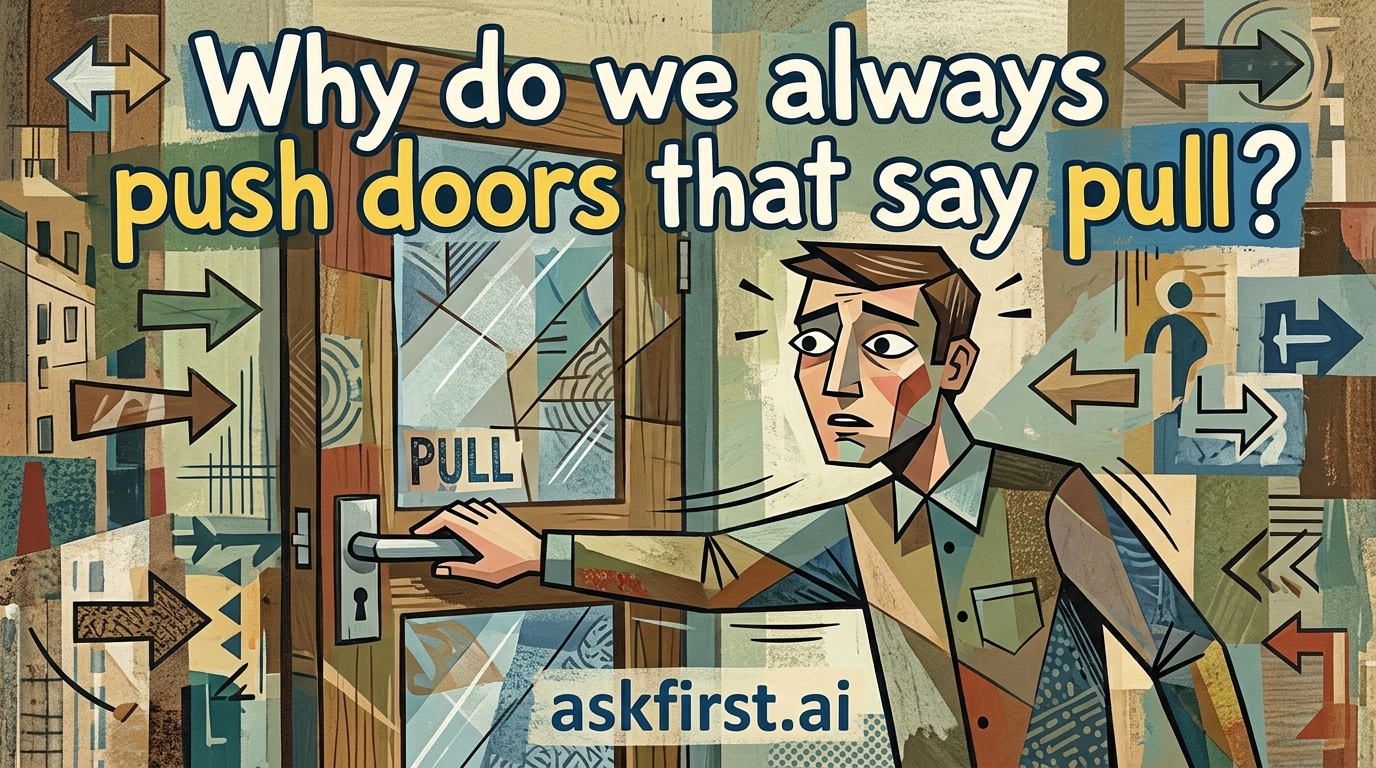
Human interaction with physical objects is governed by a concept known in design psychology as 'affordance'. When a person approaches a door, the mind subconsciously scans the environment for visual cues—such as a handle, a flat plate, or a knob—to determine how to interact with it. When these cues are ambiguous or contradicted by signage, a 'Norman Door' is born. Named after design expert Don Norman, these are doors where the design fails to communicate the intended usage, leading to cognitive friction.
The Failure of Visual Affordance
The primary reason for this failure is that human beings are creatures of habit who rely on 'system one' thinking, a fast, instinctive, and emotional mode of cognition. If a door has a vertical handle, the brain instinctively perceives it as an 'affordance' for pulling. Conversely, if there is a flat metal plate, the brain suggests pushing. When the architect installs a handle that is aesthetically pleasing but functionally misleading, the user's brain processes the handle before the signage. The text 'pull' is 'system two' information—it requires conscious effort and slower processing. By the time a person reads the sign, the motor cortex has already initiated the push command.
Cognitive Dissonance and Pattern Recognition
Pattern recognition is a survival mechanism honed over millennia. Humans categorize objects quickly to save mental energy. Because the vast majority of commercial exit doors are 'push-to-exit' for safety reasons, the human brain develops a high-frequency heuristic: 'doors lead out, and we push them to open.' This heuristic becomes a deeply ingrained habit. When a user encounters a door that deviates from this learned pattern, the brain defaults to the statistical probability of what doors usually do, rather than the specific instructions presented. This is not a failure of intelligence, but a triumph of efficient, albeit occasionally inaccurate, cognitive processing.
The Role of Design Ergonomics and Safety Standards
Safety regulations often mandate that doors in public buildings must open outward to ensure safe egress during fires. This architectural standard forces designers to make doors that push. However, when a design goal conflicts with environmental constraints—such as a door that must open inward for structural reasons or to avoid hitting a pedestrian on the other side—the visual design often fails to keep pace. If a designer prioritizes a sleek appearance over a functional, intuitive grip, they inadvertently create a trap. Research in ergonomics shows that if a design requires a manual for operation, the design itself is flawed. A perfectly designed door should effectively communicate its function without the need for language-based instructions.
Strategies for Better Door Architecture
To mitigate these frustrations, designers employ several cognitive engineering strategies:
- Mapping: The control should mimic the desired action. For example, a flat plate on the side that requires pushing is a clear signal.
- Visibility: If a door requires a pull, it should have a handle that is impossible to confuse with a push plate.
- Constraint: Physically limiting movement can guide behavior. Using locks or latches that only allow movement in the desired direction prevents errors.
- Signage as a Secondary Element: Signage should be a backup, not the primary method of instruction. If users must read a sign, the door has failed its psychological purpose.
Conclusion: The Lesson of the Misleading Door
The phenomenon of pushing doors that demand a pull is a profound reminder that human error is often a symptom of poor system design. It highlights the tension between our evolved cognitive shortcuts and the built environment. As we move toward a future of smart buildings and automated access, understanding these fundamental principles of design is essential for creating spaces that are not only aesthetically pleasing but truly intuitive to the human experience. By aligning the physical affordance of objects with the logical requirements of usage, we can eliminate the frustration of the 'Norman Door' entirely, allowing technology and architecture to serve humanity with seamless, invisible efficiency.