The Eternal Nature of Honey: Nature’s Biological Miracle
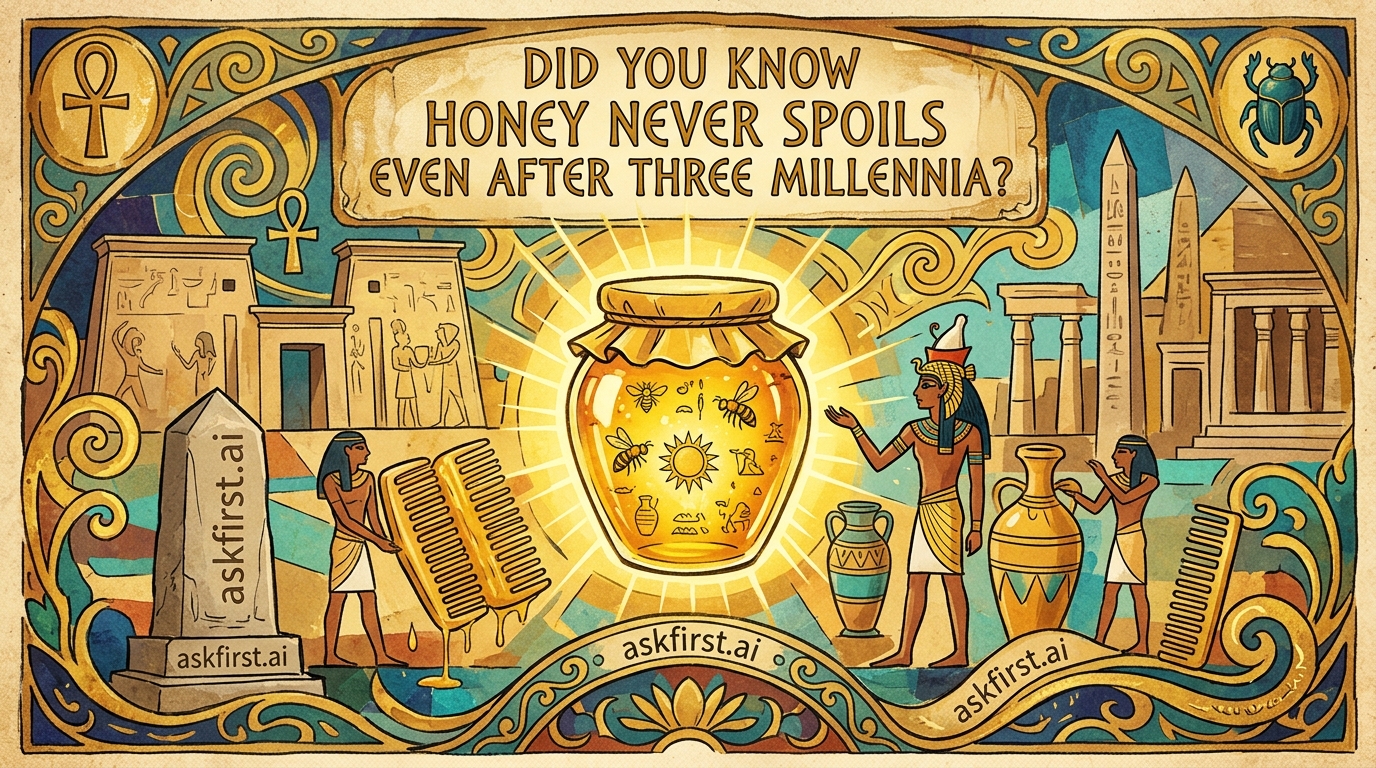
Honey, often referred to as liquid gold, is perhaps the most extraordinary food substance discovered by human civilization. Archeologists have unearthed pots of honey in ancient Egyptian tombs, dating back thousands of years, that remain perfectly edible. This phenomenon is not magic; it is a complex, multi-layered chemical synergy that defies the conventional laws of food decomposition.
The Chemical Trifecta of Preservation
The secret to honey’s immortality lies in three primary pillars of chemistry: moisture content, acidity, and chemical additives delivered by bees.
1. Extremely Low Moisture Content
Fresh nectar gathered by bees contains high amounts of water, typically around 60% to 80%. Bees resolve this by flapping their wings to create powerful air currents, effectively dehydrating the nectar until the water content drops to roughly 17%. Bacteria, fungi, and molds require water to thrive; in such a dehydrated environment, these microorganisms face osmotic pressure that draws water out of their own cells, causing them to dehydrate and die before they can spoil the substance.
2. High Acidity Levels
With a pH balance typically ranging between 3.2 and 4.5, honey is inherently acidic. This acidic environment acts as a natural inhibitor for the vast majority of food-borne pathogens. Few bacteria can survive in a medium with such high acidity, creating an inhospitable landscape for anything attempting to decompose the substance.
3. Hydrogen Peroxide: The Natural Defense
Bees contribute a unique enzyme called glucose oxidase to the nectar. When the nectar is converted into honey, this enzyme interacts with glucose to produce gluconic acid and hydrogen peroxide. This release of hydrogen peroxide acts as a potent, natural disinfectant. It effectively keeps the honey sterile while it sits in the hive and while it is stored for human consumption.
The Role of Osmotic Pressure
Honey is a supersaturated solution of sugars, primarily glucose and fructose. This high sugar density creates an intense osmotic pressure that serves as an additional layer of protection. Any airborne bacteria that manage to enter a jar of honey are stripped of their internal moisture, effectively turning the honey into a sterile sanctuary where life cannot gain a foothold. This process is so effective that in the field of medicine, medical-grade honey has been utilized historically—and continues to be used—to treat wounds and burns due to its antimicrobial properties.
Common Misconceptions
Many consumers believe that honey that has crystallized is 'spoiled' or 'bad.' This is a significant misconception. Crystallization is a perfectly natural physical change, not a sign of degradation. Because honey is a supersaturated sugar solution, it is physically unstable. Over time, glucose molecules will bind together and form solid crystals. The texture may change, but the chemical properties—and the eternal shelf life—remain identical to liquid honey. To revert crystallized honey to its liquid state, one simply needs to gently warm the jar in a water bath, avoiding excessive heat that could destroy delicate floral enzymes.
The Impact of Modern Packaging
While honey is technically eternal, human intervention is the only factor that can cause it to lose this property. The key to preserving honey for centuries is an airtight container. Because honey is hygroscopic, it will naturally absorb moisture from the surrounding atmosphere. If a container is left open in a humid environment, the moisture content will eventually rise above the critical threshold of 18-20%, at which point the natural chemical barriers are diluted and fermentation can occur. As long as honey is stored in a cool, dark, and sealed vessel, it maintains its integrity indefinitely.
Why This Matters for Humanity
Understanding the science behind honey provides a profound look at biological engineering. Humans often rely on heavy processing, canning, or artificial preservatives to extend the shelf life of food. Yet, through evolutionary adaptation, bees have developed a naturally processed superfood that essentially ignores the passage of time. This intersection of entomology, chemistry, and culinary art proves that nature offers solutions to complex problems that remain unparalleled by modern laboratory standards. Whether enjoyed as a sweetener or studied as a marvel of preservation, honey serves as a permanent testament to the efficiency of the natural world.