The Psychology of Collective Resilience
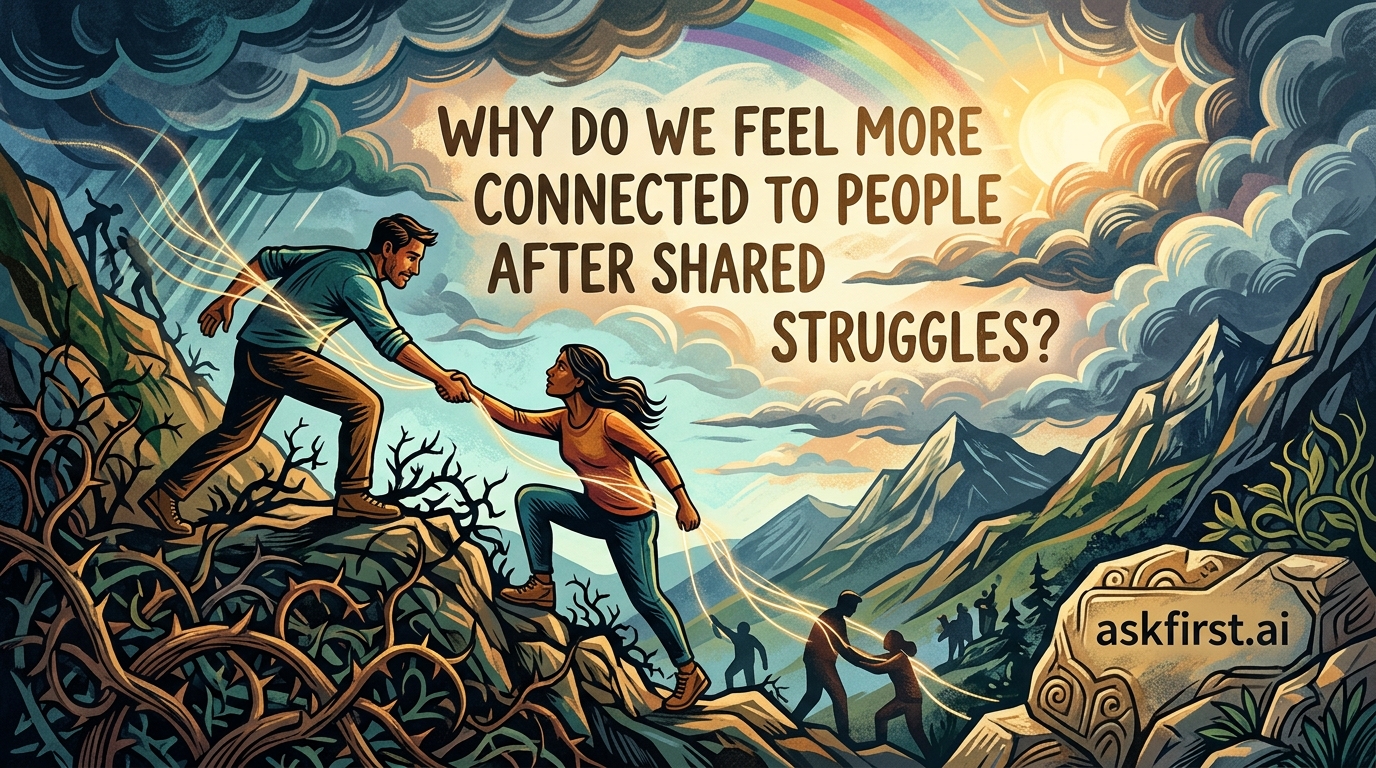
Shared adversity functions as a powerful psychological catalyst for social bonding, often described by psychologists as 'identity fusion.' When individuals face significant challenges together, the cognitive barriers that typically separate the 'self' from the 'other' begin to dissolve. This phenomenon is rooted in the deep-seated evolutionary need for survival, where cooperative units historically outlived isolated individuals. In modern contexts, this translates into intense emotional proximity that standard social interactions rarely achieve.
The Neurobiology of Bonding
At the neurological level, the experience of shared struggle triggers a unique cocktail of neurochemicals. When people undergo stress together, the brain releases oxytocin and endorphins. Oxytocin, often dubbed the 'bonding hormone,' enhances social recognition and trust. Simultaneously, the physical and mental strain of a task can trigger the release of endorphins, which act as natural analgesics and promote feelings of euphoria. When these biological signals are experienced in the presence of others, the brain implicitly links those individuals with the positive emotional relief that follows the release of tension. This is known as 'misattribution of arousal,' where the heightened state of the struggle is mistakenly credited to the presence of the support network.
The 'Identity Fusion' Mechanism
Sociologist Harvey Whitehouse posits that shared, high-intensity experiences lead to identity fusion, a state where an individual's personal identity becomes functionally equivalent to their social identity within a group. Unlike simple group identification, fusion creates a visceral feeling of 'oneness.' During a struggle, the brain shifts its focus from 'me' to 'we.' As the group works to solve a common problem, participants often lose track of individual egos, leading to what is termed 'flow' in group dynamics. This shared flow state leaves an enduring imprint on memory, cementing a sense of loyalty that can last decades.
The Role of Vulnerability
Shared struggle necessitates vulnerability. When people are at their limits, they are unable to maintain the curated personas they project in daily life. This stripping away of social masks allows for authentic connection. According to Brené Brown's research on human connection, vulnerability is the birthplace of belonging. When individuals witness each other's limitations, frustrations, and eventual victories, it fosters a deep level of relational transparency. This transparency builds a foundation of trust that is far more resilient than connections formed in comfort.
Theoretical Foundations: Prosocial Behavior
Research published in journals like Psychological Science suggests that synchronous activity—moving, speaking, or acting in concert during a challenge—further intensifies this bond. Whether it is a professional team navigating a corporate crisis or a group of strangers working together to repair a damaged road, the synchronization of behavior acts as a non-verbal language of unity. This promotes prosocial behavior, as the group members feel a heightened sense of responsibility for one another's well-being. The struggle creates a 'common fate' scenario, which is a major precursor to altruism.
Modern Applications and Long-term Benefits
- Organizational Synergy: High-performing teams are often forged in the fires of 'stretch assignments' or high-stakes problem-solving. This is why companies simulate crises to bond remote teams.
- Therapeutic Benefits: Support groups for shared experiences leverage this phenomenon, showing that knowing someone 'gets it' provides a unique form of emotional validation that reduces cortisol levels.
- Community Building: Movements that arise from social struggle often possess higher cohesion rates than those born from mere shared interests. The 'cost' of the effort spent increases the 'value' of the connection, a concept known in behavioral economics as the 'IKEA effect' applied to interpersonal relationships.
The Counter-Intuitive Truth
It is fascinating to note that the depth of a connection is not necessarily determined by the amount of time spent together, but by the intensity of the emotional terrain navigated. A week spent in a high-stakes, stressful environment can create a bond equivalent to years of casual acquaintance. This happens because the brain prioritizes 'meaningful markers'—emotional peaks that serve as anchor points for memory. By overcoming obstacles, the brain is essentially recording a permanent signal that these people are 'safe' and 'reliable,' providing an evolutionary advantage that rewards the individual for remaining part of the group.
Conclusion
We feel more connected after shared struggle because, in those moments, we are biologically and psychologically wired to integrate the other into our sense of self. Adversity acts as an intense laboratory for social experimentation, filtering out superficiality and revealing the raw, capable, and supportive nature of those standing beside us. While the stress of the struggle is unpleasant in the moment, the long-term result is a profound strengthening of the social fabric, turning strangers into partners and acquaintances into lifelong allies.