The Evolutionary Blueprint of Regret
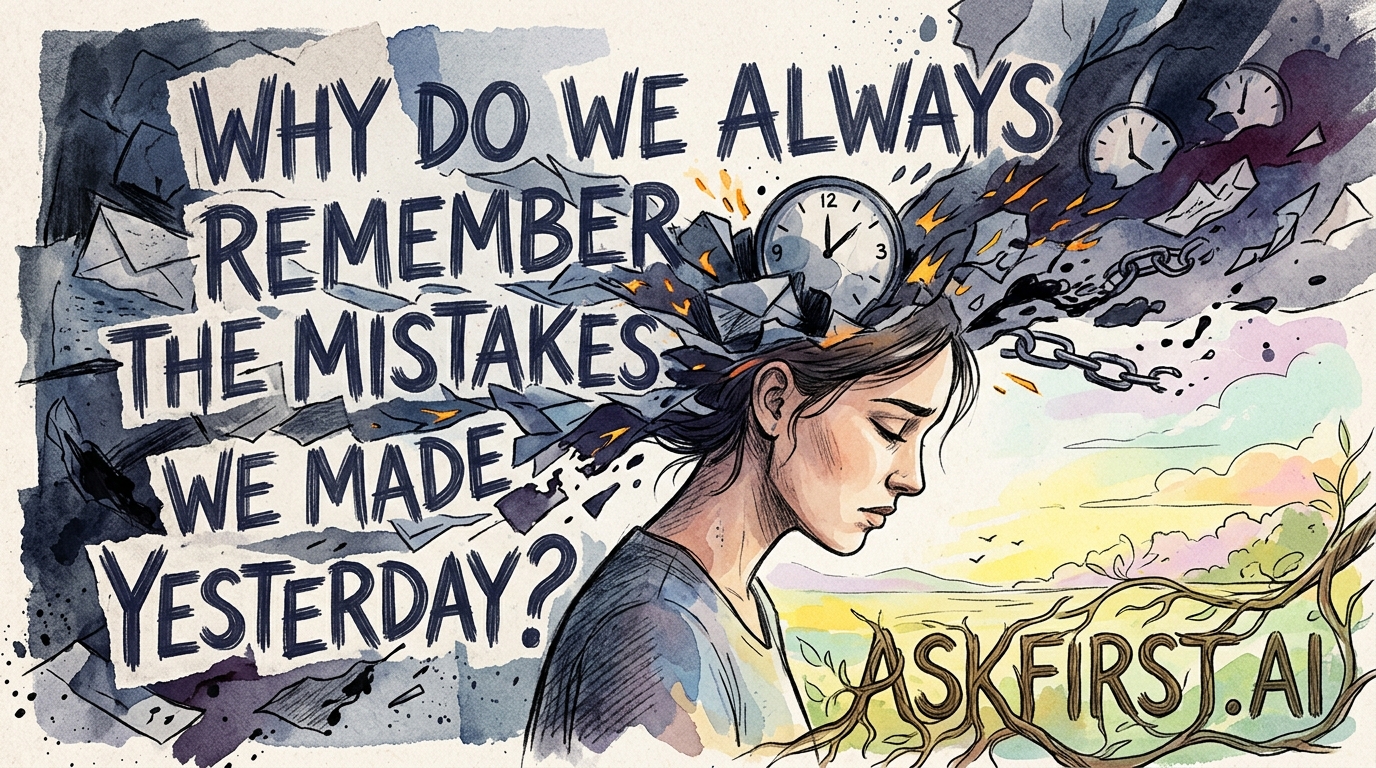
The human propensity to dwell on yesterday's mistakes is not a flaw; it is a sophisticated evolutionary feature designed for survival. Psychologists and neuroscientists suggest that the brain prioritizes negative information because, historically, failing to notice a danger or a mistake meant potential harm or death. This phenomenon, known as the negativity bias, ensures that errors are cataloged with higher fidelity than successes. When an error occurs, the brain initiates a process of intense analysis to prevent a repeat performance. This mental review is a cornerstone of learning, operating through the mechanism of error-monitoring in the anterior cingulate cortex.
The Neurobiology of Hindsight
When a mistake is identified, the brain triggers a spike in activity that signals a deviation from expected outcomes. This neurochemical alert acts as a teaching signal. If the brain did not vividly store these memories, behavioral stagnation would occur. By keeping yesterday's blunders in the 'active' workspace of the mind, the brain forces a simulation of alternative realities. This simulation allows for the development of improved strategies. The dopamine system plays a dual role here: it rewards correct behavior while also signaling the need for adjustment when predictions fail, ensuring that the sting of a mistake acts as a corrective feedback loop.
Psychological Drivers and the Zeigarnik Effect
Beyond basic neurobiology, the Zeigarnik Effect provides a compelling psychological explanation for this memory persistence. This principle dictates that individuals remember uncompleted or interrupted tasks better than completed ones. A mistake represents an 'unresolved' outcome. Because the goal—success—was not achieved, the brain holds the memory of the mistake in a heightened state of awareness until the lessons are internalized. This creates a cognitive 'loop' that keeps the error at the forefront of consciousness.
- The Power of Rumination vs. Reflection: While healthy reflection leads to growth, rumination is a destructive cognitive trap. Recognizing the difference is essential for mental well-being.
- The Role of Emotional Salience: Emotions act as a chemical marker for memory. A mistake that causes embarrassment or surprise is tagged with higher emotional intensity, making it far more difficult to forget.
- Perspective-Taking: Viewing mistakes as data points rather than character defects reduces the emotional weight while retaining the educational value.
Strategies for Transforming Regret into Growth
To manage the tendency to obsess over past errors, one must transition from passive rumination to active problem solving. The following frameworks are utilized by high-performers to convert mistakes into competitive advantages:
- The Pre-Mortem Analysis: Before engaging in a task, anticipate potential failures to prepare the brain for contingencies. This proactive approach reduces the intensity of the surprise response when mistakes occur.
- Cognitive Reframing: Treat yesterday’s error as an experiment that yielded unexpected data. By labeling the event as 'research' rather than 'failure,' the brain re-categorizes the memory, reducing the associated shame and increasing the analytical clarity.
- The 24-Hour Rule: Give full permission to process the error immediately after it occurs, but enforce a strict cutoff point. After 24 hours, shift focus toward the next iteration of the task. This honors the need for error-processing while preventing the loop from becoming a cycle of stagnation.
The Social Utility of Memory
In social contexts, remembering our mistakes serves a prosocial function. It enforces humility and awareness of societal expectations, which strengthens social bonds and group cohesion. Those who remember their social faux pas are statistically more likely to act in ways that preserve their reputation and improve their future interactions. This memory serves as a social thermostat, keeping behavior within acceptable, effective, and collaborative boundaries.
Conclusion: From Burden to Beacon
Ultimately, the brain's insistence on holding onto yesterday's mistakes is a testament to the relentless human drive for optimization. The discomfort felt when recalling an error is simply the friction created as the brain refines its predictive model of the world. By shifting the perspective from self-reproach to strategic analysis, individuals can utilize these memories as blueprints for future success. The next time a memory of a mistake surfaces, recognize it for what it truly is: a powerful, evolutionarily-honed signal that a new, better version of the self is currently under construction.