The Enclothed Cognition Phenomenon
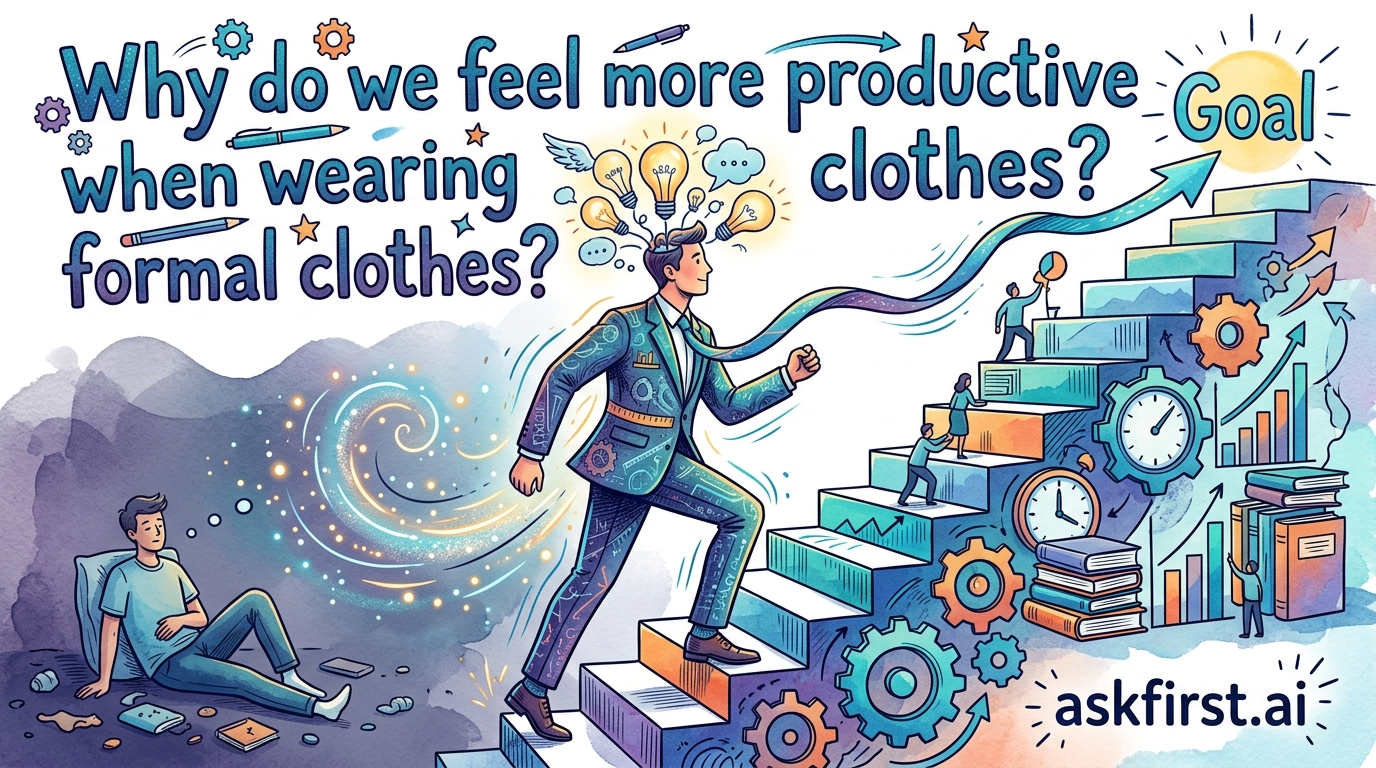
The relationship between what humans wear and how they perform is rooted in a psychological concept known as enclothed cognition. This theory suggests that the clothes one wears influence the wearer’s psychological processes, impacting cognitive performance and mood. When an individual dons formal attire, such as a suit or a structured blazer, the brain subconsciously interprets this change in costume as a shift in role, identity, and expected behavior.
Psychological Underpinnings of Professional Dress
Research published in journals such as the Journal of Experimental Social Psychology has demonstrated that wearing formal clothing enhances abstract thinking and integrative cognitive processing. This occurs because formal wear is historically and culturally associated with power, authority, and professionalism. When an individual adopts this aesthetic, they are essentially 'stepping into' a persona of competence. This psychological transition minimizes distractions and fosters a mindset of discipline that is often absent when wearing casual garments like loungewear.
- Symbolic Association: We associate formal clothing with high-stakes environments, such as boardrooms or legal proceedings. Wearing such items triggers a conditioned response that prepares the brain for rigorous focus.
- Self-Perception: The 'looking the part' phenomenon dictates that an individual’s internal self-view changes based on their external presentation. When an individual looks like a professional, they begin to think and act like a professional.
- Signal Processing: Just as a uniform identifies a pilot or a surgeon, formal business attire serves as an external signal to both oneself and others that the current focus is on task-completion and efficiency.
Impact on Cognitive and Behavioral Traits
Beyond mere mood-lifting, formal attire significantly alters how individuals approach problem-solving. Studies suggest that wearing 'power clothes' increases the wearer’s dominance and negotiation skills. The formality imposes a sense of structure. Much like how a tidy desk reduces mental clutter, a tidy appearance reinforces the cognitive architecture needed for deep work.
The Role of Expectation and Social Conditioning
Sociologists often argue that clothing serves as an extension of the self. From early childhood, society reinforces the link between 'dress-up' clothes and serious behavior. This creates a deeply embedded neural pathway. By the time an adult reaches the professional stage, the mere act of putting on a structured garment functions as a cognitive trigger for switching from 'leisure mode' to 'work mode.'
Practical Tips for Productivity Optimization
To leverage enclothed cognition for peak performance, professionals should consider these strategies:
- Contextual Dressing: One does not necessarily need a three-piece suit to be productive; rather, one needs clothing that signals a departure from relaxation. A collared shirt or well-fitted trousers often suffice.
- The Ritual of Transition: Treat the act of getting dressed as a professional ritual. This physical boundary creates a clear psychological line between 'home' and 'work' environments, which is particularly vital for those working remotely.
- Comfort vs. Structure: Modern research indicates that finding the 'sweet spot'—where clothes feel professional but do not restrict movement—yields the highest productivity gains. The clothing should represent structure without causing physical irritation that would draw attention away from the task at hand.
Counter-Intuitive Truths
While casual work environments are trending, the psychological necessity of formal wear remains potent for high-intensity tasks. Many people report that when working from home, wearing pajamas leads to 'procrastination creep.' Even if no one is watching, the self-observation of wearing loungewear validates a state of rest. Conversely, donning a blazer while at a home office serves as a constant reminder of one’s professional responsibilities and objectives.
Conclusion
The phenomenon of enclothed cognition highlights that we are not merely independent brains controlling machines; we are biological entities deeply influenced by our environments and our own physical presentation. By strategically utilizing formal clothing, individuals can effectively 'prime' their cognitive state, fostering higher levels of discipline, abstract thinking, and overall productivity. Embracing the psychology of dress is not about conformity or superficiality; it is about utilizing the tools of human perception to optimize our most precious resource: our focus.