The Perceptual Illusion of Temporal Acceleration
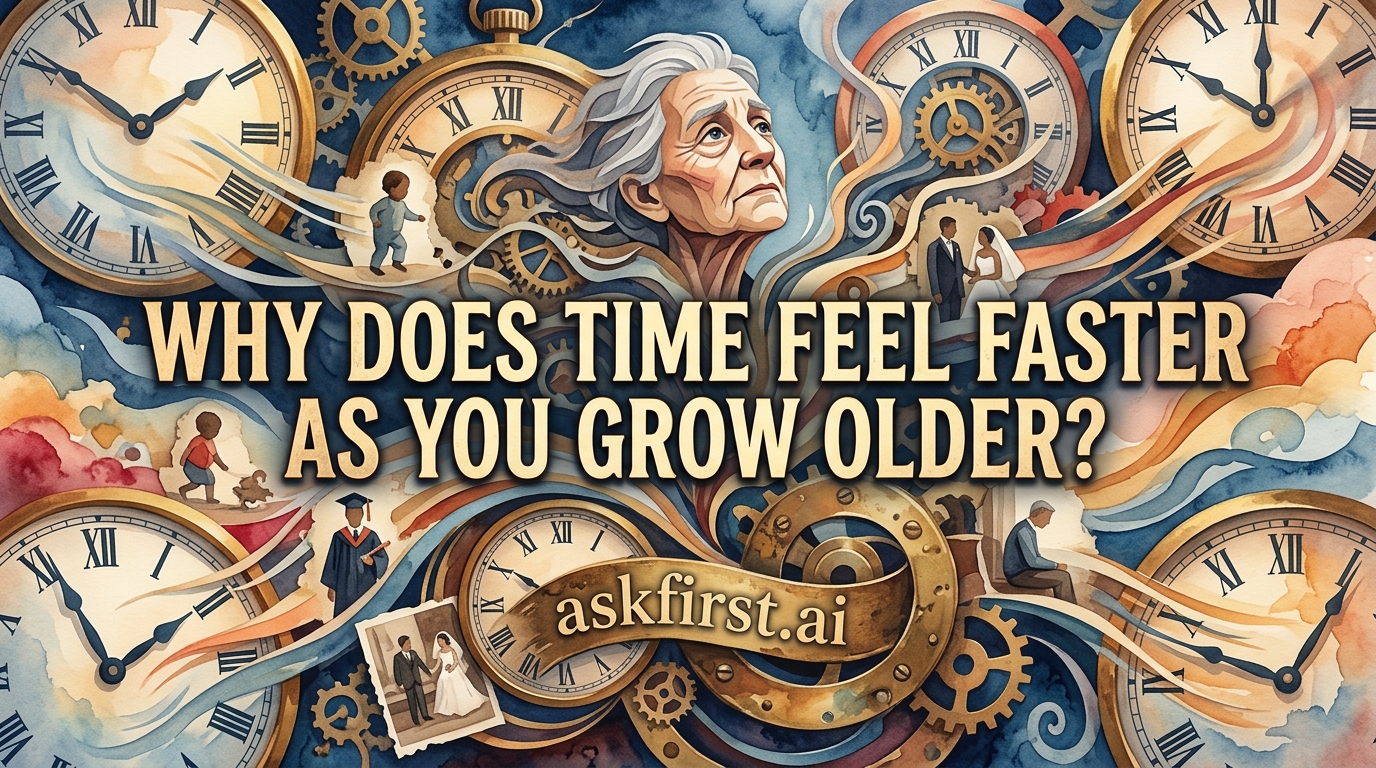
The phenomenon where time appears to accelerate as individuals transition from childhood into adulthood is one of the most pervasive subjective experiences in human psychology. While the clock ticks with mathematical precision, the human brain functions as a complex, non-linear processor of experience. This discrepancy between chronological time and perceived duration is rooted in the intersection of neuroscience, memory encoding, and information processing.
The Proportional Theory: The Fractional Perspective
One of the most mathematically compelling explanations is the Proportional Theory, first proposed by French philosopher Paul Janet in 1877. This theory posits that our perception of time is relative to the total duration of our life experience. For a five-year-old, one year represents a full 20 percent of their entire existence. The magnitude of this interval is immense, facilitating a dense accumulation of experiences. In contrast, for a fifty-year-old, one year constitutes a mere 2 percent of their life. Because each year represents a smaller fraction of the totality of one’s history, the interval feels significantly shorter in comparison to the expansive duration of youth.
The Novelty Effect: Memory Density and Encoding
The human brain utilizes the rate of 'novelty encoding' to estimate the passage of time. During childhood and adolescence, the world is a landscape of frequent 'firsts.' First day of school, first bike ride, first heartbreak, and first major travel experiences. These events are processed with high intensity by the brain, as they require significant synaptic activity to store as long-term memories. When one reflects on a period characterized by high novelty, the sheer volume of unique, detailed memories creates a psychological perception of a 'longer' duration.
Conversely, as individuals reach adulthood, the frequency of novel stimuli typically decreases. Routine dominates the professional and personal lives of many. Commuting to the same office, performing identical tasks, and following repetitive schedules mean the brain does not need to record these experiences with the same level of granular detail. Because the brain essentially 'compresses' mundane, repetitive data to save energy, a week or a month filled with predictable patterns leaves fewer distinct memory markers. Looking back, the lack of landmarks makes that period seem to vanish in an instant.
Neurochemical Modulation of Time
Scientific research into neurobiology, such as studies conducted by researchers like Dr. Peter Mangan, highlights that the neurotransmitter dopamine plays a crucial role in how the brain perceives the passage of time. Dopamine helps regulate our internal clock. In younger years, the brain is highly reactive to new stimuli, leading to a steady, rhythmic processing of incoming data. As we age, the modulation of these chemicals changes. Some neuroscientists suggest that as the efficiency of neural pathways improves through repetitive learning, the speed at which we process familiar information increases. This faster processing speed essentially makes external time seem to move more slowly in comparison, or conversely, makes our internal time feel like it is lagging, creating the impression that external 'real-world' time is sprinting past us.
Strategies for Expanding Perceived Time
Recognizing the mechanism behind this phenomenon provides a roadmap for counteracting the feeling of rapid acceleration. The key lies in conscious novelty generation:
- Cultivate New Skills: Engaging in activities that require deep cognitive load—such as learning a complex musical instrument or a new language—forces the brain to remain in a state of high-encoding, slowing down the subjective perception of time.
- Alter Physical Environments: Regular travel or even minor changes in routine, such as taking a different route to work, disrupt the brain’s automated 'compression' mode.
- Practice Mindfulness: By focusing intensely on the present moment, one stops the brain from defaulting to autopilot. Meditation and deep sensory awareness force the recording of high-resolution details during everyday tasks.
- Set Challenging Goals: Pushing beyond one's comfort zone ensures that life is punctuated by new experiences, creating more 'mental hooks' that act as anchors in the stream of time.
Summary
Ultimately, time is not merely a quantitative measurement but a qualitative experience. The sensation of acceleration is not an inevitable decay of the senses, but a consequence of the brain's incredible efficiency at adapting to the world. By consciously introducing complexity, curiosity, and novelty into daily life, individuals can effectively expand their perception of duration, turning the rapid blur of adulthood back into a rich, long, and textured journey.