The Neuroscience of Musical Memory
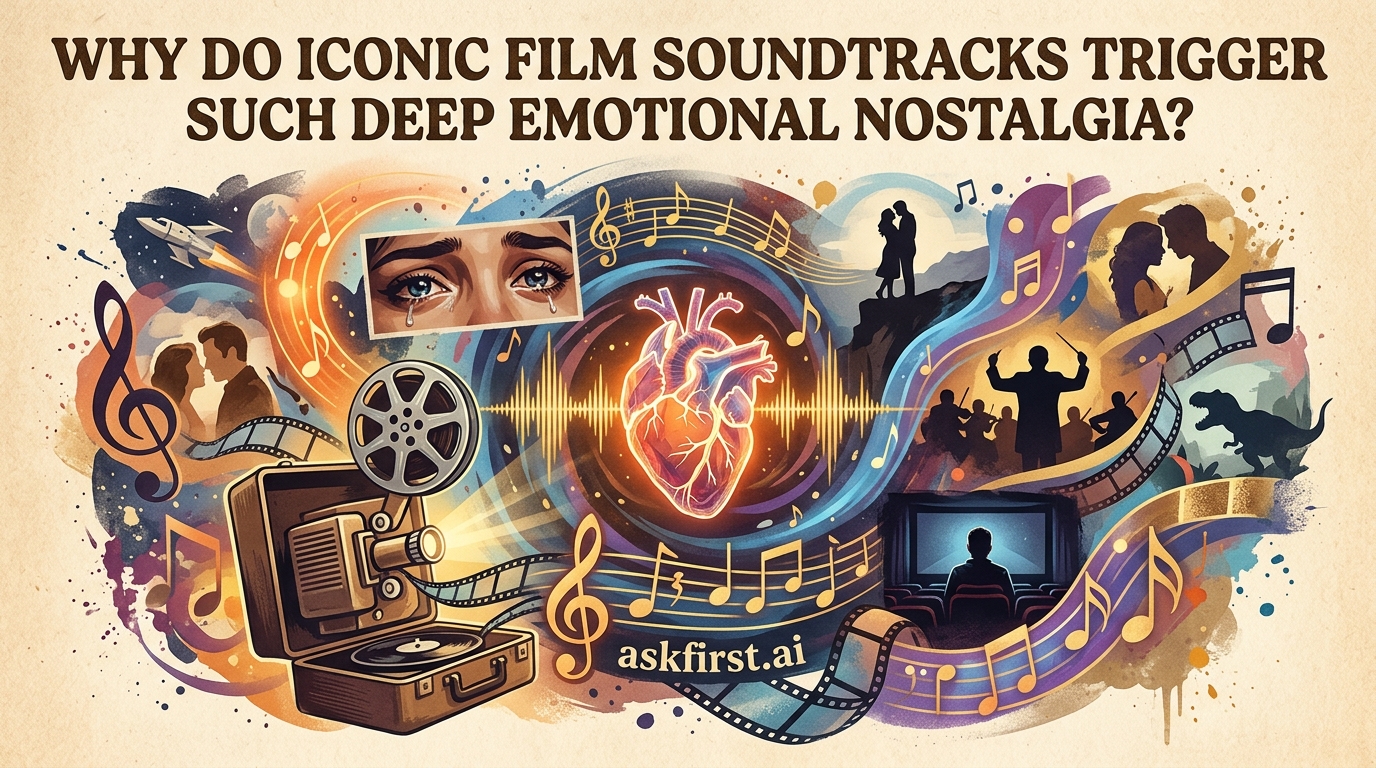
At the intersection of auditory processing and memory consolidation lies the unique power of film soundtracks to induce intense emotional nostalgia. The human brain possesses a remarkable capacity to store musical information in regions closely linked to the limbic system, particularly the amygdala and the hippocampus. When a specific musical motif is heard, it does not merely function as an external stimulus; it acts as a 'neural key' that unlocks vivid autobiographical memories. Scientific research suggests that music is uniquely pervasive in its ability to trigger the 'Reminiscence Bump,' a phenomenon where individuals tend to recall events from their adolescence and early adulthood with greater frequency and emotional intensity when accompanied by evocative auditory cues. Film scores, through their calculated use of leitmotifs, weave themselves into the fabric of these personal memories, creating an indelible link between the viewer's life experiences and the composer's harmonic structures.
The Role of Pavlovian Conditioning and Emotional Association
Classic film soundtracks serve as powerful vehicles for classical conditioning. When a viewer experiences a profound cinematic moment—such as a victory, a reunion, or a moment of awe—the soundtrack provides a heightened sensory context. Over time, the brain associates the chord progression or instrumentation of that scene with the physiological arousal and emotional resonance felt during the initial viewing. This association is often strengthened through repeated exposure. As individuals re-watch favorite films throughout their lives, the music becomes a temporal marker, anchoring the viewer to a specific version of themselves. This is why a simple four-note sequence from a composer like John Williams or Hans Zimmer can spontaneously induce a sense of 'longing' for the past; the brain is effectively re-experiencing the emotional state of that initial, formative moment of connection.
Key Mechanisms Behind Musical Nostalgia
- Neural Priming: Film scores utilize familiar tonal patterns that prime the brain to expect resolution or climax, creating a sense of psychological safety and predictability that mirrors the comforts of the past.
- Limbic Resonance: The frequency and tempo of iconic soundtracks are often aligned with human resting heart rates, which can lower cortisol levels and induce a state of 'relaxed nostalgia,' allowing the mind to wander into past memories without the intrusion of current stressors.
- Cultural Anchoring: Soundtracks frequently draw upon cultural archetypes and shared musical languages. This means that even if a viewer did not experience a specific historical event depicted on screen, the music utilizes universal patterns that signal hope, sorrow, or triumph, making the nostalgia feel collectively inherited.
Why Iconic Scores Remain Timeless
Nostalgia functions as a psychological defense mechanism, providing a sense of continuity in a rapidly changing world. Iconic film soundtracks serve as 'auditory anchors' that bridge the gap between who a person was and who they are becoming. Unlike visual elements, which can become dated due to changes in special effects or fashion, musical motifs remain abstract and malleable. This allows them to stay relevant across decades. The lack of specific verbal lyrics in many scores further enhances this effect; because there are no explicit words to define the experience, the listener is free to project their own personal narratives onto the composition. This 'emptiness' or 'openness' within the melody invites the listener to fill the silence with their own history, turning a piece of cinematic art into a deeply personal vessel for their own memories.
The Future of Sonic Memory
As audiences move further into the digital age, the role of soundtracks in emotional preservation will likely grow. The ability to carry an entire library of sonic landscapes in one's pocket allows for the constant curation of personal 'soundtracks of life.' When one hears a score that defined a specific decade of their life, the emotional response is not merely a recollection of a movie; it is a profound recognition of a chapter of existence that has been preserved in amber. Ultimately, the reason film music triggers such deep nostalgia is that it provides a structured, beautiful, and repeatable way to access our own humanity. It reminds us that while time moves forward, the emotional echoes of our most significant moments are never truly gone; they are waiting for a specific chord to bring them home once again.