The Psychology of Memory Persistence
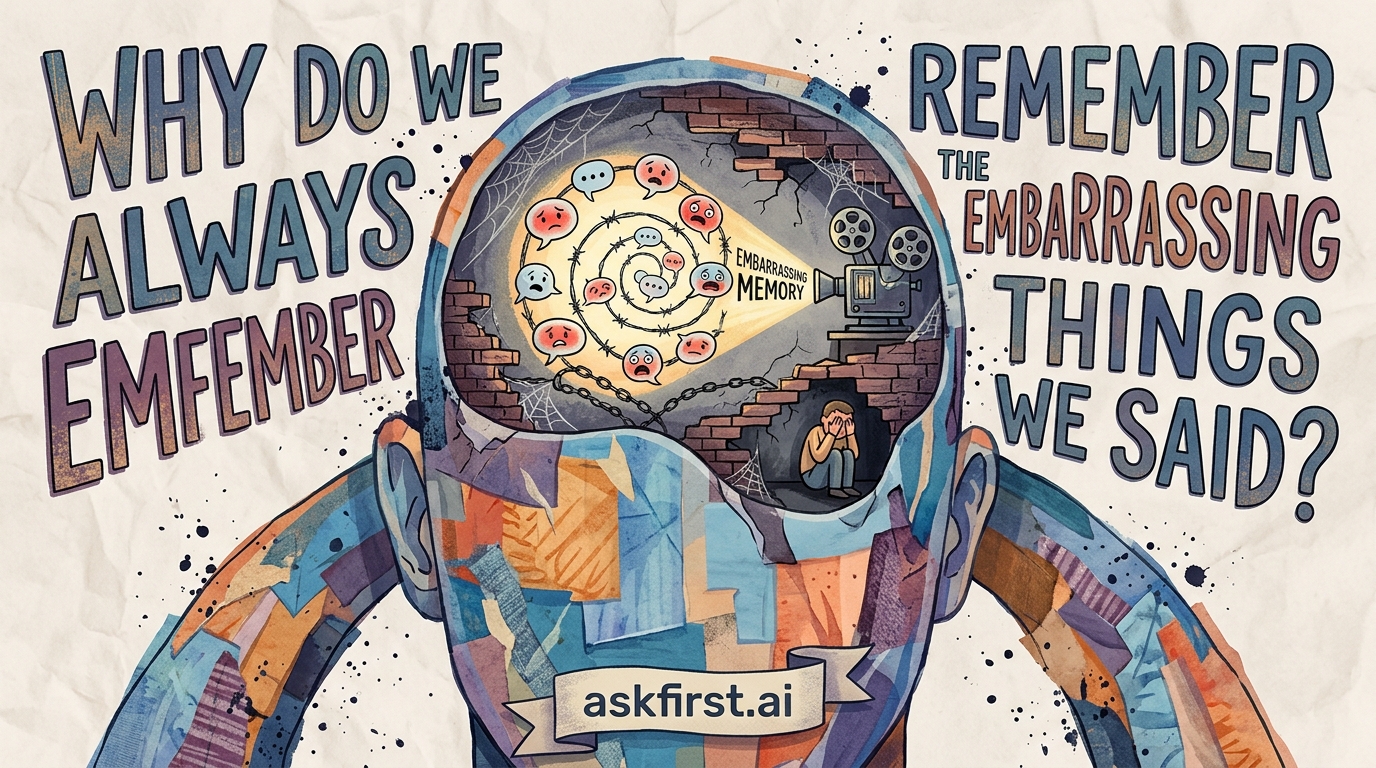
Human memory is not a perfect recording device. Instead, it functions as a reconstructive system, heavily filtered by emotional intensity, social evolution, and the inherent drive for survival. When an individual experiences a social blunder—an awkward slip of the tongue, a misread room, or a poorly timed joke—the brain tags these memories with high priority. This phenomenon is rooted in the evolutionary mandate to maintain social standing, often described by psychologists as the 'Spotlight Effect'.
The Evolutionary Mechanism: Social Surveillance
From an ancestral perspective, social belonging was a prerequisite for survival. Being cast out of a group meant exposure to environmental threats and starvation. Consequently, the brain developed a hypersensitive monitoring system for social faux pas. Embarrassment serves as a 'social alarm' designed to ensure the individual learns from mistakes and corrects behaviors that might lead to exclusion. The vivid recall of past humiliations acts as a deterrent, prompting the internal reflection needed to modify future social strategies.
Cognitive Biases: The Negativity Bias
Human cognition is inherently tilted toward negative stimuli—a tendency known as the Negativity Bias. Researchers suggest that negative information requires more cognitive processing than positive or neutral information. Because embarrassment triggers an activation of the amygdala, the brain's emotional hub, these memories become physically etched into the neural pathways with greater durability. While success is often forgotten because it aligns with our goals, embarrassment is jarring, disruptive, and demanding of our focus, making it stand out in the stream of consciousness.
The Role of Rumination and the Default Mode Network
When we are not focused on a specific task, the brain enters a state of activity called the Default Mode Network (DMN). This system is heavily involved in 'autobiographical rumination'—reflecting on one's life, identity, and past actions. In this state, the brain frequently replays embarrassing clips as a means of 'self-correcting' our social personality. While it feels like a curse, this mechanism is essentially an unconscious attempt at optimization. The mind is trying to solve a social puzzle, wondering: 'If I were back in that situation, what should I have said instead?'
Distinguishing Realism from Illusion
- The Spotlight Effect: Most people overestimate how much others notice their minor mistakes. Research in social psychology shows that while we obsess over our 'faux pas' for days, others likely forgot the event within seconds.
- Cognitive Distortions: We suffer from 'fortune telling' and 'mind reading,' assuming we know how others perceived our behavior. This leads to the illusion of a lasting negative reputation, even when no such reputation exists.
- Reframing Strategies: Experts recommend moving from 'Why did I say that?' to 'What is the lesson for next time?' By shifting the focus from the ego-threat to the behavioral learning, the emotional charge of the memory diminishes.
Practical Steps to Mitigate Social Anxiety
To diminish the power of these memories, consider these evidence-based techniques:
- Objective Visualization: Imagine the event as an external observer. Removing the emotional self from the memory reduces the 'hot' processing in the amygdala.
- Radical Acceptance: Accept that imperfection is a standard feature of the human condition. Acknowledging that everyone has cringe-worthy moments humanizes the experience.
- Active Distraction: Since the DMN is responsible for the replay, engaging in high-focus activities (like sports, complex problem solving, or creative endeavors) can physically interrupt the ruminative loop.
Conclusion
The obsession with embarrassing memories is not a sign of failure but a testament to the brain's deep-seated desire for social excellence. Understanding the mechanism behind this phenomenon—that the brain is simply trying to keep one safe from social friction—can turn a source of dread into a neutral, manageable feature of human consciousness. By recognizing the limitations of our own perception and the kindness of others' memories, we can finally learn to let go of the ghosts of yesterday's awkward conversations.